
Why Your House Has Uneven Heating and Cooling
Why Your House Has Uneven Heating and Cooling
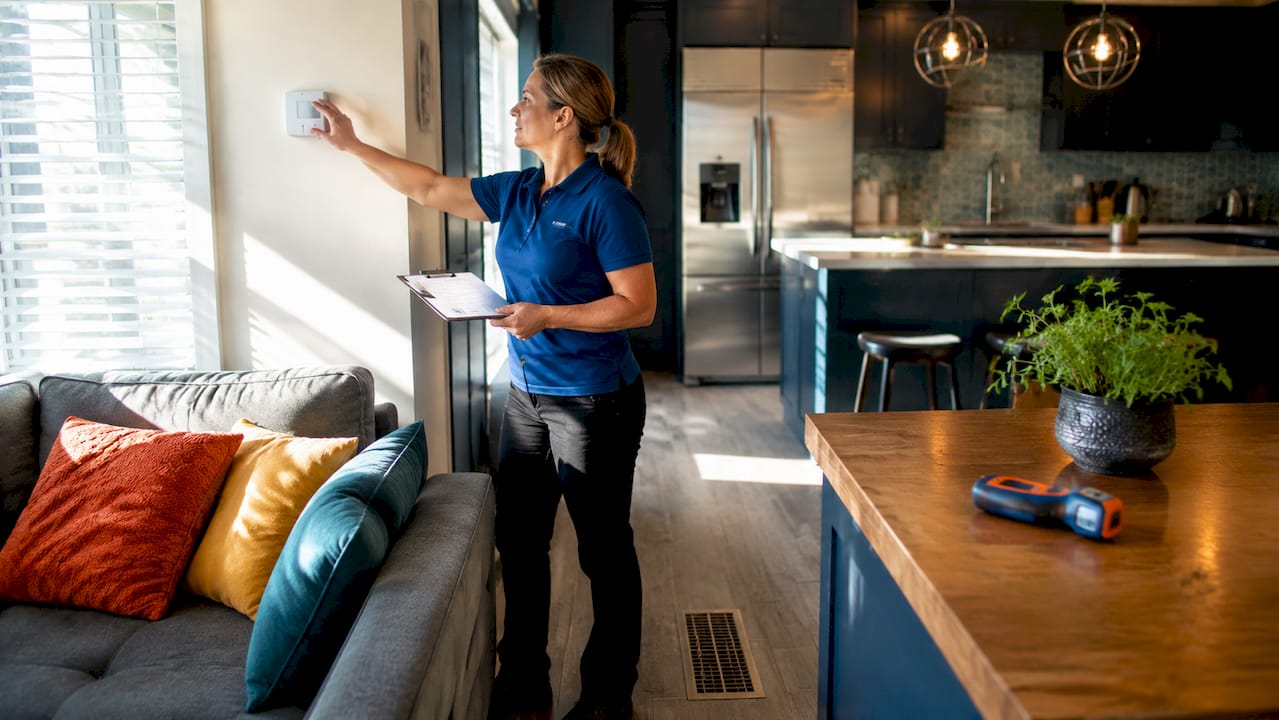
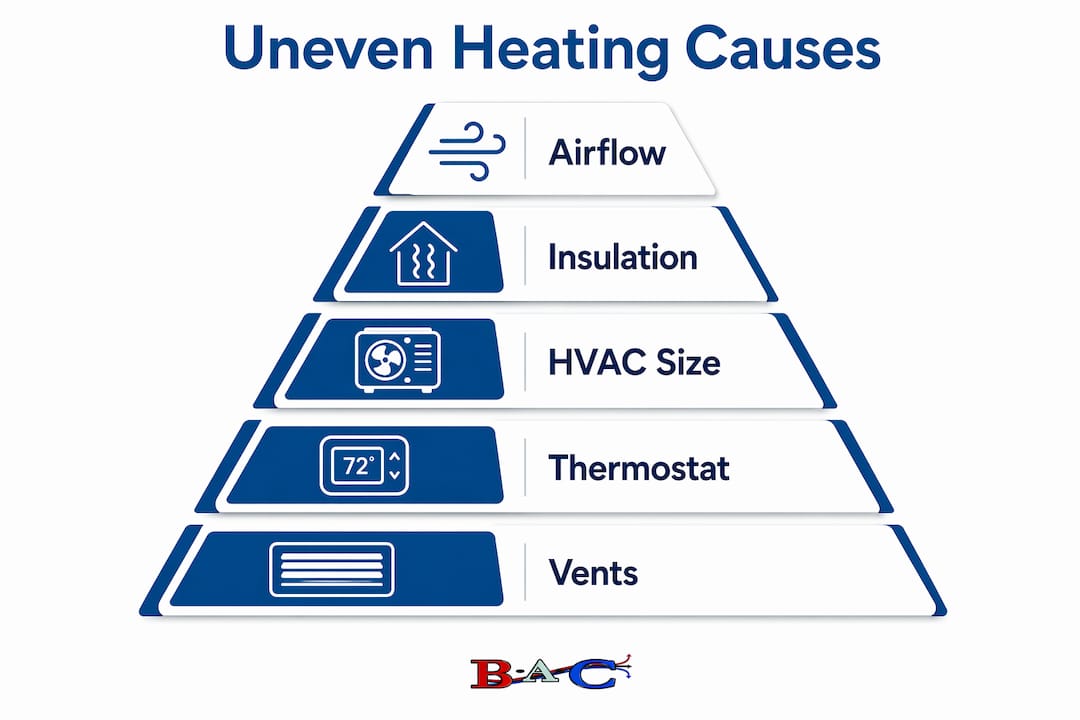
Uneven heating and cooling is defined as the condition where different rooms or zones in a home maintain noticeably different temperatures despite running the same HVAC system. The industry term for this is “thermal comfort imbalance,” and it affects a large share of American homes. The root causes are almost never a broken furnace or failed AC unit. Uneven temperatures almost always stem from air distribution problems, insulation gaps, or equipment sizing errors. Understanding which cause applies to your home is the first step toward fixing it.
Why does my house have uneven heating and cooling?
The single most common reason for uneven temperatures is a problem with how air moves through your duct system, not a failure of the heating or cooling equipment itself. Ducts that leak, sag, or were poorly designed from the start send conditioned air to the wrong places. Some rooms get too much airflow, others get almost none, and the result is a house where one bedroom feels like a sauna while another stays cold all winter.
Blocked or closed vents make the problem worse. Supply and return vents need at least 3 feet of clear space around them to work properly. Furniture pushed against a vent, drapes covering a return grille, or a rug laid over a floor register all restrict airflow in ways that create noticeable temperature differences across rooms.
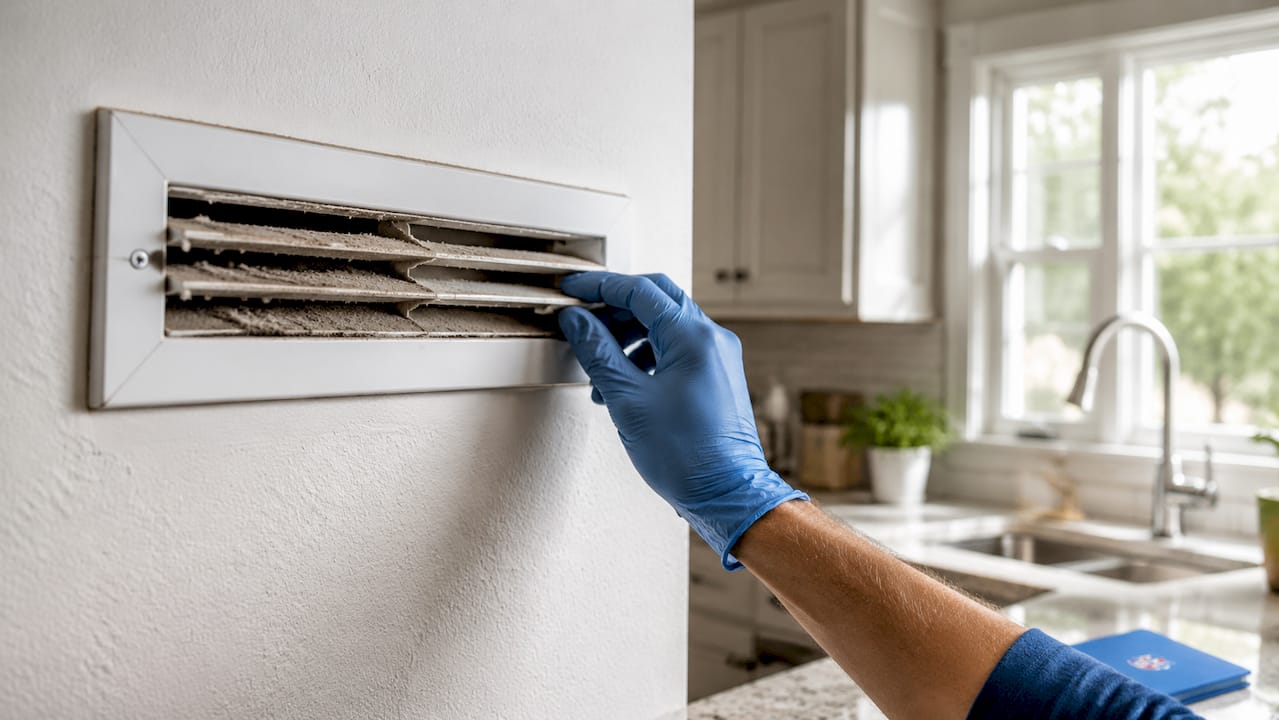
Thermostat placement also plays a bigger role than most homeowners realize. A thermostat mounted near a drafty window, in direct sunlight, or above a heat-producing appliance reads the wrong temperature. The system shuts off too early or runs too long based on a false reading, leaving the rest of the house uncomfortable.
Insulation quality rounds out the top causes. Poor attic insulation and air leaks can cause up to 30% of your generated heat to escape before it ever reaches the living space. That loss shows up as cold ceilings, drafty corners, and rooms that never quite reach the set temperature.
How ductwork and airflow problems drive temperature differences
Duct leaks are the most underdiagnosed cause of home heating issues. A duct joint that separates inside a wall or attic can dump conditioned air directly into unconditioned space, meaning you pay to heat or cool your attic instead of your bedroom. The room at the end of that duct run gets almost no airflow, and no amount of thermostat adjustment fixes it.
Return air paths matter just as much as supply ducts. Closing bedroom doors without a dedicated return vent in the room causes the space to pressurize. Pressurized rooms push back against incoming supply air, reducing flow and making the room harder to heat or cool. The fix is either adding a return vent, cutting a transfer grille into the door, or simply leaving interior doors open when the system runs.
Furniture placement is a fixable cause that homeowners overlook constantly. A couch blocking a supply vent does not just reduce airflow to that room. It also throws off the pressure balance for the entire duct system, affecting rooms further down the line.
- Check every supply and return vent for obstructions, including furniture, rugs, and drapes
- Keep HVAC air vents clean and free of dust buildup that restricts airflow
- Leave interior doors open when possible to allow return air to circulate
- Never block return grilles, even partially, with curtains or decorative items
Pro Tip: Hold a tissue in front of each supply register while the system runs. Weak or no movement means restricted airflow at that vent. This simple tissue test takes five minutes and can pinpoint exactly which rooms have airflow problems.
How insulation and home construction create hot and cold spots
Insulation does not last forever at full effectiveness. Homes aged 10–20 years are especially prone to uneven temperatures because attic insulation settles and compresses over time, and weatherstripping around doors and windows wears out. A home that was well insulated when built may now lose significant heat through the same walls and ceilings that once held it in.
Room location within the house matters a great deal. Corner bedrooms have two exterior walls instead of one, which means more surface area exposed to outside temperatures. Rooms above garages face a similar problem because the garage ceiling is rarely insulated to the same standard as the rest of the house. These structural realities create temperature disparities that no amount of vent adjustment will fully correct without addressing the insulation itself.
Windows and their orientation add another layer of complexity. South-facing rooms gain significant solar heat in winter, which can feel comfortable, but the same rooms overheat in summer. West-facing rooms get intense afternoon sun in the hottest part of the day. Single-pane windows or older double-pane units with failed seals transfer outdoor temperatures directly into the room, creating cold spots in winter and heat gain in summer.
- Inspect attic insulation depth and condition, especially if your home is more than 10 years old
- Check weatherstripping on all exterior doors and windows for gaps or compression damage
- Look for air leaks around electrical outlets on exterior walls, which are common but easy to seal
- Pay special attention to rooms above garages and corner bedrooms when diagnosing temperature fluctuations in homes
Does HVAC system size affect how evenly your home heats and cools?
An oversized HVAC unit is one of the most common and least obvious causes of uneven airflow problems. An oversized system cycles on and off too quickly, a pattern called short cycling. Short cycling means the system never runs long enough to distribute air evenly throughout the house. The rooms closest to the air handler get comfortable fast, while rooms further away never reach the set temperature before the system shuts off.
An undersized system creates the opposite problem. It runs constantly but cannot keep up with the heat load of the home, leaving the house perpetually behind on temperature. Neither scenario is a sign of a broken unit. Both are signs of a unit that was never matched correctly to the home’s actual heating and cooling load.
A single thermostat controlling a large or multi-story home compounds these sizing problems. The thermostat reads the temperature in one location and makes decisions for the entire house based on that single data point. Rooms on different floors, with different sun exposure, or at different distances from the air handler will always feel different from the room where the thermostat sits.
Pro Tip: If your system runs for less than 10 minutes before shutting off, short cycling is likely the cause of your uneven comfort. A central AC system that is properly sized for your home’s square footage and layout will run in longer, steadier cycles that distribute air far more evenly.
Practical steps to diagnose and fix uneven home temperatures
Start with the basics before calling anyone. Replace your air filter if it has not been changed in the last 30–90 days. A clogged filter restricts airflow across the entire system and is the single most common cause of reduced performance. A clean filter costs a few dollars and takes two minutes to swap out.
- Replace the air filter and note whether comfort improves within 24 hours
- Walk every room and confirm all supply and return vents are fully open and unobstructed
- Use the tissue test at each supply register to identify rooms with weak airflow
- Check that interior doors are not trapping air in rooms without dedicated return vents
- Inspect your thermostat location for direct sunlight, drafts, or nearby heat sources
- Look for obvious air leaks around windows, doors, and electrical outlets on exterior walls
When DIY steps do not resolve the problem, the cause is likely inside the duct system or the equipment itself. Persistent humidity issues combined with uneven temperatures point to system-level faults like low refrigerant, a failing evaporator coil, or inadequate blower performance. These require professional static pressure testing and diagnostics, not a filter change.
Duct sealing is one of the highest-return professional services available for homes with chronic temperature imbalances. A technician uses a blower door test or duct pressurization test to find leaks, then seals them with mastic compound or metal tape. The result is more conditioned air reaching the rooms that need it.
Pro Tip: Never close vents in unused rooms thinking it will save energy or redirect heat. Closing vents disrupts the pressure balance your duct system was designed around and typically makes comfort worse in every room, not just the one you closed.
Key takeaways
Uneven heating and cooling in homes is caused by airflow distribution problems, insulation failures, and equipment sizing errors, not by HVAC unit breakdown.
| Point | Details |
|---|---|
| Airflow is the primary cause | Duct leaks, blocked vents, and closed doors restrict air movement and create temperature disparities. |
| Vent clearance matters | Supply and return vents need at least 3 feet of clear space to maintain proper airflow. |
| Insulation degrades over time | Homes older than 10 years often have settled insulation that allows significant heat loss. |
| System sizing affects distribution | Oversized units short cycle and never distribute air evenly to distant rooms. |
| Closing vents makes things worse | Shutting off vents disrupts duct pressure balance and reduces comfort throughout the home. |
What I’ve learned after years of watching homeowners chase the wrong fix
The most common mistake I see is homeowners treating uneven temperatures as a thermostat problem. They adjust the set point up or down, buy a new programmable thermostat, or argue with their family about the “right” temperature. None of that addresses what is actually happening inside the walls and ceilings.
The second most common mistake is closing vents in rooms that feel too warm. It feels logical. If a room is too hot, shut off the air going into it. But your duct system was designed as a balanced pressure network. Closing one vent increases static pressure across the whole system, which reduces total airflow, strains the blower motor, and often makes the original problem worse. I have seen homeowners close half the vents in their house and then wonder why their energy bills went up.
Older homes in New Jersey present a specific challenge. Many were built in the 1970s and 1980s with duct systems that were never designed for today’s higher-efficiency equipment. When a homeowner replaces an old furnace with a new high-efficiency unit, the duct system sometimes cannot handle the new airflow characteristics. The result is a brand-new system that still produces uneven comfort. If you have replaced equipment recently and the problem persists, the ducts deserve a hard look. You can check whether your furnace needs replacing or whether the real issue lies upstream in the distribution system.
Preventative maintenance is the most undervalued tool in this conversation. Annual HVAC tune-ups catch duct problems, blower issues, and refrigerant levels before they turn into comfort complaints. The homeowners who call me in july saying their upstairs is 10 degrees hotter than their downstairs are almost always the ones who skipped maintenance for three or four years running.
— John
Brightonaircorp can help you fix uneven comfort at home
Uneven temperatures are a solvable problem, and Brightonaircorp has been solving them for New Jersey homeowners since 1993. With over 150 years of combined technician expertise, the team diagnoses airflow imbalances, duct leaks, insulation gaps, and equipment sizing issues with the kind of precision that comes from decades of hands-on work.

Brightonaircorp offers professional HVAC evaluations, duct sealing, thermostat placement assessments, and full system diagnostics. Whether your home has one cold bedroom or a whole floor that never reaches the right temperature, the HVAC services at Brightonaircorp cover every layer of the problem. Free estimates are available, and 24/7 emergency service means you are never left waiting when comfort matters most.
FAQ
What is the most common cause of uneven heating and cooling?
Airflow distribution problems, including duct leaks, blocked vents, and return air restrictions, are the most common cause. Equipment sizing errors and insulation failures are the next most frequent contributors.
Should I close vents in rooms I don’t use?
Closing vents disrupts the pressure balance your duct system was designed around and typically worsens comfort throughout the home. Keep all vents open and address the root cause instead.
Why is my upstairs always hotter than my downstairs?
Heat rises naturally, and upper floors also absorb more solar heat through the roof. Combined with longer duct runs and reduced airflow, upper floors consistently run warmer without a properly balanced system.
How do I know if my HVAC system is the wrong size?
An oversized system short cycles, running for less than 10 minutes before shutting off. An undersized system runs almost continuously without reaching the set temperature. Both patterns indicate a sizing mismatch.
When should I call a professional for uneven temperatures?
Call a professional when DIY steps like filter replacement, vent clearing, and door adjustments do not resolve the problem. Persistent humidity combined with uneven temperatures points to system-level faults that require professional static pressure diagnostics.