Why Is Your Furnace Short Cycling? Causes and Fixes
Why Is Your Furnace Short Cycling? Causes and Fixes
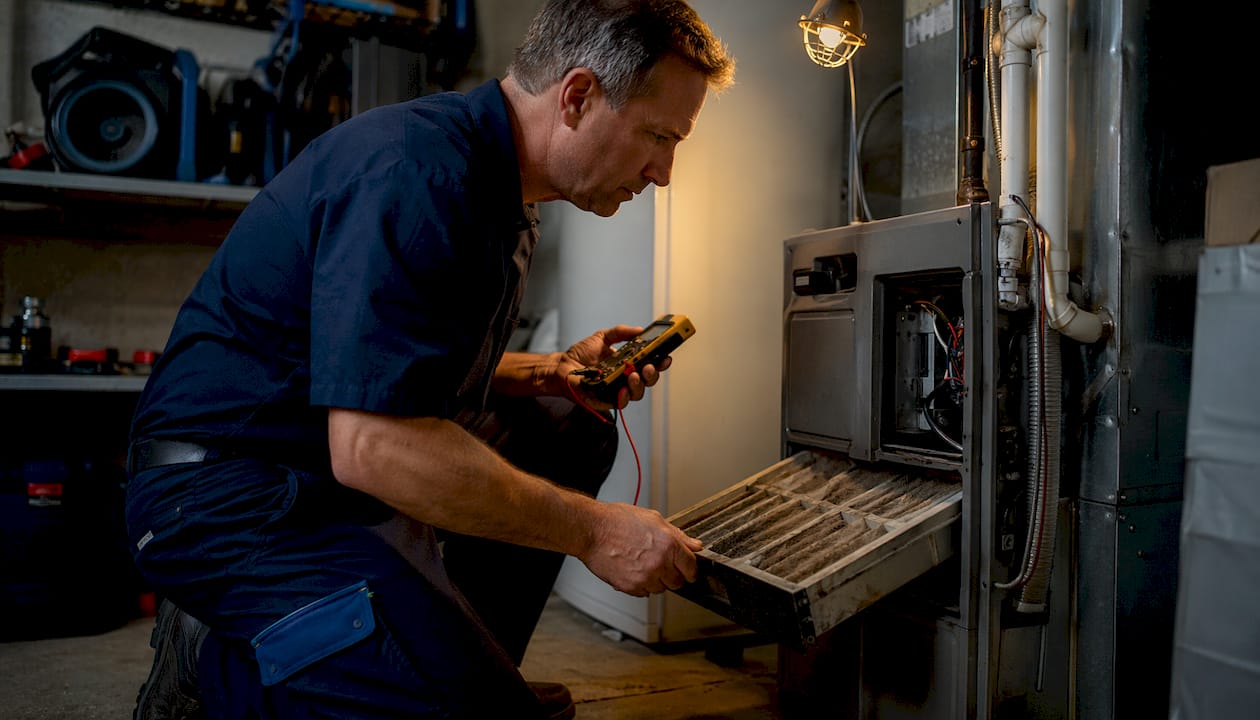
Furnace short cycling is defined as a furnace that turns on, runs for only a few minutes, shuts off before reaching the set temperature, and then repeats the cycle rapidly. This pattern is not a quirk. It signals that a safety mechanism or a component failure is interrupting normal operation. Left unaddressed, short cycling wastes energy, accelerates wear on motors and valves, and can mask serious hazards like carbon monoxide leaks. The most common triggers are clogged air filters, faulty flame sensors, thermostat problems, and oversized equipment. Knowing which cause applies to your furnace is the first step toward fixing it.
Why furnace short cycling happens: the core causes
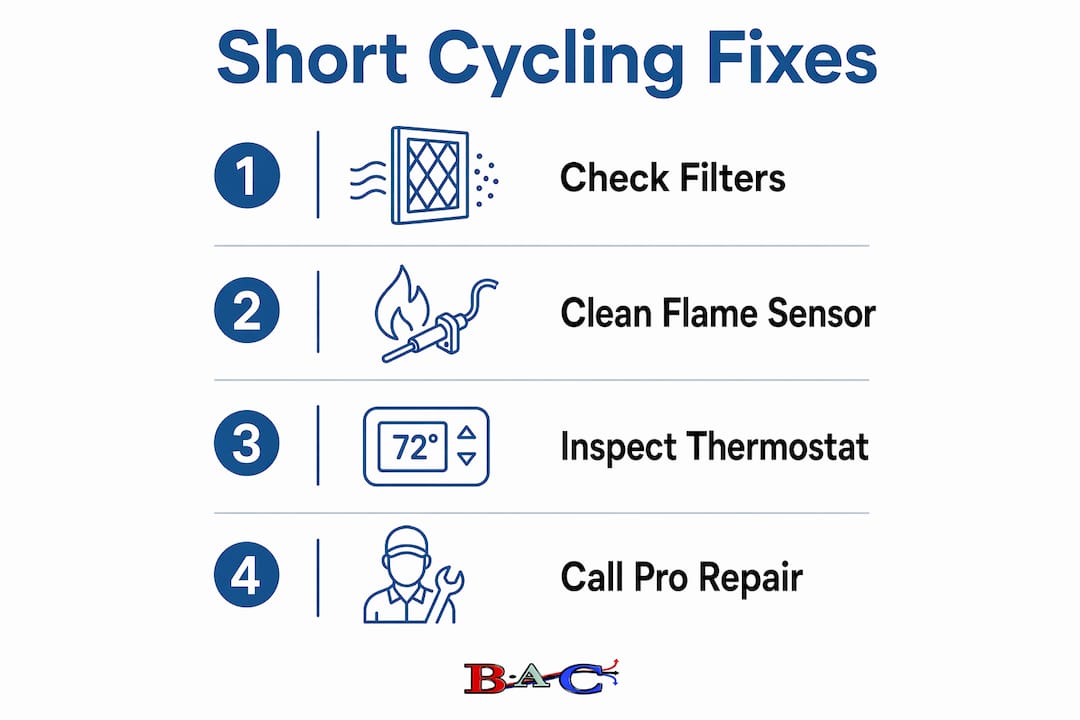
Short cycling is almost always a furnace safety response, not a random malfunction. The high-limit switch, a thermal sensor inside the furnace, shuts the burner off when internal temperatures climb too high. When airflow is blocked, heat builds up fast and the switch trips repeatedly. That repeated tripping is what you hear as the furnace turning on and off every few minutes.
The industry term for this pattern is “short cycling,” and HVAC technicians treat it as a diagnostic signal rather than a standalone problem. Fixing the symptom without finding the root cause just delays the next breakdown. The sections below cover every major cause, from the simplest DIY fix to the repairs that require a licensed technician.
How clogged air filters and airflow problems cause short cycling
Clogged air filters cause over 50% of furnace short cycling cases. That makes a dirty filter the single most likely reason your furnace keeps turning on and off. When the filter is clogged, the blower cannot pull enough air across the heat exchanger. Heat builds up, the high-limit switch trips, and the burner shuts down.
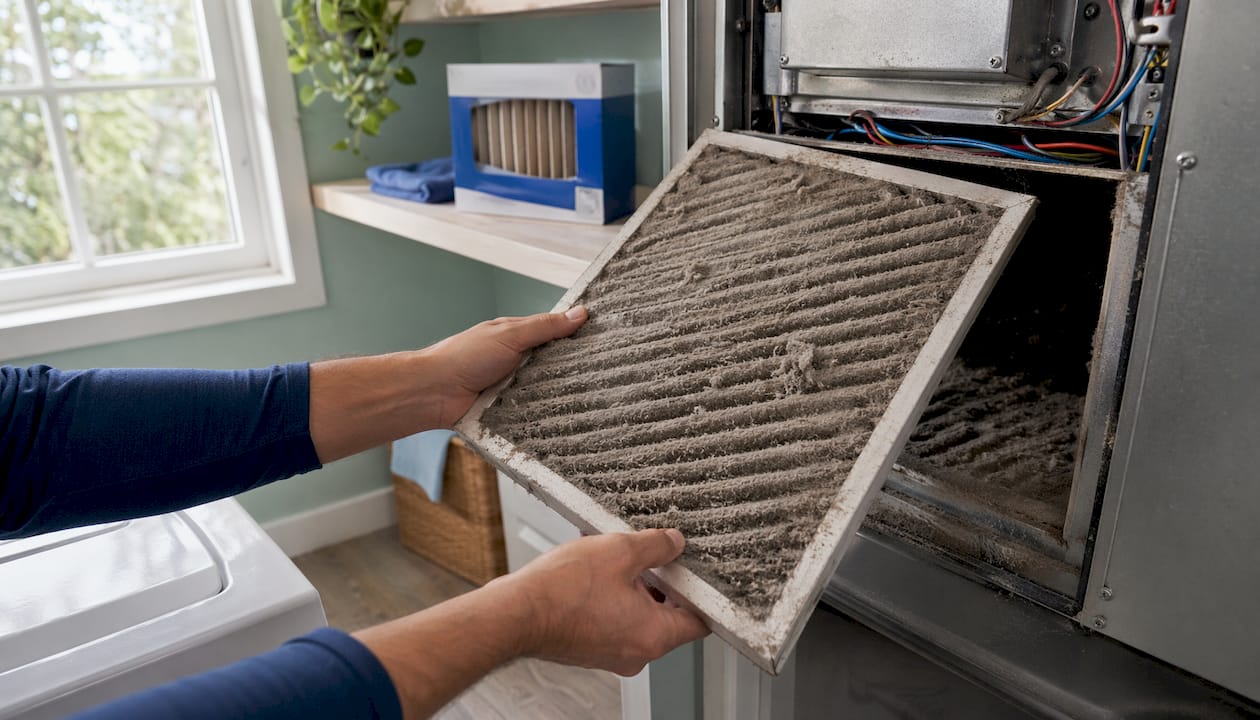
Replacing a standard 1-inch filter costs $10–$30 and takes under five minutes. Filters should be replaced every 1–3 months depending on household dust levels, pets, and occupancy. Many homeowners replace filters annually at best, which is not frequent enough for most New Jersey homes running heat through a long winter.
Airflow problems go beyond the filter, though. Three other common culprits are:
- Closed or blocked supply registers. Closing registers in unused rooms feels like a good idea, but it increases static pressure and forces the blower motor to work harder. The result is reduced airflow and high-limit switch trips.
- Blocked return air vents. Furniture pushed against a return vent cuts off the air the furnace needs to breathe. Check every return vent in your home.
- Dirty blower wheel. The blower wheel moves air through the system. A dirty blower wheel restricts airflow even when the filter is clean. Professional cleaning costs $150–$250 and is a commonly overlooked maintenance step.
Pro Tip: Check your seasonal HVAC checklist before each heating season. Catching a dirty filter or blocked vent in october costs $15. Catching it after a limit switch failure costs far more.
Why a faulty flame sensor causes rapid shutdowns
The flame sensor is a small metal rod that sits in the burner flame. Its job is to confirm that the burner actually ignited. If it cannot detect a flame within a few seconds of startup, the furnace shuts off as a safety measure. A dirty or failing sensor causes short cycles lasting 30–60 seconds, which is one of the most recognizable short cycling patterns.
Carbon deposits build up on the sensor rod over time and insulate it from the flame. The furnace lights, the sensor fails to register the flame, and the system shuts down. This cycle repeats every few minutes until the furnace locks out entirely.
A homeowner with basic comfort around their furnace can clean the sensor rod. Here is the correct process:
- Turn off power and gas to the furnace. Safety first. Never work on a live furnace.
- Locate the flame sensor. It is a single metal rod mounted near the burner, connected by one wire.
- Remove the sensor carefully. One screw typically holds it in place.
- Clean with fine emery cloth only. Proper flame sensor cleaning requires fine emery cloth. Coarse abrasives scratch the rod and create microscopic grooves that trap carbon faster, causing the problem to return within weeks.
- Reinstall and test. Reattach the sensor, restore power and gas, and run the furnace through a full cycle.
Pro Tip: If cleaning the sensor does not stop the short cycling, the rod may be cracked or corroded. Professional diagnostics cost $80–$200, and a full sensor replacement is typically inexpensive compared to the damage a persistent misfire can cause.
Thermostat issues and oversized furnaces as hidden causes
Thermostat problems are a frequently overlooked short cycling cause that homeowners often miss because the furnace itself appears to be working. The thermostat reads the room temperature and tells the furnace when to run. If the thermostat sends inaccurate signals, the furnace responds to false data.
Common thermostat problems that trigger short cycling include:
- Poor placement. A thermostat installed near a sunny window, above a heat register, or in a drafty hallway reads temperatures that do not reflect the rest of the house. The furnace satisfies the thermostat quickly and shuts off before the home is actually warm.
- Low or dead batteries. Weak batteries cause erratic signals. The thermostat may send a “satisfied” reading mid-cycle, cutting the run short. Replacing batteries costs under $5 and takes 60 seconds.
- Wiring faults. Loose or corroded thermostat wiring sends intermittent signals. A technician can diagnose this in minutes during a standard service call.
An oversized furnace creates a different but equally frustrating problem. An oversized furnace heats the area near the thermostat rapidly, satisfies the sensor before the rest of the home warms up, and shuts off. The result is short cycles and uneven temperatures throughout the house. Rooms far from the thermostat stay cold while the furnace cycles on and off constantly. The fix for an oversized furnace is a proper Manual J load calculation performed by a licensed HVAC contractor. Upgrading to a programmable or smart thermostat with multiple sensors can also reduce the symptom by averaging temperatures across zones.
Serious mechanical causes: limit switch failures, cracked heat exchangers, and blower motor problems
Some short cycling causes require immediate professional attention. These are not DIY repairs.
The high-limit switch fails in two ways. It can fail open, meaning it trips constantly even when temperatures are normal. It can also fail closed, meaning it never trips and the furnace overheats without protection. A technician can test the switch with a multimeter and replace it for a fraction of the cost of the damage a failed switch causes.
A cracked heat exchanger is the most serious cause of short cycling. The heat exchanger separates combustion gases from the air circulating through your home. When it cracks, carbon monoxide can enter your living space. Furnaces over 15 years old carry elevated risk of heat exchanger cracks. If your CO detector activates or you notice a sulfur-like odor when the furnace runs, shut the system off immediately and call a technician. Do not restart the furnace until it has been inspected.
Blower motor failure reduces airflow through the system, causing the same overheating cycle as a clogged filter. The difference is that a failing motor often produces unusual sounds, such as grinding or humming, before it fails completely. Short cycling stresses furnace motors and valves, accelerating wear and raising the chance of unplanned replacements. Catching a struggling blower motor early saves the cost of a full motor replacement or, worse, a premature furnace replacement.
A useful reference for understanding the severity of each cause:
| Cause | DIY fix possible? | Urgency level |
|---|---|---|
| Clogged air filter | Yes | Low, fix immediately |
| Dirty flame sensor | Yes, with caution | Medium |
| Thermostat battery or placement | Yes | Low |
| Oversized furnace | No | Medium, plan for replacement |
| Limit switch failure | No | High |
| Cracked heat exchanger | No | Critical, shut down furnace |
| Blower motor failure | No | High |
Dirty air ducts compound several of these problems by restricting airflow system-wide. Reviewing signs your air ducts need cleaning can help you rule out duct-related airflow restrictions before calling a technician.
Key takeaways
Furnace short cycling is a safety response to overheating or sensor failure, and fixing the root cause stops the cycle before it causes permanent damage.
| Point | Details |
|---|---|
| Clogged filters are the top cause | Replace your air filter every 1–3 months to prevent the most common short cycling trigger. |
| Flame sensor cleaning is a valid DIY fix | Use fine emery cloth only; coarse abrasives cause faster carbon buildup and repeat failures. |
| Thermostat location matters | Move or recalibrate a thermostat near heat sources or drafts to stop false temperature readings. |
| Cracked heat exchangers are a safety emergency | Shut the furnace off immediately if CO alarms trigger or you smell combustion odors. |
| Short cycling accelerates system wear | Prompt diagnosis prevents premature component failure and avoids early furnace replacement. |
What I’ve learned after years of watching homeowners ignore short cycling
Short cycling is one of those problems that feels minor until it isn’t. The furnace still turns on. The house still gets warm, eventually. So homeowners wait. That waiting is where the real damage happens.
I’ve seen furnaces that could have run another decade get replaced at year 12 because short cycling wore out the blower motor and the heat exchanger within the same season. The homeowner had noticed the furnace cycling frequently for months. A $30 filter and a $150 blower wheel cleaning would have prevented a $4,000 replacement.
The other mistake I see constantly is homeowners cleaning the flame sensor with sandpaper or steel wool because they read a quick tip online. Incorrect cleaning tools damage flame sensors, causing rapid carbon buildup and recurring short cycling within weeks. Fine emery cloth is the correct tool. That detail matters more than most people realize.
My honest advice: start with the filter and the thermostat batteries. Those two checks cost almost nothing and resolve a large share of short cycling cases. If the problem continues after those fixes, call a technician before the next cold snap. A professional diagnostic visit costs $80–$200. That is a fraction of what a cracked heat exchanger or a burned-out blower motor will cost you in february when every HVAC company in New Jersey is booked solid.
— John
Brightonaircorp can diagnose and fix your furnace fast
Brightonaircorp has served New Jersey homeowners and businesses since 1993, with over 150 years of combined technician expertise across the team. When your furnace keeps turning on and off, the cause is not always obvious from the outside.
Brightonaircorp technicians diagnose short cycling root causes on the first visit, covering everything from flame sensor cleaning and limit switch testing to blower motor inspection and heat exchanger evaluation. Emergency service is available 24/7, so you are never left without heat during a New Jersey winter. Free estimates are available for repairs and replacements. Visit Brightonaircorp to schedule a diagnostic visit or request emergency service today. If you want to reduce home heating costs while keeping your system running reliably, the team can walk you through the options.
FAQ
What is furnace short cycling?
Furnace short cycling is when a furnace turns on, runs for only a few minutes, shuts off before reaching the set temperature, and repeats the pattern rapidly. It is almost always triggered by a safety mechanism responding to overheating or a sensor fault.
How do I know if my furnace is short cycling?
A furnace that completes a full heating cycle runs for roughly 10–15 minutes per cycle. If your furnace shuts off after 2–5 minutes and restarts within minutes, it is short cycling.
Can I fix furnace short cycling myself?
Replacing a clogged air filter, swapping thermostat batteries, and opening closed supply registers are all safe DIY fixes. Flame sensor cleaning is possible with the right tools, but limit switch failures, cracked heat exchangers, and blower motor problems require a licensed technician.
Is short cycling dangerous?
Short cycling caused by a cracked heat exchanger is a carbon monoxide hazard and requires immediate shutdown. Other causes are not immediately dangerous but accelerate component wear and raise the risk of full system failure.
How much does it cost to fix a short cycling furnace?
Costs range from $10–$30 for a filter replacement to $80–$250 for professional diagnostics and sensor cleaning. Serious repairs like blower motor replacement or heat exchanger work cost significantly more, which is why early diagnosis matters.