
Why a Gas Leak Requires Urgent HVAC Response
Why a Gas Leak Requires Urgent HVAC Response
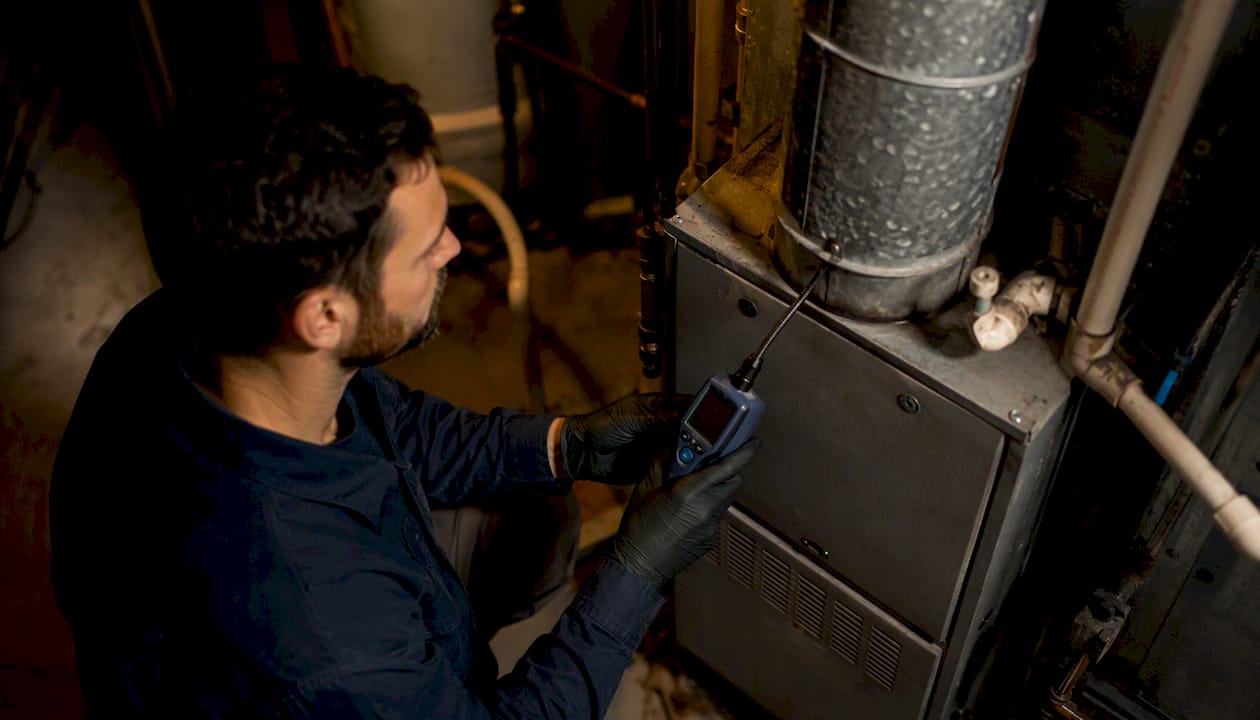
A gas leak near HVAC equipment is an immediate, life-threatening emergency. Evacuate everyone, including pets, right now. Move at least 350 feet away from the building before you do anything else. Then call 911 and your gas utility from outside.
The three actions that matter most, in order:
- Get everyone out without stopping to collect belongings. Leave doors open only if you can do so without slowing your exit.
- Move upwind and well away from the structure.
- Call 911 and your gas utility from outside or from a neighbor’s home.
Do not flip any light switches, use your phone, or operate any appliance while still inside. A single electrical arc from a wall switch is enough to ignite a gas-air mixture that has built up in an enclosed space. The reason a gas leak requires urgent HVAC response is not just the leak itself but how fast conditions can become dangerous once gas enters a home’s air supply.
Key Takeaways
A gas leak involving HVAC equipment is a life-threatening emergency that requires immediate evacuation, utility isolation, and professional repair before gas service can safely be restored.
| Point | Details |
|---|---|
| Evacuate first, always | Move at least 350 feet away and call 911 and your gas utility from outside the building. |
| No switches or phones inside | Even a small electrical arc can ignite a gas-air mixture; get out before making any calls. |
| Utility isolates, HVAC tech repairs | The gas utility shuts off supply; a licensed HVAC technician must repair and document before service is restored. |
| Smell alone is unreliable | Install listed combustible-gas detectors near appliances and in sleeping areas; test them monthly. |
| Brightonaircorp responds 24/7 | Certified technicians handle leak detection, combustion analysis, repairs, and utility clearance documentation across New Jersey. |
Table of Contents
- How to recognize a gas leak tied to your HVAC system
- Why HVAC-area gas leaks create immediate hazards
- Step-by-step emergency actions to take right now
- Who to call first and what each responder does
- How professionals locate HVAC-related gas leaks
- Why your nose is not enough: detectors you should install
- What to expect after pros arrive: timeline and costs
- Routine prevention steps that reduce your risk
- How Brightonaircorp responds to a suspected gas leak
- The case for treating every gas leak as a worst-case scenario
- Brightonaircorp is ready when a gas emergency hits
- Sources
How to recognize a gas leak tied to your HVAC system
The most obvious sign is the rotten-egg or sulfur smell of mercaptan, the odorant gas utilities add to natural gas so leaks are detectable. But smell alone is not reliable. Some people have reduced sensitivity to mercaptan, and in a slow or small leak, the concentration may never reach a detectable threshold before the situation becomes dangerous.
Watch for these signals alongside the odor:
- A steady hissing or whistling sound near your furnace, gas lines, or flexible connectors
- Dead or yellowing vegetation in a strip along outdoor gas piping, even when surrounding plants are healthy
- A yellow or orange pilot flame instead of the normal crisp blue
- Unusual flame behavior across multiple gas appliances at once
- Sudden headaches, dizziness, nausea, or fainting in household members, especially when symptoms ease after going outside
That last point matters more than most homeowners realize. Health symptoms in multiple people at the same time are a strong signal of gas exposure, and they warrant the same immediate evacuation as a strong odor.
Pro Tip: If you suspect a leak but cannot smell anything, trust the other signals. A hissing sound near the furnace or dead vegetation along a buried line is reason enough to evacuate and call.
Research on natural gas and indoor air quality confirms that some indoor leaks go entirely undetected by smell, which is exactly why relying only on your nose puts your household at risk.
Why HVAC-area gas leaks create immediate hazards
Below that range, the mixture is too lean to ignite. Above it, there is not enough oxygen. Inside that window, a single spark from a light switch, a thermostat click, or a running appliance motor can cause ignition or explosion.
The hidden amplifier in your home is the ductwork. When a gas leak occurs near a furnace or air handler, the HVAC system’s blower can pull leaked gas into the return air stream and distribute it through every room in the house. A leak that might otherwise stay localized near the appliance can reach ignitable concentrations throughout the structure in minutes once the blower is running.
Beyond explosion risk, fuel gas displaces oxygen in enclosed spaces. Prolonged exposure causes asphyxiation even without ignition. Distribution-grade natural gas also carries benzene and other hazardous air pollutants that pose health risks independent of the explosion hazard.
One distinction worth making: a fuel-gas leak and a carbon monoxide incident are different emergencies. Both require evacuation, but CO comes from incomplete combustion rather than an unburned gas release, and the detection and follow-up procedures differ. A cracked heat exchanger, for example, can produce CO while also allowing combustion products into the supply air, per DOE combustion appliance safety guidance. Technicians must perform combustion analysis and visual inspection to distinguish the two. Do not attempt that diagnosis yourself.
Newer refrigerants used in some heat pumps and mini-splits are mildly flammable (A2L classification), but their explosion risk is far lower than fuel gas. The primary explosion and asphyxiation risks in a gas-leak emergency come from methane or propane, not refrigerant.
Step-by-step emergency actions to take right now
Speed and sequence matter here. Follow these steps in order:
- Get out immediately. Do not stop to grab your phone, wallet, or pets if doing so adds more than a few seconds. Every second the blower runs, gas can spread further.
- Leave doors open as you exit if you can do so without delaying your exit. This helps dilute the concentration, but it is secondary to getting out.
- Do not touch any switches. No lights, no thermostat, no garage door opener. Do not unplug anything. Do not use your phone until you are outside.
- Move at least 350 feet away from the building, upwind if possible. That distance is not arbitrary — it reflects the minimum safe distance recommended in emergency natural gas response guidance.
- Call 911 first if anyone is symptomatic, if the odor is strong, or if you heard an explosion or saw a flame. Then call your gas utility’s emergency line.
- Give dispatchers specific information: your address, where you detected the smell or sound, how many people evacuated, and whether anyone has symptoms.
- Do not re-enter until fire department or utility personnel declare the scene safe. Not to grab belongings, not to check on pets left inside.
Hamilton College’s emergency action plan for natural gas leaks reinforces this sequence: evacuate, avoid ignition sources, and contact emergency responders from outside. The guidance is the same whether you are in a home or a larger building.
Pro Tip: Save your gas utility’s emergency number in your phone now, before you ever need it. In New Jersey, PSE&G’s emergency line is 1-800-436-7734. Searching for it during an emergency costs time you may not have.
Who to call first and what each responder does
Three different responders may show up at a gas leak, and each has a distinct role. Knowing who does what prevents confusion and delays.
| Responder | When to call | What they do |
|---|---|---|
| 911 / Fire Department | Anyone symptomatic, strong odor, explosion, or large suspected leak | Scene safety, possible evacuation orders, initial isolation assistance, medical response |
| Gas Utility (emergency line) | Every gas leak, always — even after calling 911 | Detects and isolates supply at the meter; will not restore service until the system is certified safe |
| Licensed HVAC Technician | After utility has isolated or cleared the site | Diagnoses leak source, repairs components, performs combustion analysis, provides documentation for utility re-pressurization |
The utility’s role is critical and often misunderstood. Once the utility isolates gas at the meter, they will not turn it back on until a licensed contractor has repaired the leak and provided documentation that the system is safe. That is not a formality — it is a hard stop that protects you and your neighbors.
Key points on the division of responsibility:
- Call 911 any time someone has symptoms or the odor is strong. Do not wait to assess severity.
- The gas utility handles the meter and the supply side. They do not repair your furnace or gas lines inside the home.
- A licensed HVAC technician handles everything from the meter connection into the home: supply lines, fittings, the furnace itself, and all connected appliances.
- Do not hire an unlicensed contractor for gas work. In New Jersey, gas piping work requires a licensed plumber or HVAC contractor with the appropriate certifications.
Understanding the HVAC emergency diagnostic process helps you ask the right questions when a technician arrives and know what documentation to request before gas service is restored.
How professionals locate HVAC-related gas leaks
The most common failure points in residential HVAC systems are:
- Aging or corroded flexible connectors between the gas line and the furnace
- Loose or improperly sealed threaded fittings at furnace connections
- Faulty gas valve assemblies, particularly on older furnaces
- Manifold and burner compartment connections that have worked loose over years of thermal cycling
- Corroded or damaged supply lines, especially in homes built before the 1980s
- Cracked heat exchangers, which can allow combustion products into the supply air
Professionals do not guess. They use a layered diagnostic approach:
- Electronic combustible-gas detectors (sniffers): calibrated instruments that detect methane or propane at concentrations well below what a human nose can register. DOE combustion appliance safety guidance specifies testing above fittings for natural gas (which rises) and below for propane (which sinks).
- Soap-bubble checks: applied to threaded fittings and joints to visually confirm small leaks the detector flags.
- Pressure-decay testing: technicians pressurize the system with nitrogen or forming gas and monitor for pressure drop over time, a method that confirms whether the system holds pressure after repairs. INFICON’s leak detection guidance describes this pressurization approach for HVAC systems.
- Combustion analysis: checks heat-exchanger integrity and confirms complete, safe combustion after repairs.
Pro Tip: Never attempt to locate a gas leak yourself using an open flame or by sniffing near appliances. The only safe search method is a calibrated electronic detector, and even then, the work belongs to a trained technician.
Knowing what causes sudden heating system failure gives homeowners useful context on why furnace components degrade and which failures carry the highest gas-leak risk.
Why your nose is not enough: detectors you should install
Mercaptan odorization is the first line of defense against undetected gas leaks, but it is not a reliable sole control. Odor concentration varies by location within a structure, and human sensitivity to mercaptan varies significantly from person to person. Large-scale sampling research found that distribution-grade natural gas often contains benzene and other hazardous air pollutants, and that some leaks go undetected by smell entirely. The researchers recommend requiring sensitive gas detectors in buildings with gas appliances.
What homeowners should install:
- Listed combustible-gas detectors (methane/natural gas or propane, depending on your fuel type) near each gas appliance and in sleeping areas. Look for UL 2034 or CSA 6.19 listed units.
- Carbon monoxide alarms on every level of the home and outside sleeping areas. CO and fuel-gas leaks are separate hazards requiring separate detectors.
- Smoke alarms on every level, interconnected so all sound when one triggers.
Placement matters. Combustible-gas detectors for natural gas should be mounted high on the wall or near the ceiling, since methane is lighter than air and rises. Propane detectors go low, near the floor. Hardwired units with battery backup are more reliable than plug-in-only models because they stay active during a power outage.
On the technology front, PNNL researchers developed a sensor capable of detecting refrigerant (R32) in roughly seven seconds under lab conditions, a meaningful advance for HVAC leak monitoring. That technology targets refrigerant, not methane, so it does not replace a combustible-gas detector. The two sensor types address different hazards and both have a place in a well-protected home.
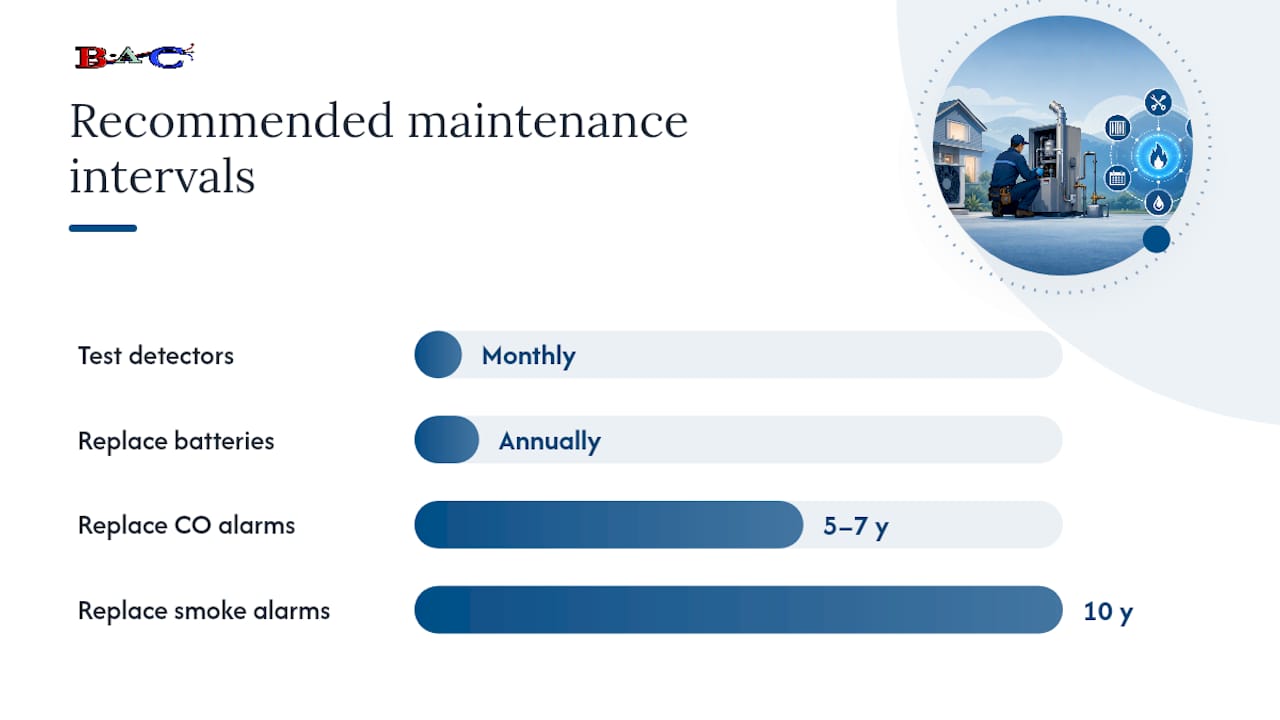
Test every detector monthly. Replace batteries annually or per manufacturer guidance, and replace the units themselves on the schedule printed on the device (typically 5–7 years for CO alarms, 10 years for some smoke alarms).
What to expect after pros arrive: timeline and costs
The sequence of events after a gas leak is confirmed follows a predictable pattern, though the timeline varies considerably based on the severity of the leak.
- Utility isolation: The gas utility shuts off supply at the meter. This happens before any repair work begins.
- Leak confirmation and location: The licensed HVAC technician uses electronic detectors, soap checks, and pressure testing to confirm the leak source.
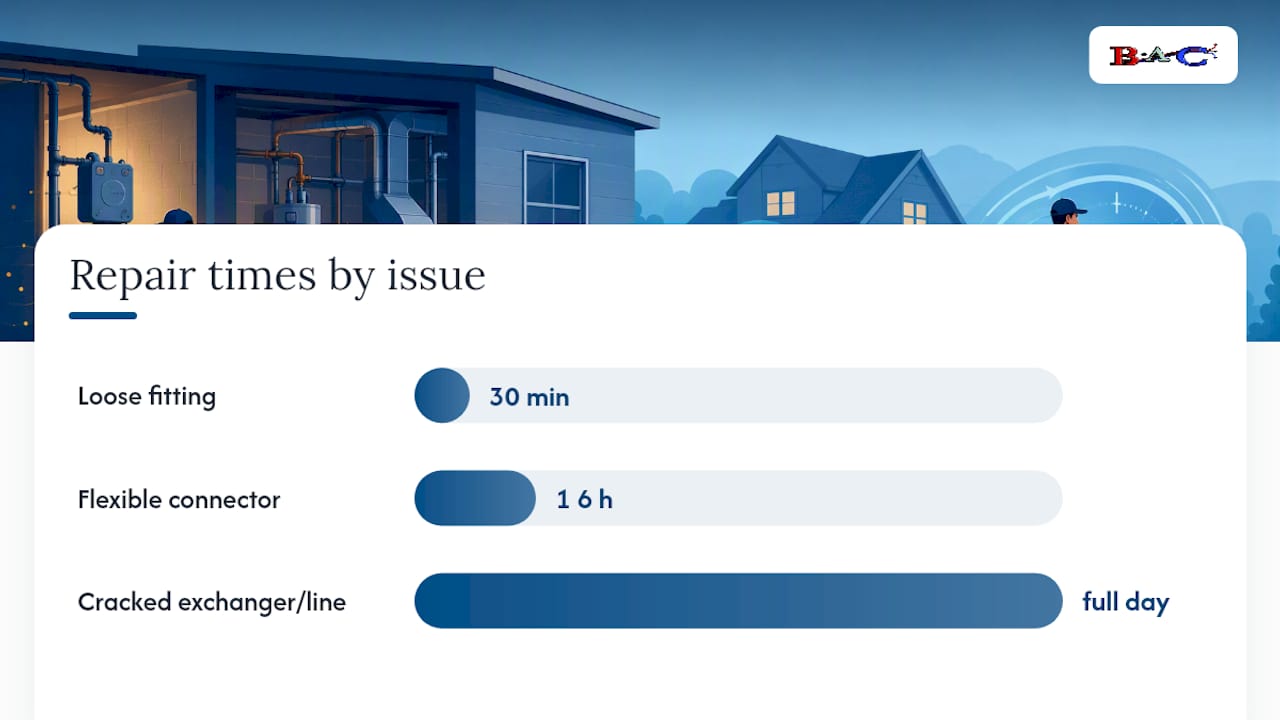
- Component repair or replacement: A loose fitting may take 30 minutes to reseal and test. A failed flexible connector typically takes an hour or two. A cracked heat exchanger or major line replacement can extend the job to a full day or require a return visit.
- Combustion analysis and documentation: After repairs, the technician performs combustion analysis and prepares documentation the utility requires before restoring gas service.
- Utility restoration: The utility re-pressurizes the system and restores service once documentation is received and the system passes their check.
For a small connector leak caught early, the full process from utility isolation to restored service can be completed in a few hours. A cracked heat exchanger or significant line replacement may mean an overnight or multi-day repair, particularly if parts need to be ordered.
On costs, homeowners should expect several categories:
- Emergency or after-hours service call premiums (these are standard and reflect the real cost of 24/7 availability)
- Diagnostic fees for leak detection and combustion analysis
- Parts: flexible connectors, gas valves, fittings, or in serious cases, a furnace replacement
- Possible permit fees for gas line work, depending on local jurisdiction
Costs vary widely by location, extent of damage, and whether the furnace itself needs replacement. The HVAC lifecycle cost analysis guide provides useful context on repair-versus-replace decisions when a major component is involved.
Pro Tip: Always request a written repair receipt, the pressure test results, and the combustion analysis report before the technician leaves. The gas utility may ask for this documentation, and it protects you if questions arise later.
Routine prevention steps that reduce your risk
Most HVAC-related gas leaks are preventable with consistent maintenance. The steps below are not complicated, but they require follow-through.
- Schedule an annual furnace inspection that includes combustion analysis and a leak check. Fall, before heating season, is the standard timing. A technician who skips the combustion analysis is not doing a complete inspection.
- Replace aging flexible connectors proactively. Corrugated stainless steel connectors (CSST) and older uncoated connectors degrade over time. If your connector is more than 10 years old or shows any corrosion, ask your technician about replacement.
- Keep the area around gas appliances clear. Stored items near a furnace can obstruct venting, create fire hazards, and make it harder to spot early signs of a problem.
- Check that vents and flues are unobstructed at the start of each heating season. Bird nests, debris, and ice can block exhaust venting and force combustion products back into the home.
- Install and test combustible-gas detectors and CO alarms as described above. Test them monthly.
- Keep records. Maintain a file with inspection reports, repair receipts, and any safety certificates issued after major work. If you sell the home, this documentation is valuable. If a utility question arises, it is essential.
The seasonal HVAC preparation checklist covers these steps in detail and gives homeowners a practical framework for staying ahead of problems before they become emergencies.
How Brightonaircorp responds to a suspected gas leak
When a homeowner calls Brightonaircorp with a suspected gas leak, the response follows a specific sequence designed to protect both the occupants and the technician arriving on site.
The emergency intake process captures the location of the odor or sound, the number of people in the home, whether anyone has symptoms, and whether the utility has already been called. That information determines dispatch priority. A certified technician is sent with calibrated combustible-gas detection equipment and the components most commonly needed for emergency repairs.
On site, the technician coordinates with the utility and fire department if they are present. No diagnostic work begins until the utility has isolated supply at the meter. Once isolation is confirmed, the technician performs a full leak survey using electronic sniffers, soap checks, and pressure testing, then completes combustion analysis after any repairs.
Questions worth asking any technician who responds to a gas leak:
- Are you licensed for gas piping work in New Jersey?
- What diagnostic methods will you use to locate the leak?
- Which components will you inspect beyond the obvious failure point?
- Will you provide written documentation of the repair and test results?
Pro Tip: A technician who cannot answer those four questions clearly, or who wants to restore gas service without performing combustion analysis, is not following the correct procedure. Ask for documentation before you allow the utility to restore service.
Brightonaircorp operates 24/7 for emergency calls and offers financing options for homeowners facing unexpected repair or replacement costs. Post-repair follow-up testing is standard, not optional.
The case for treating every gas leak as a worst-case scenario
Most homeowners who have never experienced a gas emergency tend to underestimate how fast conditions deteriorate. The instinct is to investigate, to sniff around the furnace room, to check whether the pilot light is out. That instinct is understandable and consistently wrong.
What the evidence actually shows is that the danger is not just at the leak point. HVAC ductwork turns a localized problem into a whole-house problem within minutes. Odorant concentration is not uniform, and human sensitivity varies enough that some people will not smell a leak that is already at ignitable concentration in another part of the home. The research on hazardous air pollutants in distribution gas adds a layer of risk that most homeowners have never considered.
The contractors who handle these calls regularly will tell you the same thing: the homeowners who fare best are the ones who got out fast and called immediately, not the ones who spent five minutes trying to figure out whether the smell was “bad enough.” There is no threshold worth waiting for. If you suspect it, treat it as confirmed.
Brightonaircorp is ready when a gas emergency hits
When gas is in the air and your furnace is involved, the next call after 911 and your utility should be to a certified HVAC contractor who knows how to work alongside emergency responders.

Brightonaircorp has served New Jersey homeowners and businesses since 1993, with over 150 years of combined technician experience across residential and commercial systems. When a gas leak is suspected, the team dispatches a certified technician with calibrated detection equipment, coordinates with the utility and fire department on site, and provides the written combustion analysis and repair documentation your utility requires before restoring service.
Emergency service is available 24 hours a day, 7 days a week. Financing options are available for homeowners facing unexpected repair or replacement costs. After repairs are complete, follow-up testing confirms the system is safe before the job is closed.
Call Brightonaircorp now or schedule emergency HVAC service to get a certified technician dispatched to your location.
This article is general information, not a substitute for advice from a qualified doctor. Consult a qualified healthcare professional about your own circumstances before acting on anything here.
Sources
The sources below are primary-authority references homeowners can use to verify the guidance in this article or go deeper on specific topics.
- Natural gas and indoor air pollution in North America — PSE Healthy Energy
- New sensor targets refrigerant leaks in HVAC systems — PNNL
- Emergency Action Plans - Natural Gas Leaks (Hamilton College)
- HVAC/R Refrigerant Leak Detection - INFICON