
What Is an HVAC System? A Homeowner's Guide
What Is an HVAC System? A Homeowner’s Guide
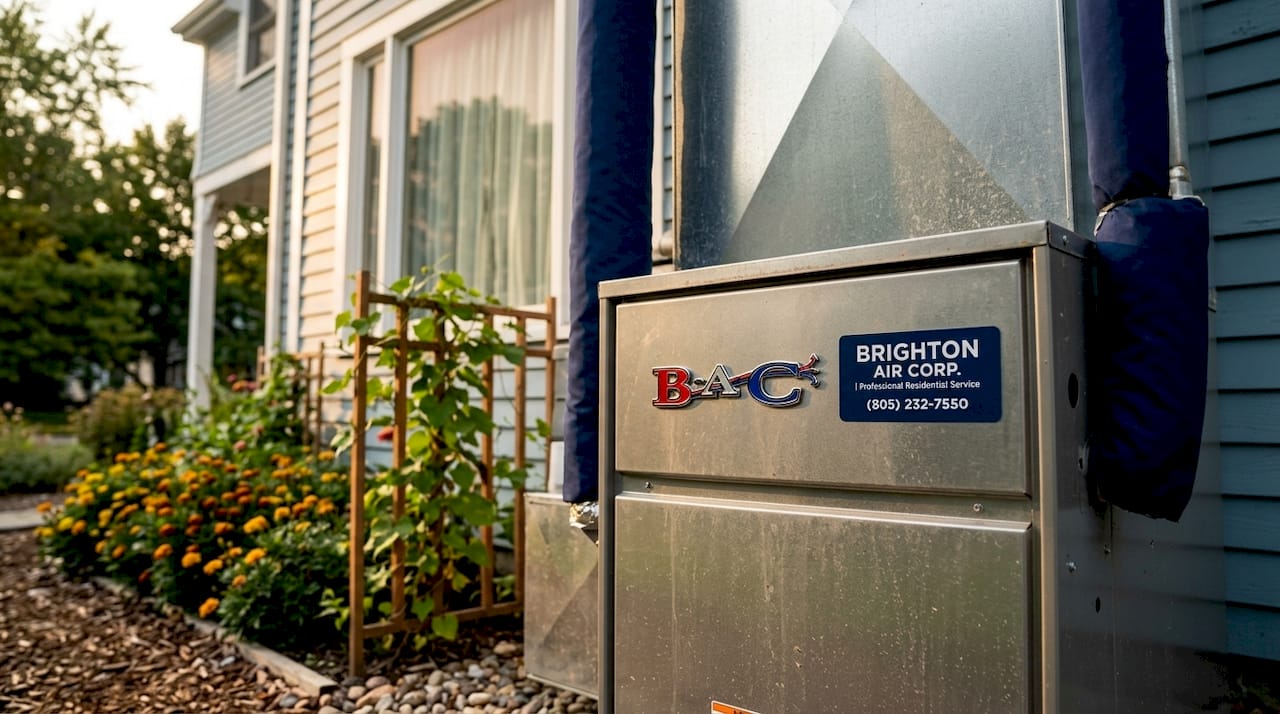
An HVAC system is defined as a coordinated mechanical setup that provides heating, ventilation, and air conditioning to regulate temperature, humidity, and air quality in residential, commercial, and industrial buildings. HVAC stands for Heating, Ventilation, and Air Conditioning. Unlike a standalone window AC unit or a space heater, a full HVAC system manages your entire indoor climate as one integrated network. Brands like Bryant, Carrier, and Lennox build systems designed to work as a whole, not as separate appliances. Understanding how your HVAC system works is the first step toward making smarter decisions about comfort, energy costs, and maintenance.
What is an HVAC system and what does it include?
An HVAC system is not just air conditioning. It is a complete climate control system that handles heating and ventilation alongside cooling. That distinction matters because most comfort and air quality problems in homes trace back to one of the three functions being neglected or out of balance.
The core components of a residential HVAC system include:
- Heating unit: A furnace burns natural gas or propane to generate heat. A boiler heats water and distributes it through radiators or radiant floor systems. A heat pump transfers heat from outdoor air into the home during winter.
- Cooling unit: A central air conditioner removes heat from indoor air and expels it outside. A heat pump in cooling mode does the same job using the same refrigerant cycle in reverse.
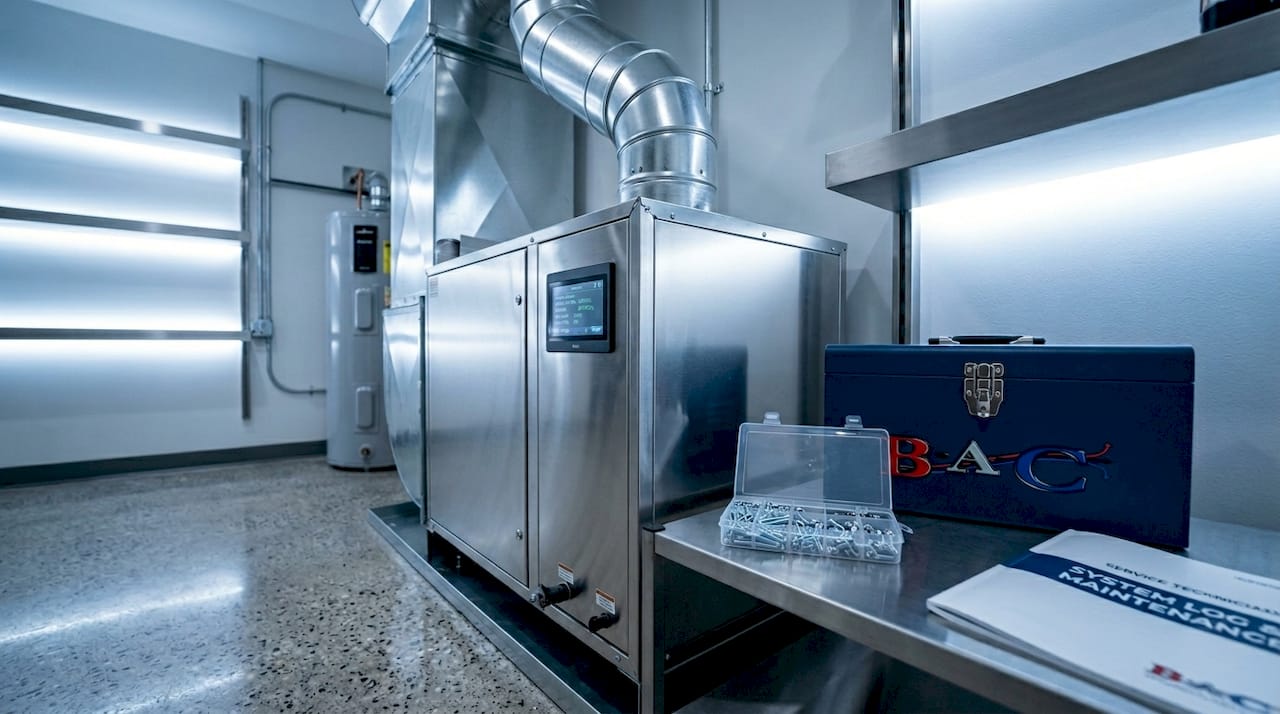
- Air handler: This unit circulates conditioned air through the home. It contains the blower fan, evaporator coil, and filter housing.
- Ductwork: Sheet metal or flexible ducts carry heated or cooled air from the air handler to every room and return stale air back for reconditioning.
- Thermostat and controls: Smart thermostats like the Ecobee SmartThermostat or Honeywell T6 Pro regulate when and how the system runs, based on your temperature settings and schedules.
- Filtration components: MERV-rated filters trap dust, pollen, and particulates before air recirculates through the system.
The heating, cooling, and airflow functions work in concert rather than independently. When one component underperforms, the entire system feels it.
Pro Tip: Replace your air filter every 60 to 90 days for standard 1-inch filters, or every 6 to 12 months for thicker 4-inch media filters. A clogged filter forces the blower to work harder and reduces airflow to every room.
Ducted vs. ductless: how do the main HVAC types compare?
The two primary HVAC configurations are ducted central systems and ductless mini-split systems. Each has real advantages depending on your home’s layout, age, and comfort goals.
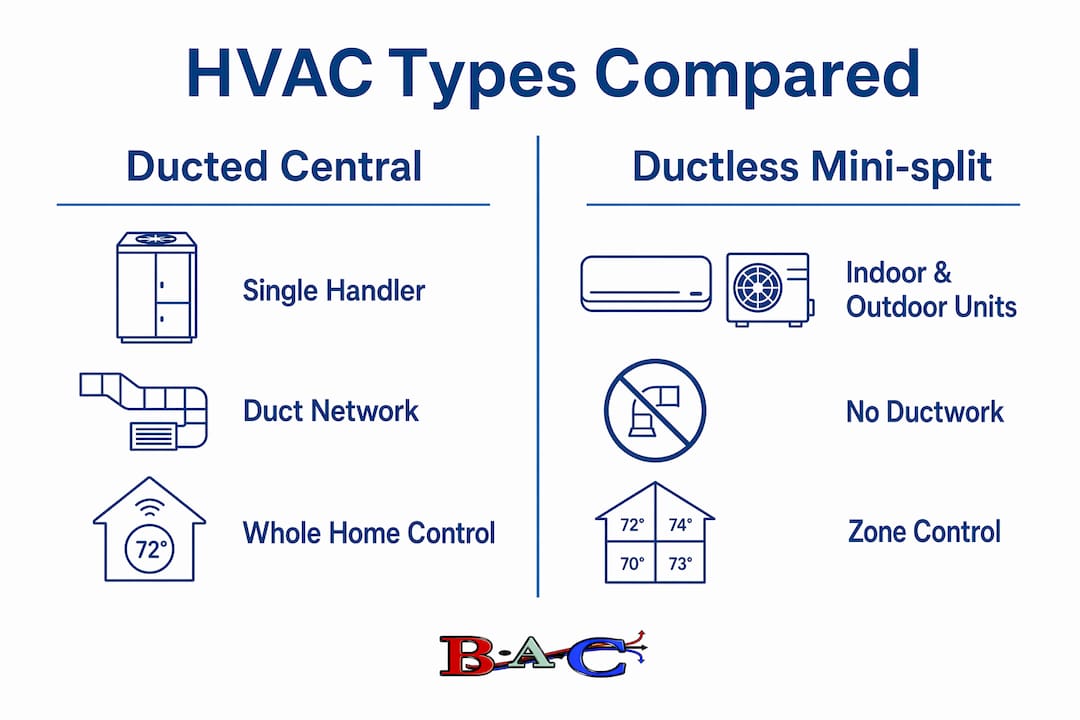
Ducted central HVAC uses a single air handler connected to a network of ducts. One thermostat controls the whole home, though zoning dampers can divide the system into independently controlled areas. Central systems work well in homes built with ductwork already in place and are the most common setup in New Jersey residential construction.
Ductless mini-split systems use indoor and outdoor units connected by refrigerant lines without any ductwork. Each indoor unit serves one room or zone and has its own remote or wall control. Mini-splits are popular for room additions, older homes without existing ducts, and garages converted to living space.
| Feature | Ducted central HVAC | Ductless mini-split |
|---|---|---|
| Installation complexity | Moderate to high (ductwork required) | Lower (no ductwork needed) |
| Zoning capability | Limited without dampers | Built-in, room by room |
| Energy efficiency | Can lose 20%+ through duct leakage | High efficiency, direct delivery |
| Best application | Whole-home with existing ducts | Additions, older homes, targeted zones |
| Upfront cost | Moderate for existing duct homes | Higher per zone, lower overall for small spaces |
| Maintenance | Duct sealing and filter changes | Filter cleaning, coil inspection |
One important nuance: ductless systems require careful zoning design. Adding one mini-split unit to a large open floor plan and expecting whole-home comfort is a common mistake. Under-zoning leaves certain areas uncomfortable even when the unit itself functions correctly. A proper load calculation before installation prevents this problem.
For property managers overseeing multi-unit buildings, a split system commercial HVAC setup often combines central air handling with individual zone controls per unit. This gives tenants control over their own comfort without affecting neighboring spaces.
How does HVAC maintain air quality beyond temperature control?
Comfort and indoor air quality are interdependent. Your HVAC system does not just heat or cool the air. It filters contaminants, controls humidity, and brings in fresh outdoor air through the ventilation component. Most homeowners focus on temperature and ignore the other two functions until something goes wrong.
Ventilation serves three specific purposes in a residential HVAC system:
- Diluting indoor pollutants: Cooking odors, volatile organic compounds from furniture and paint, and carbon dioxide from occupants all accumulate without fresh air exchange.
- Controlling humidity: High humidity above 60% encourages mold growth and dust mites. Low humidity below 30% causes dry skin, static electricity, and wood shrinkage. HVAC systems with whole-home humidifiers and dehumidifiers maintain the 40% to 50% range that most people find comfortable.
- Supporting efficient operation: Effective ventilation manages humidity and contaminants in ways that reduce the load on heating and cooling equipment. A well-ventilated home requires less energy to maintain a set temperature.
Poor filtration compounds these problems. A filter that has not been changed in six months restricts airflow and allows fine particles to coat the evaporator coil. A dirty coil transfers heat poorly, which means your system runs longer cycles to reach the same temperature. This raises your energy bill and shortens equipment life.
Pro Tip: If anyone in your home has allergies or asthma, upgrade to a MERV 11 or MERV 13 filter. These capture finer particles than standard MERV 8 filters without significantly restricting airflow in most residential systems.
Practical considerations for homeowners and property managers
Understanding what an HVAC system is only gets you so far. The real value comes from knowing what it costs, what breaks, and how to keep it running well.
What does HVAC replacement cost in 2026?
HVAC replacements in 2026 cost between $5,000 and $28,000, with most homeowners in a 2,000-square-foot home paying $7,000 to $20,000 for a combined central air conditioner and furnace. That range reflects significant variation in equipment efficiency ratings, brand tier, and installation complexity. Adding new ductwork or upgrading electrical service pushes costs toward the higher end.
Common causes of uneven heating and cooling
Uneven temperatures across rooms are one of the most frequent complaints from homeowners and tenants. The cause is rarely a failing furnace or compressor. Uneven temperatures most often trace to airflow and ductwork issues, including leaky duct connections, blocked return vents, or improperly balanced dampers.
The most effective maintenance steps to address this are:
- Seal duct connections with mastic sealant or metal tape (not standard duct tape, which fails over time).
- Check that all supply and return vents are open and unobstructed by furniture or rugs.
- Calibrate thermostat controls to confirm they read actual room temperature accurately.
- Change filters on schedule to maintain proper airflow pressure throughout the duct system.
- Schedule a professional airflow balance test if comfort problems persist after the above steps.
Key maintenance data for residential HVAC
| Maintenance task | Recommended frequency | Impact if skipped |
|---|---|---|
| Air filter replacement | Every 60 to 90 days | Reduced airflow, higher energy use |
| Coil cleaning | Annually | Poor heat transfer, longer run cycles |
| Duct inspection | Every 3 to 5 years | Energy loss, uneven comfort |
| Thermostat calibration | Annually | Inaccurate temperature control |
| Full system tune-up | Once per season | Shortened equipment lifespan |
Upgrading an HVAC system means replacing not just the main unit but often ductwork, electrical wiring, thermostats, and filters to maintain system integration. Treating it as a single-appliance swap is the most expensive mistake a property owner can make. For property managers in New Jersey, proper HVAC maintenance documentation also supports compliance during property inspections.
Key takeaways
An HVAC system works because heating, ventilation, and air conditioning function as one coordinated system, and neglecting any single component degrades the performance of the whole.
| Point | Details |
|---|---|
| HVAC is a complete system | It covers heating, ventilation, and cooling together, not just temperature control. |
| Components work together | Furnaces, air handlers, ductwork, and thermostats must all perform in balance. |
| Ducted vs. ductless trade-offs | Mini-splits offer room-level zoning; central systems suit homes with existing ductwork. |
| Air quality depends on HVAC | Filtration, humidity control, and ventilation directly affect occupant health and comfort. |
| Replacement costs vary widely | Budget $7,000 to $20,000 for most whole-home replacements in 2026, more with ductwork upgrades. |
Why most HVAC problems are maintenance problems in disguise
After working with HVAC systems across New Jersey for years, the pattern I see most often is this: homeowners call about a broken system when the real problem is a neglected one. A furnace that short-cycles in January almost always has a dirty filter or a blocked return vent. A central AC that cannot cool the upstairs in August usually has a refrigerant leak that started small and went unnoticed for two seasons.
The industry tends to frame HVAC as equipment. Buy the right brand, get the right SEER rating, and you are set. That framing sells units, but it does not serve homeowners. What actually determines comfort is how well the entire system, including ductwork, controls, filtration, and ventilation, is maintained as a whole. I have seen brand-new Lennox and Carrier installations underperform within two years because the ductwork feeding them was never sealed or balanced.
The homeowners and property managers who get the most out of their systems are the ones who treat HVAC maintenance the way they treat a car service schedule. They do not wait for a breakdown. They prepare their system seasonally and document what was done. That habit alone extends equipment life and prevents the $15,000 emergency replacement calls I see every winter.
— John
How Brighton Air Corp can help with your HVAC system
Whether you are trying to understand your current setup or planning a full replacement, the right HVAC partner makes the difference between a system that lasts 20 years and one that fails in 10.
Brighton Air Corp has served New Jersey homeowners and property managers since 1993, with over 150 years of combined technician expertise across residential and commercial HVAC systems. The team handles everything from furnace and AC installations to duct sealing, thermostat upgrades, and 24/7 emergency repairs. If you are dealing with uneven temperatures, rising energy bills, or an aging system, Brighton Air Corp offers free estimates and financing options to make the right solution accessible. Visit Brighton Air Corp to schedule a consultation or request emergency service today.
FAQ
What does HVAC stand for?
HVAC stands for Heating, Ventilation, and Air Conditioning. The term describes the complete system that manages indoor temperature, airflow, and air quality in residential and commercial buildings.
How does an HVAC system work?
An HVAC system heats or cools air using a furnace, heat pump, or air conditioner, then circulates it through ductwork or directly into rooms via an air handler. The thermostat controls when each function activates based on your set temperature.
What is the difference between a ducted and ductless HVAC system?
A ducted system uses a central air handler and ductwork to distribute conditioned air throughout the home, while a ductless mini-split delivers air directly to individual rooms through wall-mounted units without any ducts. Ductless systems offer better zoning control but require one indoor unit per zone for full coverage.
What is a commercial HVAC system?
A commercial HVAC system serves office buildings, retail stores, and industrial facilities using larger-capacity equipment and more complex zoning than residential systems. What is an industrial HVAC system differs further in that it must handle extreme temperature ranges, chemical exposure, and continuous operation demands that standard commercial equipment cannot meet.
How often should an HVAC system be serviced?
Most HVAC systems need a professional tune-up once per season, meaning once before summer cooling and once before winter heating. Filter changes every 60 to 90 days and annual coil cleaning keep the system running at full efficiency between service visits.
Recommended
- Cranford Westfield Summit Scotch Plns Fanwood Kenilworth Clark Rahway Livingston AC Repair Install Service HVAC Contractor Emergency Heat Pump Repair HVAC System Installation
- Cranford Westfield Summit Scotch Plns Fanwood Kenilworth Clark Rahway Livingston AC Repair Install Service HVAC Contractor Emergency Heat Pump Repair HVAC System Installation
- Cranford Westfield Summit Scotch Plns Fanwood Kenilworth Clark Rahway Livingston AC Repair Install Service HVAC Contractor Emergency Heat Pump Repair HVAC System Installation
- Cranford Westfield Summit Scotch Plns Fanwood Kenilworth Clark Rahway Livingston AC Repair Install Service HVAC Contractor Emergency Heat Pump Repair HVAC System Installation