
What Causes AC Compressor Failure: A Homeowner's Guide
What Causes AC Compressor Failure: A Homeowner’s Guide
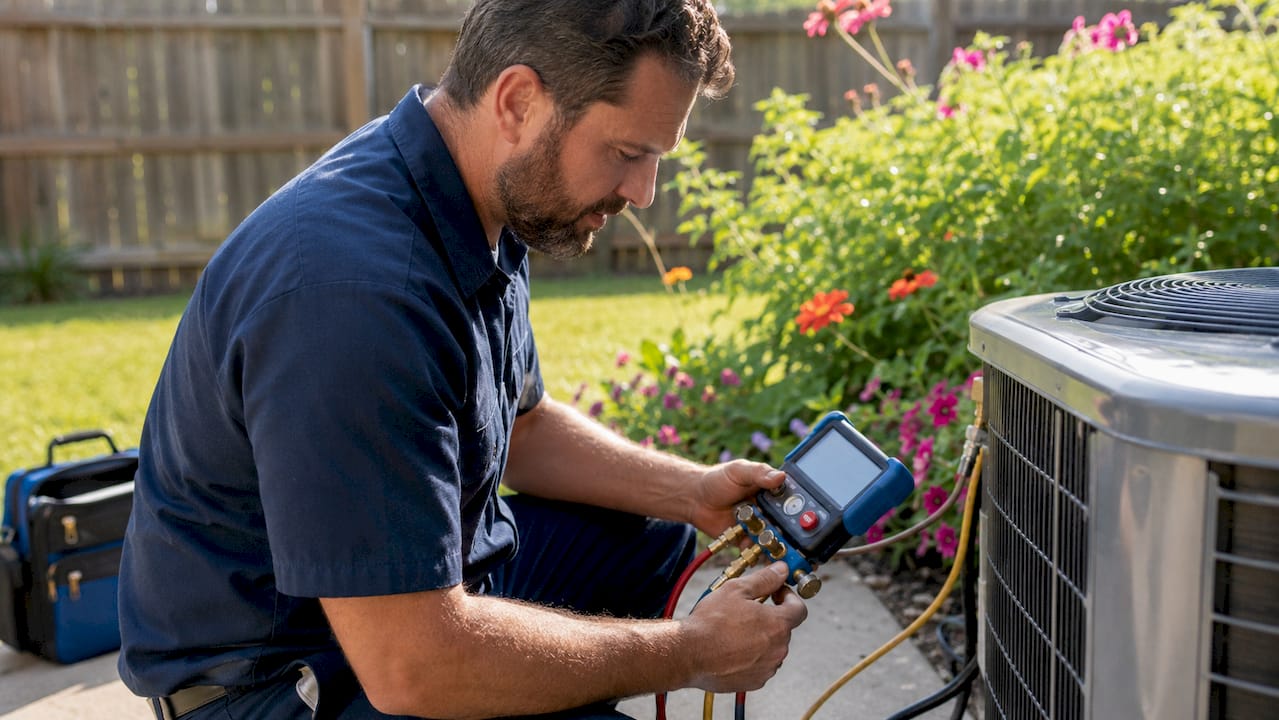
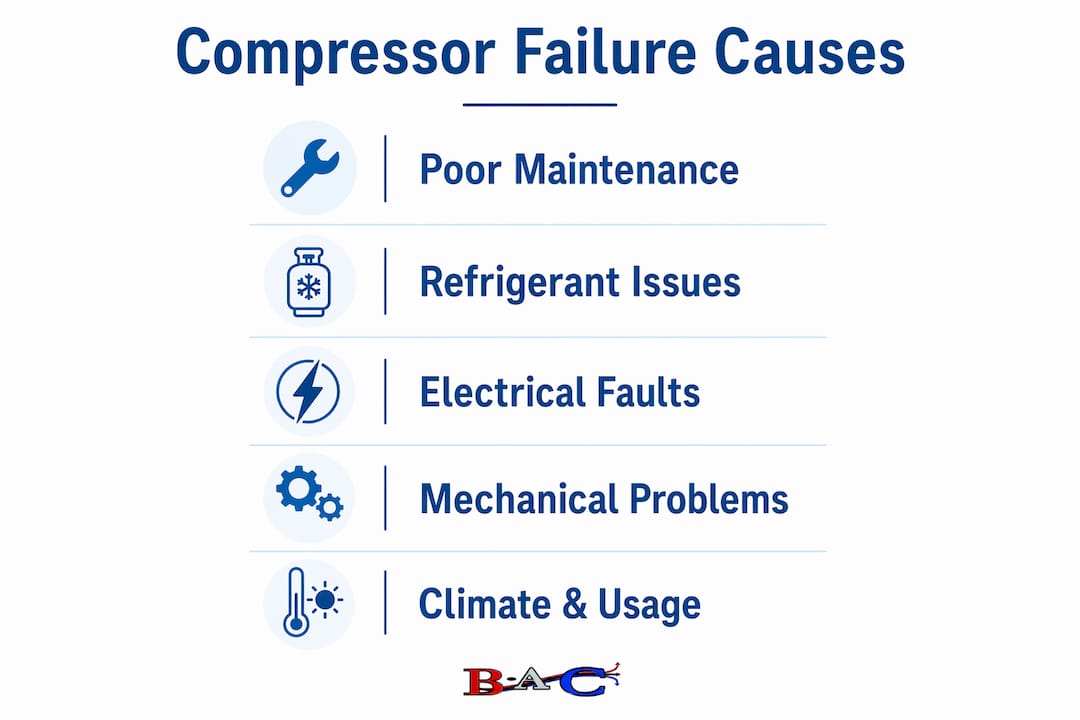
AC compressor failure is defined as the breakdown of the component that pressurizes refrigerant and drives the entire cooling cycle in your air conditioning system. The three primary causes are poor maintenance, refrigerant mismanagement, and electrical faults. Compressors typically last 10–15 years depending on climate and how hard the system works. New Jersey homeowners running their systems through long, humid summers often see that lifespan shrink without consistent upkeep. Knowing what causes ac compressor failure puts you in a position to prevent it, not just react to it.
What causes AC compressor failure most often?
Poor maintenance is the single most preventable driver of compressor damage. When routine service gets skipped, the compressor compensates for every other problem in the system until it gives out. Refrigerant issues and electrical faults follow close behind, and all three causes frequently overlap.
The compressor is the most expensive component in your AC system, often costing $1,000–$2,500 or more to replace. That cost makes understanding the root causes worth your time before a breakdown forces the conversation.
How does maintenance neglect damage the compressor?
Dirty condenser coils are one of the fastest paths to compressor failure. Dirty coils reduce efficiency by as much as 30%, which forces the compressor to run hotter and longer to meet the same cooling demand. That extra heat accelerates wear on internal parts and shortens the compressor’s working life.
Clogged air filters make the problem worse. When airflow is restricted, the evaporator coil freezes over. A frozen coil sends liquid refrigerant back to the compressor instead of vapor. Compressors are built to compress gas, not liquid, so liquid slugging causes immediate mechanical damage.
Neglected maintenance also means missed early warnings. A technician doing a seasonal checkup catches a failing capacitor or a refrigerant leak before it becomes a compressor replacement. Skipping that visit means those small problems quietly compound.
Key maintenance tasks that protect the compressor:
- Change air filters monthly during peak cooling season
- Clear debris from around the outdoor condenser unit
- Schedule professional tune-ups at least once a year, ideally in spring
- Clean condenser coils annually or more often in dusty environments
- Check drain lines to prevent moisture buildup near electrical components
Pro Tip: Set a phone reminder for the first week of april each year to book your AC tune-up. Scheduling before the summer rush means faster service and a compressor that starts the season in good shape.
Following a seasonal HVAC checklist gives you a structured way to stay ahead of these tasks without guessing what needs attention.
How do refrigerant problems cause compressor failure?
Refrigerant does two jobs: it carries heat out of your home, and it lubricates the compressor. Low refrigerant means less lubrication, which means the compressor runs hotter and its internal parts wear faster. A refrigerant undercharge on top of fouled coils cuts system capacity by an additional 3–4%, creating a compounding problem that is easy to misread as a failing compressor.
Overcharging is equally damaging. Overcharging refrigerant without measuring subcooling and superheat causes liquid slugging and dangerous head pressure spikes. Both conditions stress the compressor in ways that lead to premature failure.
Common signs of refrigerant problems include:
- Ice forming on the refrigerant lines or evaporator coil
- Warm air blowing from vents despite the system running
- Hissing or bubbling sounds near the indoor or outdoor unit
- Higher than normal electric bills without a change in usage
Topping off refrigerant without finding and fixing the leak is one of the most common mistakes homeowners and even some technicians make. The refrigerant will escape again, the compressor will run dry again, and the second failure happens faster than the first. The only correct fix is to locate the leak, repair it, and then recharge to the manufacturer’s specification.
Reducing the heat load on your home also reduces how hard the compressor works. Window tinting is one practical way to cut indoor heat gain and lower the demand on your refrigerant system during peak summer hours.
What electrical faults lead to compressor damage?
Electrical problems are responsible for a large share of what looks like compressor failure but often is not. Many apparent compressor failures are actually failed capacitors, contactors, or pressure switches that prevent the compressor from starting. Replacing the compressor without testing these upstream components wastes thousands of dollars.
Voltage imbalances are a subtler threat. A voltage imbalance of just 3–4% can spike motor winding temperatures significantly, accelerating insulation breakdown inside the compressor motor. Grid instability during summer peak demand periods makes this a real risk in many neighborhoods.
Warning signs homeowners should report to a technician right away:
- The circuit breaker trips when the AC turns on
- The outdoor unit hums but the fan or compressor does not start
- The system short-cycles, turning on and off every few minutes
- Burning or electrical smells near the air handler or outdoor unit
- Visible scorch marks or melted wiring on any component
Pro Tip: Never reset a tripped breaker more than once without calling a technician. Repeated resets on a struggling compressor motor can turn a fixable electrical fault into a full compressor burnout.
Understanding the HVAC diagnostic process helps you know what a technician is actually checking and why that evaluation matters before any parts get ordered.
Other mechanical causes of compressor failure
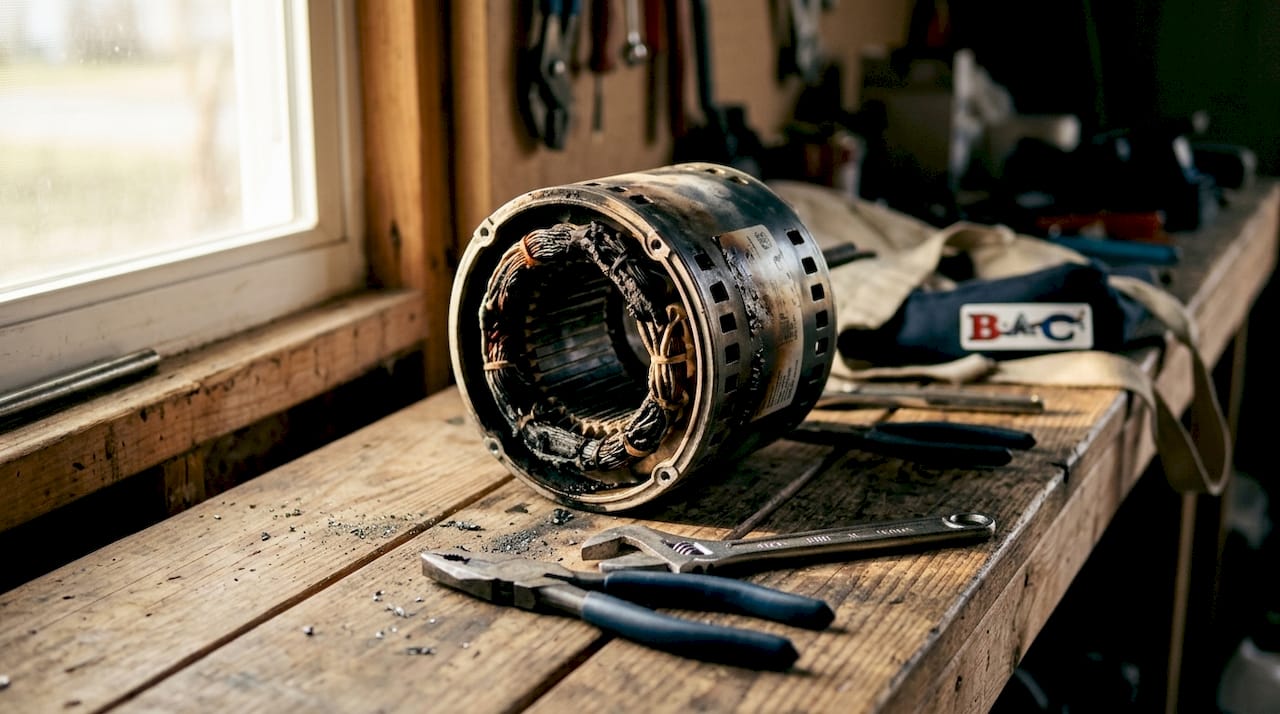
Moisture inside the refrigerant circuit is a serious and underappreciated threat. Moisture causes acid formation that chemically degrades the compressor motor’s insulation. Once insulation breaks down, the motor shorts internally and the compressor fails. This type of damage is not visible from the outside, which is why it often goes undetected until the unit stops working entirely.
Suction line blockages create pressure imbalances that force the compressor to work against abnormal conditions. Over time, that strain causes mechanical wear on pistons, valves, and bearings. Age-related wear is unavoidable, but system stress accelerates it.
| Cause | Effect on compressor | Repair approach |
|---|---|---|
| Acid contamination | Motor insulation breakdown | Full system flush and evacuation |
| Suction line blockage | Pressure imbalance and mechanical strain | Clear blockage, inspect valves |
| Normal age-related wear | Gradual loss of compression efficiency | Preventive maintenance or replacement |
| Motor burnout residue | Rapid failure of replacement compressor | Proper evacuation required after burnout |
One detail that catches many homeowners off guard: if a compressor fails due to motor burnout and the system is not fully flushed before a new compressor is installed, acid residue will destroy the replacement unit quickly. The repair quality matters as much as the replacement part.
How do climate and usage patterns affect compressor life?
Compressors in hot, humid regions run significantly more hours per year than those in mild climates. Higher annual operating hours in hot regions cause earlier mechanical wear and raise the risk of failure without consistent maintenance. New Jersey summers combine heat and humidity in a way that puts real stress on residential systems.
Usage intensity also matters. A system running 16 hours a day in july accumulates wear faster than one running 8 hours a day. Property managers overseeing multiple units should factor regional climate into their maintenance schedules, not just follow a generic annual plan.
Reducing the heat load your AC system carries is one of the most effective ways to extend compressor life. Practical steps like preventing window heat gain reduce how often the compressor cycles on and how long each cycle runs. Fewer cycles mean less wear over the life of the system.
Early detection of upstream issues through frequent maintenance is the most reliable way to offset the effects of a demanding climate. A technician who visits annually in a mild climate should visit twice a year in a region with long, hot summers.
Key Takeaways
AC compressor failure is almost always traceable to poor maintenance, refrigerant mismanagement, or electrical faults, and addressing these root causes is far cheaper than replacing the compressor.
| Point | Details |
|---|---|
| Maintenance prevents most failures | Dirty coils and clogged filters force the compressor to overwork and overheat. |
| Refrigerant must be correct | Both undercharging and overcharging damage the compressor through different mechanisms. |
| Electrical faults mimic compressor failure | Test capacitors and contactors before assuming the compressor itself has failed. |
| Moisture causes acid damage | A system flush after motor burnout is required to protect any replacement compressor. |
| Climate increases maintenance frequency | Hot, humid regions demand more frequent service to offset higher annual operating hours. |
What I’ve learned after watching too many avoidable replacements
The pattern I see most often is this: a homeowner skips two or three annual tune-ups, the system starts blowing warm air, and the assumption is that the compressor is dead. Sometimes it is. But a surprising number of those calls turn out to be a failed capacitor, a refrigerant leak that has been slow-draining the charge for two seasons, or a contactor that stopped closing properly. The compressor itself is fine. The fix costs a fraction of a replacement.
The other mistake I see regularly is the “top off” approach to refrigerant. A technician adds refrigerant without finding the leak, the homeowner gets cool air for another summer, and then the compressor fails the following year because it ran with inadequate lubrication for months. Root cause diagnosis is not optional. It is the only thing that actually solves the problem.
My honest advice: treat your AC system the way you treat your car. You would not skip oil changes and then act surprised when the engine fails. The compressor is the engine of your cooling system. Electrical and refrigerant work require a licensed technician. Changing filters and keeping the outdoor unit clear are things you can do yourself. That division of responsibility is the right one.
If your system is showing any of the warning signs covered here, do not wait for a full breakdown. The cost of a diagnostic visit is a fraction of what a compressor replacement runs. And if a technician recommends replacing the compressor without first testing the capacitors, contactors, and refrigerant charge, get a second opinion.
— John
Brightonaircorp keeps your compressor running longer
Brightonaircorp has served New Jersey homeowners and property managers since 1993, with over 150 years of combined technician expertise across residential and commercial systems.

When your AC shows signs of trouble, Brightonaircorp’s licensed technicians run a full diagnostic before recommending any repair. That means checking electrical components, refrigerant charge, airflow, and mechanical condition, not just swapping parts. Seasonal maintenance plans are available for both single-family homes and multi-unit properties, calibrated to New Jersey’s demanding summer climate. Schedule an AC inspection with Brightonaircorp and get a clear picture of your system’s health before a small problem becomes a compressor replacement.
FAQ
What is the most common cause of AC compressor failure?
Poor maintenance is the leading cause, specifically dirty condenser coils and clogged filters that force the compressor to overheat. Refrigerant leaks and electrical faults follow as the next most frequent drivers.
How do I know if my compressor is failing or if it’s another part?
Symptoms like a tripping breaker, a humming outdoor unit that does not start, or warm air from vents can all point to a failed capacitor or contactor rather than the compressor itself. A licensed technician should test upstream electrical components before any compressor replacement is recommended.
Can low refrigerant destroy a compressor?
Yes. Low refrigerant reduces lubrication inside the compressor, causing it to run hot and wear out faster. Running a system with a known refrigerant leak without repairing it will eventually cause compressor failure.
How long should an AC compressor last?
A well-maintained compressor typically lasts 10–15 years. Systems in hot, humid climates that run more annual hours may reach the lower end of that range without consistent professional maintenance.
Should I repair or replace a failed compressor?
The answer depends on the system’s age, the cost of the compressor, and whether the root cause of failure has been identified and fixed. Replacing a compressor without correcting the underlying problem, such as acid contamination or a refrigerant leak, leads to rapid failure of the new unit.