
How to Temporarily Heat Your Home During an Outage
How to Temporarily Heat Your Home During an Outage
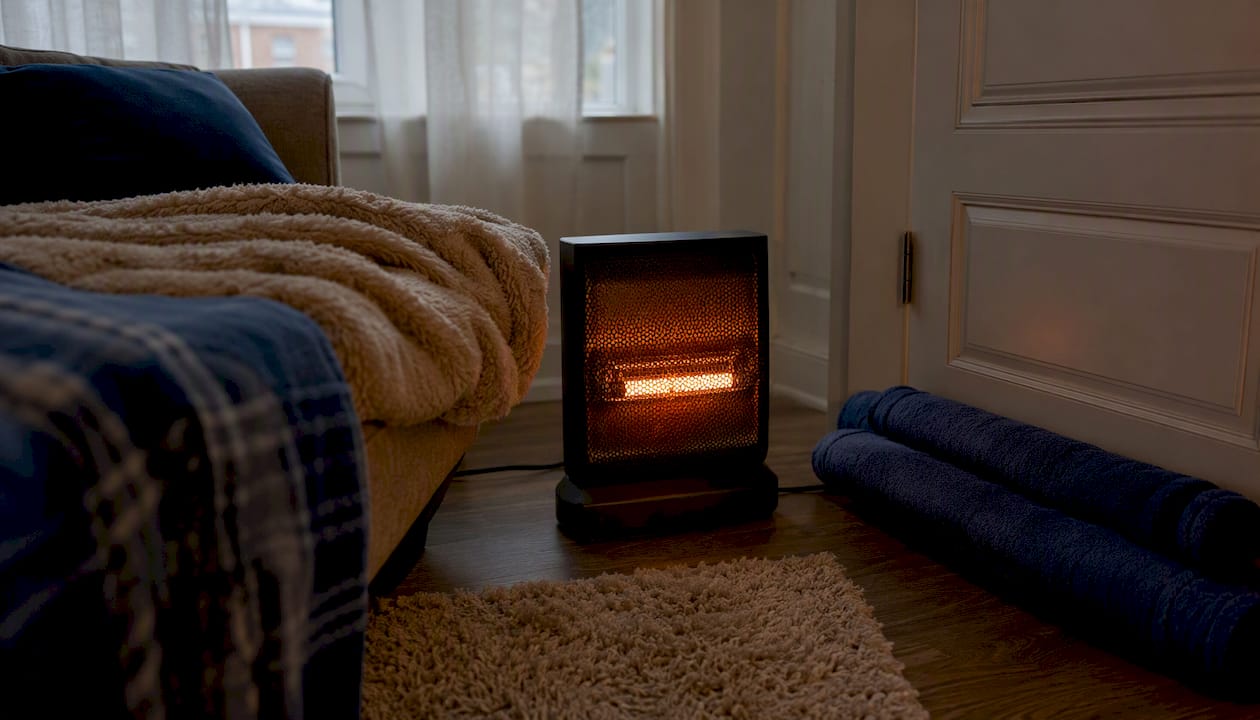
The safest way to temporarily heat your home during an outage is to consolidate everyone into one interior room, layer up with blankets and clothing, and use only battery-powered or properly vented heat sources. Do not use your gas oven, charcoal grill, or a gasoline generator indoors. The CDC is direct on this: those practices produce carbon monoxide (CO), a colorless, odorless gas that kills.
Immediate actions to take right now:
- Check that smoke and CO alarms are working (battery backup required)
- Move everyone, including pets, into one room and close the doors
- Gather blankets, sleeping bags, and warm clothing
- If you own a generator, move it outside immediately, at least 20 feet from any window, door, or vent
- Charge your phone and notify family or local authorities if anyone in the home depends on powered medical equipment
Key Takeaways
Keeping your household safe during a heating outage comes down to one principle: use only heat sources designed for indoor use, and get everyone into a single insulated space before temperatures drop.
| Point | Details |
|---|---|
| Never use combustion appliances indoors | Gas ovens, charcoal grills, and camp stoves produce lethal CO; the CDC prohibits this practice. |
| Generators belong outdoors, 20+ feet away | Ready.gov requires at least 20 feet from windows, doors, and vents; CO builds to lethal levels in minutes indoors. |
| Consolidate into one room immediately | A smaller sealed space retains heat far longer than an open floor plan. |
| Test CO and smoke alarms monthly | Use battery-backup units on every level and outside sleeping areas per CPSC guidance. |
| Brightonaircorp provides 24/7 emergency service | New Jersey homeowners can schedule emergency HVAC repair or generator inspection any time. |
This article is general information, not a substitute for advice from a qualified doctor. Consult a qualified healthcare professional about your own circumstances before acting on anything here.
Table of Contents
- What to do in the first hour after power goes out
- Safe temporary heating options and how to use each one
- Dangerous practices that cause CO poisoning and fires
- Heat-conservation steps that extend warmth without fuel
- How to recognize hypothermia and CO poisoning
- Your recovery and preparedness checklist
- When staying home is too risky
- A note from Brighton Air Corp
- Brightonaircorp is ready when your heat goes out
- Sources
What to do in the first hour after power goes out
Life-safety comes first. Walk through the house and confirm your smoke and CO alarms are functioning. CPSC guidance recommends battery-operated units or alarms with battery backup installed on every level and outside sleeping areas. If anyone uses a powered medical device, call their provider and local emergency services now, before the situation becomes urgent.
Next, consolidate. Pick one room, ideally an interior room on an upper floor or a south-facing room that gets passive solar gain. Close every door between that room and the rest of the house. Stuff towels or rolled blankets against door gaps. Heat rises and concentrates, so a smaller space warms faster and stays warmer longer.
Pro Tip: Place a folded blanket or sleeping pad underneath you before lying down. Conductive heat loss to a cold mattress pulls warmth away from your body faster than cold air does.
| Priority | Action | Why it matters |
|---|---|---|
| 1 | Test CO and smoke alarms | CO builds silently; alarms are your only warning |
| 2 | Consolidate into one room | Smaller space retains heat far more efficiently |
| 3 | Layer clothing and blankets | Insulation on the body is immediate and costs nothing |
| 4 | Move generator outdoors | Indoor CO from generators reaches lethal levels in minutes |
| 5 | Charge devices, notify contacts | Communication is critical if conditions worsen |
Safe temporary heating options and how to use each one
Not all heat sources are equal during an outage. Here is a practical breakdown by fuel type, with the rules that keep each one safe.
Battery and solar power stations are the cleanest option for indoor use. The EPA confirms that battery- and solar-powered units produce no fumes and are safer for small indoor loads. They can run a small electric space heater for several hours depending on capacity, and they charge phones, medical devices, and lights without any CO risk.
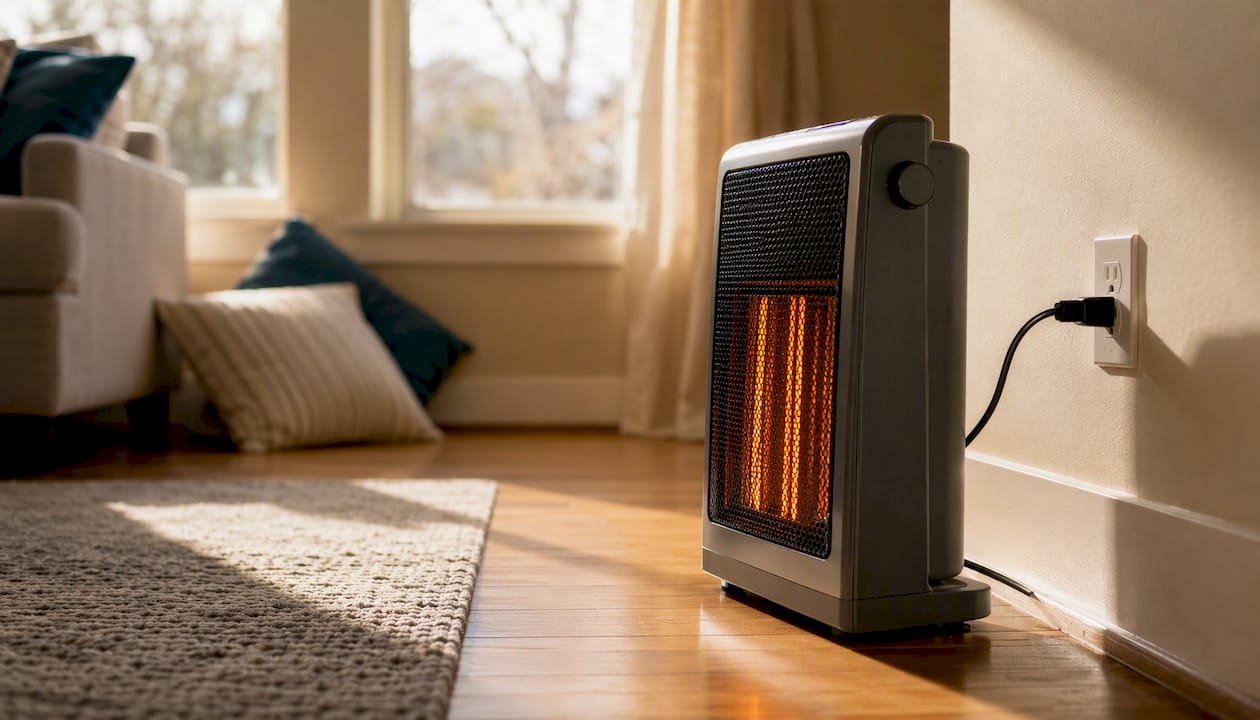
Electric space heaters work well when you have grid power or a battery station large enough to run them. Plug directly into a wall outlet only. Keep the heater at least 3 feet from curtains, bedding, and furniture. Turn it off before sleeping. Never use an extension cord or power strip.
Vented wood stoves and fireplaces are reliable for longer outages if the unit is properly installed, the chimney is clean, and you have dry wood. A fireplace that has not been inspected recently is a fire risk, not a solution.
Gasoline or propane generators can power electric heaters indirectly, but only when operated correctly. Ready: run generators outdoors only, at least 20 feet from windows, doors, and vents, with exhaust pointed away from the building. Never run one in a garage, basement, or on a covered porch.
| Heat source | Indoor use | CO risk | Run-time factors | Best for |
|---|---|---|---|---|
| Battery/solar station | Yes | None | Battery capacity | Short outages, medical devices, phones |
| Electric space heater | Yes (wall outlet only) | None | Grid or battery power | Spot heating one room |
| Vented solid-fuel (fireplace/stove) | Yes (properly vented) | Low if vented correctly | Fuel supply | Longer outages with dry wood |
| Gasoline/propane generator | Outdoors only | High if misused | Fuel supply | Running electric appliances indirectly |
Dangerous practices that cause CO poisoning and fires
Some of the most common improvised heating methods during outages are also the most lethal.
Gas ranges and ovens, charcoal grills, and camp stoves all produce CO when burned indoors. The CPSC estimates that several hundred people died from CO poisoning associated with generators alone during that period. Many Americans die each year from unintentional CO poisoning not linked to fires, with thousands hospitalized.
A common and dangerous misconception: cracking a window or door does not make indoor generator use safe. CPSC confirms that partial ventilation cannot prevent lethal CO buildup from a running generator or grill indoors. Even running a generator on a covered porch or in a carport puts occupants at risk because exhaust migrates back into the home.
Fire risks are equally serious. Space heaters placed too close to curtains or bedding, heaters left running overnight, and electric heaters plugged into extension cords are all leading causes of outage-related house fires.
Heat-conservation steps that extend warmth without fuel
Keeping heat in is just as important as generating it. These tactics cost nothing and work immediately.
- Pick one room and seal it. Close all interior doors, stuff towels under gaps, and hang a blanket over the doorway if the door does not seal well.
- Cover windows at night. Close heavy drapes or hang blankets over windows after dark to block radiant heat loss. During daylight, open south-facing window coverings to capture solar gain.
- Cover cold floors. Bare floors pull heat from your feet. Lay down rugs, folded blankets, or sleeping pads.
- Layer clothing strategically. Wool and synthetic base layers trap heat better than cotton. Cover your head and neck. A fleece hood or balaclava can feel more effective than adding another jacket because the head and neck are high-loss thermal zones.
- Avoid alcohol and caffeine. Both increase heat loss from the body. Warm broth or water is a better choice.
Improving your home’s energy efficiency before an outage, through better insulation and draft sealing, directly reduces how fast indoor temperatures drop when the heat goes out.
Establish your warm room before the indoor temperature drops below 55°F. Reheating a cold room takes far more energy than maintaining a warm one. If your home is already at 58°F, act now.
How to recognize hypothermia and CO poisoning
Hypothermia warning signs:
- Mild: persistent shivering, cold skin, fatigue
- Moderate: confusion, slurred speech, loss of coordination
- Severe: slow or stopped breathing, loss of consciousness
For mild symptoms, add layers, move to a warmer space, and drink warm (not hot) liquids. For moderate or severe symptoms, call 911 immediately. Do not rub the person’s limbs or give alcohol.
CO poisoning warning signs:
- Headache, dizziness, or nausea that improves when you go outside
- Confusion or disorientation
- Loss of consciousness
CO is colorless and odorless. You will not smell it. If your CO alarm sounds or anyone shows these symptoms, get everyone out of the house immediately, leave the door open, and call 911 from outside.
Test alarms monthly. Replace batteries at least once a year, or choose sealed 10-year battery units.
Your recovery and preparedness checklist
After the outage ends:
- Inspect furnace vents and flue pipes for snow, ice, or debris before restarting the system.
- Test all CO and smoke alarms and replace any batteries.
- Restock your emergency kit: batteries, bottled water, extra blankets, and a charged power bank.
- Schedule a professional HVAC inspection to check for any damage caused by the outage or temperature swings.
- If you own a generator, have a licensed technician inspect it before the next storm season.
Before the next outage:
- Add a battery or solar power station to your emergency kit.
- Write down local warming center addresses and the 2-1-1 helpline number.
- Keep a list of neighbors or family members who may need help during an outage.
- Review common causes of sudden heating system failure so you can catch problems before they leave you without heat.
Pro Tip: Annual generator maintenance by a licensed HVAC technician is the single most reliable way to confirm your backup power will actually start when you need it.
When staying home is too risky
Some situations require leaving. Do not wait to see if conditions improve.
- A CO alarm activates and does not reset after ventilating the space
- Anyone in the home shows moderate or severe hypothermia symptoms
- A household member depends on powered medical equipment and backup power is unavailable
- Indoor temperatures drop below 50°F and you have no safe heat source
- You cannot safely operate any heating option
Where to go:
- Call 2-1-1 to find the nearest warming center or emergency shelter
- Contact your local emergency management office or check their website for shelter locations
- Stay with friends or family who have heat
- If someone is in medical distress, call 911 directly
When leaving, turn off portable heaters, unplug appliances, and leave a note on the door with your destination and contact number for emergency responders.
A note from Brighton Air Corp
At Brightonaircorp, we have been responding to emergency heating calls across New Jersey since 1993, and the pattern is consistent: the most dangerous situations happen when homeowners improvise with equipment that was never designed for indoor use. A generator running in a garage, a gas oven left on overnight, a space heater plugged into an extension cord. These are not freak accidents; they are predictable outcomes of under-preparation.
Professional inspection and proper generator installation are not optional extras. A licensed technician can confirm your system will hold up before a storm hits, not after. If your heating system failed during a recent outage, understanding what causes sudden heating system failure is the first step toward making sure it does not happen again.
Brightonaircorp is ready when your heat goes out
When a heating outage hits New Jersey, Brightonaircorp offers 24/7 emergency HVAC repair, generator inspection and maintenance, and furnace diagnostics from technicians with over 150 years of combined experience. No waiting until Monday. No guessing whether your system is safe to restart.

If your furnace failed, your generator needs a pre-season check, or you want a professional to inspect your system before the next storm, schedule an emergency visit or request a generator inspection with Brightonaircorp today.
Sources
- Carbon Monoxide Poisoning Basics | Carbon Monoxide Poisoning | CDC
- Ready
- Cpsc
- Power outages and indoor air quality | EPA