
$6,000–$15,000 NJ Oil to Gas Conversion: Rebates, Timing, Tank Risks
$6,000–$15,000 NJ Oil to Gas Conversion: Rebates, Timing, Tank Risks
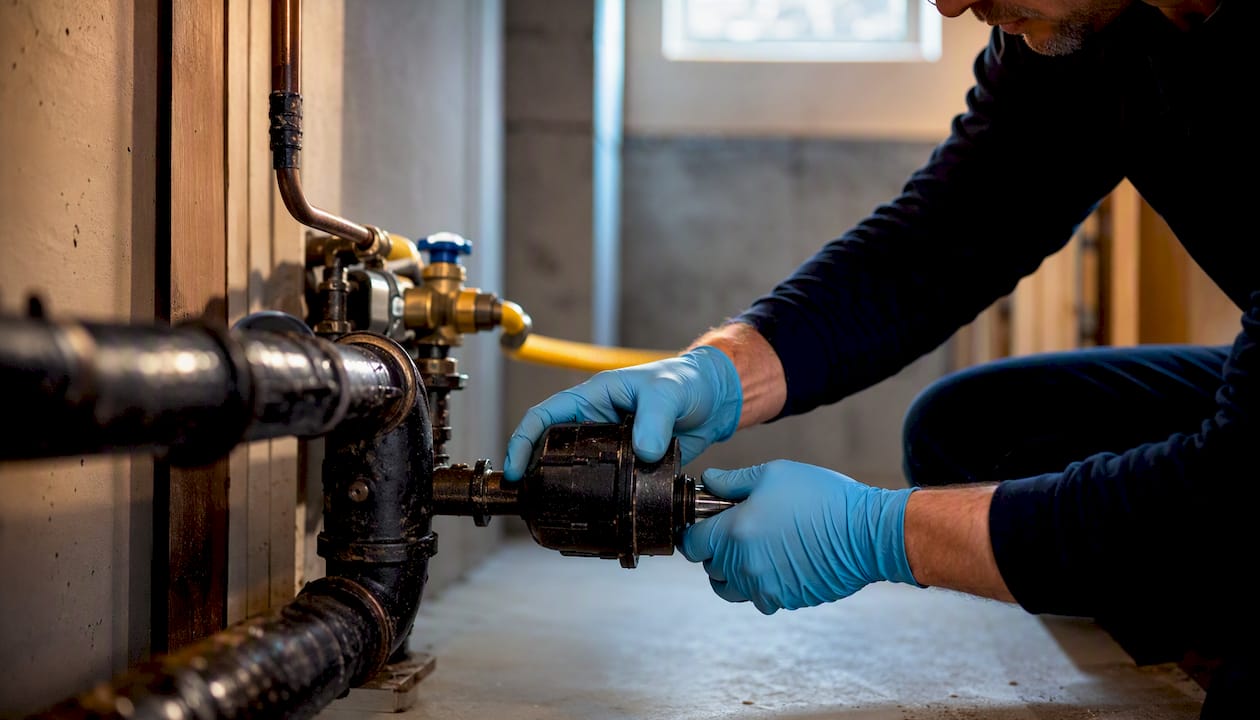
Most New Jersey homeowners typically spend several thousand dollars for a full oil to gas conversion, with lower costs common when gas service already runs near the house. The biggest cost swings come from four things: the new furnace or boiler, extending the gas line from the street, indoor piping and venting, and what happens to your old oil tank. Utility and NJ Clean Energy rebates can knock a chunk off that number, but only if you catch the deadlines.
TL;DR:
- Gas line extension costs can reach $12,000 to $15,000 or more for homes without existing service, mainly due to excavation and pipe length.
- Rebates from South Jersey Gas and Elizabethtown Gas typically cap at $1,500 to $1,750 per project, but claim deadlines are strict and require proper documentation.
- Utility-installed service line work usually takes four to six weeks, and scheduling indoor work prematurely can cause delays and budget overruns.
- Oil tank removal costs vary widely, with contaminated tanks requiring expensive remediation; only certified contractors should handle underground tank closures.
- Financing options, including utility on-bill repayment and 0% APR programs, are common and can significantly ease the upfront cost of conversion.
Table of Contents
- How Much Does Gas Conversion Cost in NJ, Line by Line?
- What Rebates Can Cut Your Gas Conversion Cost in NJ?
- How Long Does an Oil to Gas Conversion Take in NJ?
- When Does Oil Tank Removal Add Unexpected Cost?
- How Do You Budget and Pay for a Gas Conversion in NJ?
- What a Local NJ Contractor Actually Brings to This Job
- Get a Free Estimate for Your NJ Gas Conversion
- Sources
How Much Does Gas Conversion Cost in NJ, Line by Line?
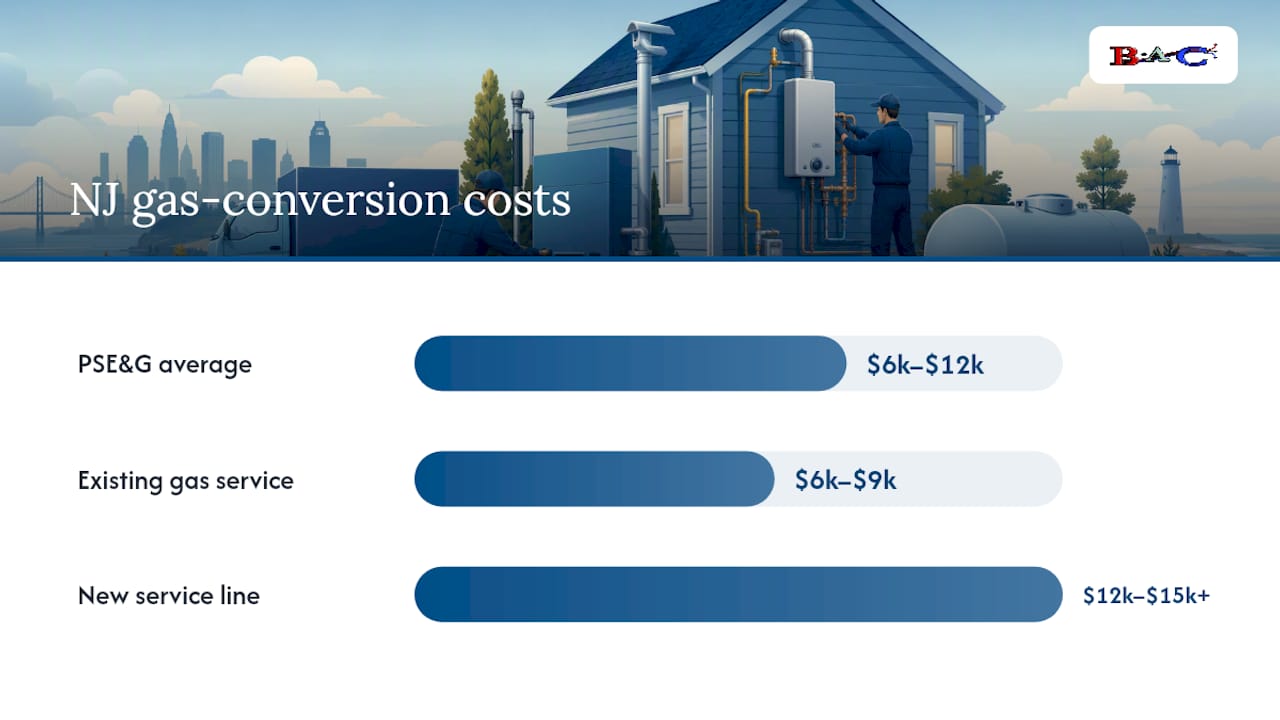
PSE&G puts the average conversion cost between $6,000 and $12,000, and that range holds up across most NJ utility territories. But “average” hides a lot of variation, so it helps to break the job into its actual pieces.
- New gas boiler or furnace: costs vary depending on efficiency rating and brand.
- Gas service line extension: varies widely based on distance from the street main.
- Indoor piping and labor: costs depend on the complexity of running gas lines and venting.
- Tank removal or closure: expenses differ greatly, especially if remediation is needed.
- Permits and inspections: fees vary by township.
Homes that already have gas service running to the street, maybe for a stove or dryer, tend to land in that $6,000 to $9,000 range because the utility work is minimal. Homes needing a brand new service line, especially on rural or older streets without existing gas infrastructure, can climb to $12,000 to $15,000 or more once excavation and longer pipe runs get added in.
Here’s a mid-range example with typical costs for key job components: a high-efficiency furnace, a modest service line extension, indoor piping, straightforward tank removal, and permits, totaling several thousand dollars before any rebate reduces the bill.
What Rebates Can Cut Your Gas Conversion Cost in NJ?
Rebates are where a lot of homeowners leave money on the table simply because they didn’t check deadlines before signing a contract. South Jersey Gas and Elizabethtown Gas both run conversion incentive programs, and the numbers are worth knowing before you get a quote.
By the numbers: SJG and ETG conversion incentives commonly cap out around $1,500 for qualifying appliances, and SJG program materials note rebates up to $1,750 on eligible high-efficiency water heating and HVAC equipment.
The process for claiming these funds follows a fairly rigid sequence:
- Confirm your specific utility’s program rules before signing a contractor agreement, since ETG’s terms and conditions tie eligibility to new service contracts and specific appliance categories.
- Get an itemized invoice from your contractor immediately after installation, listing model numbers and efficiency ratings.
- Submit your rebate application within the program’s stated window. Miss it, and the money is gone.
One wrinkle worth knowing: the NJ Clean Energy Program’s WARMAdvantage rebates moved to utility administration back in July 2021. That means you’re not filing with the state directly anymore. Your gas utility now handles the rebate, so a call to PSE&G, SJG, or ETG before you sign anything is the smartest ten minutes you’ll spend on this whole project.
How Long Does an Oil to Gas Conversion Take in NJ?
Two separate teams work on your conversion, and they don’t move at the same speed. The utility handles the service line assessment, permit approval, excavation, and meter installation. Your HVAC contractor handles equipment, indoor piping, and venting.
PSE&G’s own guidance states that new service line installations typically take four to six weeks depending on permit approval and weather, and the utility won’t set the meter until all required inspections pass. That timeline is the anchor for everything else on the job.
- Request a utility site visit first, before scheduling any indoor demolition or equipment removal.
- Have your contractor do the onsite quote and equipment selection while you wait on the utility’s service assessment.
- Gather permit documents (property survey, existing heating system details) before the inspector’s first visit.
Pro Tip: Ask your contractor to start indoor work only after the utility confirms an excavation date. Crews sitting idle waiting on a meter set is one of the most common reasons conversion quotes run over budget.
When Does Oil Tank Removal Add Unexpected Cost?
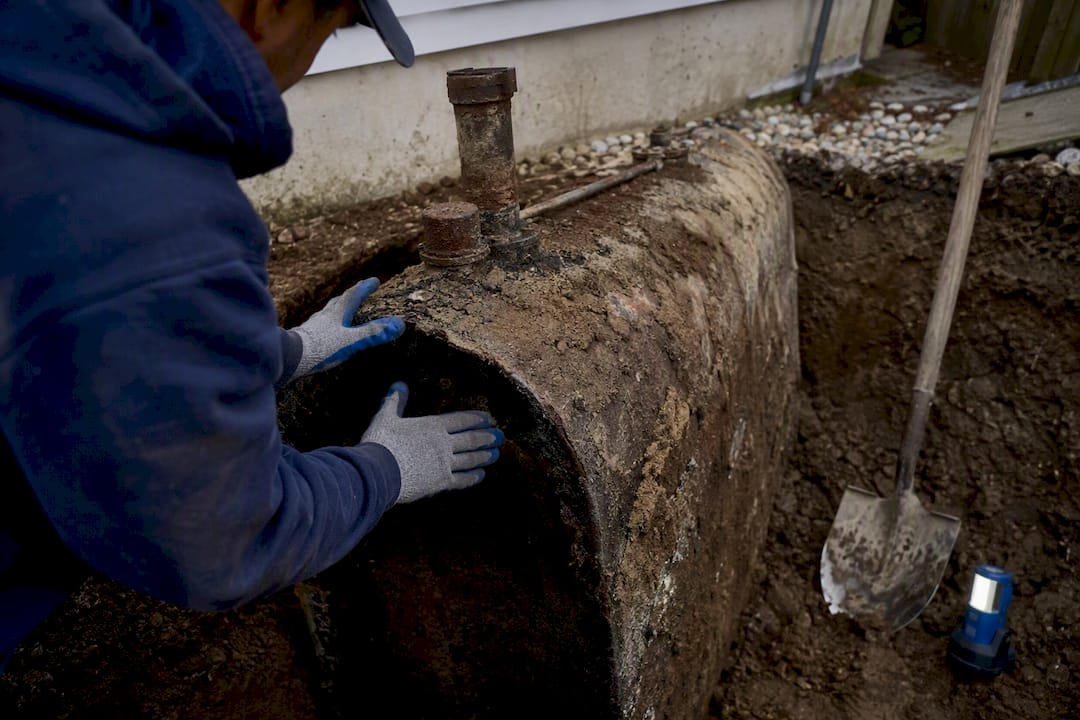
Your old oil tank is the single biggest wildcard in this whole budget. NJDEP’s heating oil tank remediation rules (N.J.A.C. 7:26F) require prompt notification and specific remediation steps the moment there’s a known or suspected discharge, and underground tank closure must be handled by a closure-certified individual or firm.
A clean, dry tank with no leak history closes out for a few hundred dollars. A tank with soil contamination can turn into a multi-thousand-dollar remediation project, sometimes doubling or tripling your total conversion cost.
- Find out whether your tank is underground or above ground; the rules differ for each.
- Ask directly about leak or discharge history before you get quotes.
- Hire only closure-certified contractors for underground tank work.
- Keep every closure document. You’ll need it for both permits and any rebate applications tied to the project.
How Do You Budget and Pay for a Gas Conversion in NJ?
Cash upfront is the simplest route, but it’s rarely the only one. Contractor financing plans are common, and some utilities offer on-bill repayment or 0% APR programs on qualifying equipment, which spreads the cost across your monthly gas bill instead of one lump payment.
Quick math: heating oil in New Jersey has run noticeably higher per BTU than natural gas in recent years, and homeowners converting from oil commonly report meaningful annual savings on heating costs, though the exact payback period depends heavily on your home’s size, insulation, and current oil usage.
Before requesting quotes, pull together:
- Your last 12 months of heating oil bills, so a contractor can estimate your actual usage.
- Details on your current tank (age, location, capacity).
- A rough idea of whether you want a boiler or a high-efficiency furnace, since that choice affects both installed cost and long-term efficiency.
If your current system is already struggling, it’s worth reading up on signs your furnace needs replacing before you finalize equipment choices.
What a Local NJ Contractor Actually Brings to This Job
Brighton Air Corp has served New Jersey homeowners and businesses since 1993, and that history matters most in a project with this many moving pieces. Our technicians, with over 150 years of combined field experience, know the permit sequencing, the NJDEP tank rules, and the utility scheduling patterns that trip up first-timers.
An honest contractor gives you an itemized estimate before work starts, coordinates timing with the utility so crews aren’t sitting idle, and knows the certified closure process for tank removal cold. When you’re evaluating quotes, ask about scope detail, projected timeline, warranty terms, and closure certifications directly. If a bid is vague on any of those four, keep looking.
— John
Get a Free Estimate for Your NJ Gas Conversion
Brighton Air Corp handles the parts of this project that trip up most homeowners: coordinating the utility’s timeline with your indoor installation, managing permits, and sequencing tank closure so nothing sits half finished for weeks. That coordination is where most delays and cost surprises come from, and it’s exactly what a general contractor without HVAC-specific utility experience tends to miss.

A free onsite estimate from Brighton Air Corp covers equipment selection, a realistic timeline built around your utility’s service window, and financing options if you’d rather spread the cost than pay it all upfront. We also help you understand uneven heating issues that sometimes surface once a new system goes in, and we walk you through installation details worth checking before you sign any contractor’s proposal. If you’re also weighing whether open permits could complicate a future home sale, this permit guide is worth a read too.
Schedule your free estimate with Brighton Air Corp today and get a real number for your home, not just a range.