
Homeowners: EPA Rules to Tell If Mold in Air Ducts Needs a Pro
Homeowners: EPA Rules to Tell If Mold in Air Ducts Needs a Pro
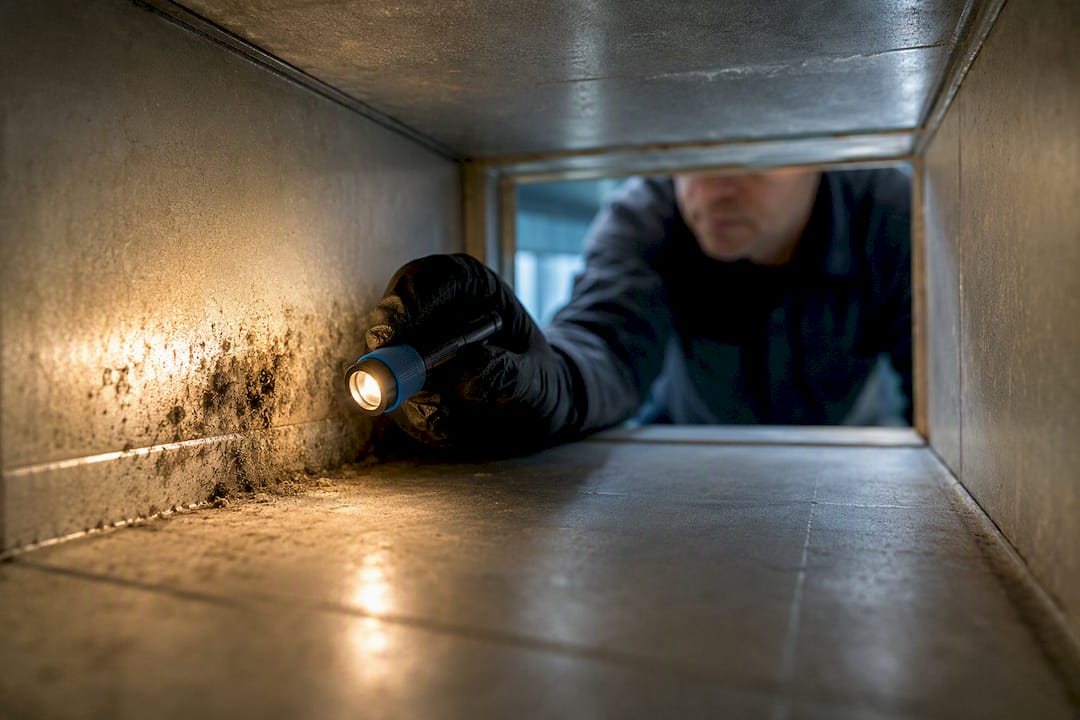
If you suspect mold in your air ducts, stop running the HVAC system and get a professional inspection before doing anything else. The EPA’s threshold for hiring a remediation crew is “substantial visible mold” inside hard ductwork or on HVAC components. If your ducts have porous liners like fiberglass or duct board and they’re wet or moldy, expect replacement, not cleaning, because those materials can’t be fully decontaminated.
TL;DR:
- Only substantial visible mold in hard ductwork justifies professional removal, while porous materials like duct board usually require complete replacement.
- A musty smell when the system runs, fuzzy patches, or worsening allergy symptoms indicate possible mold presence needing further inspection.
- Visible signs such as dark streaks, fuzzy growth, and persistent indoor odor, combined with symptoms, warrant careful evidence collection before contacting a contractor.
- Professional remediation involves containment, HEPA cleaning, removal of porous materials, and verification, with porous liners often needing replacement rather than cleaning.
- Addressing moisture sources like leaks, humidity control, and insulation is essential to prevent mold recurrence after cleanup.
Table of Contents
- What Are the Signs of Mold in HVAC Ducts?
- How Do You Safely Inspect Air Ducts for Mold?
- When Should You Call a Professional for Duct Mold?
- What Does Professional Mold Remediation Involve?
- How Do You Stop Mold From Coming Back in Your Ducts?
- How Much Does Air Duct Mold Removal Cost?
- What Should Homeowners Look for in a Duct Remediation Contractor?
- What’s the Smartest First Move if You Suspect Duct Mold?
- Get an Air Duct Mold Inspection From Brighton Air Corp
- Sources
What Are the Signs of Mold in HVAC Ducts?
A musty smell that shows up only when the system runs is one of the most reliable clues that mold has colonized your ductwork rather than a random spot in the house. Visible clues matter too: dark streaking around supply registers, fuzzy patches on exposed sheet metal, or discoloration at the edges of grilles. Any of these are worth photographing before you touch anything.
Health symptoms often confirm what your nose already suspects. According to the Mayo Clinic, common mold-allergy reactions include nasal congestion, itchy or watery eyes, coughing, and wheezing. If those symptoms flare specifically when you’re home with the system running, that pattern is meaningful.
- Musty odor tied to HVAC operation, not general household smell
- Dark streaks or fuzzy growth near vents, grilles, or visible metal ducting
- Allergy or asthma symptoms that worsen indoors and ease when you leave
The CDC’s mold guidance also notes that some people, including those with asthma, allergies, or compromised immune systems, face higher health risks from mold exposure and should treat any of these signs with more urgency.
How Do You Safely Inspect Air Ducts for Mold?
You can gather useful evidence without opening up the ductwork or putting yourself at risk. Follow these steps before calling anyone:
- Look at each supply and return register for visible staining, dust buildup, or texture that looks fuzzy rather than flat.
- Notice when the musty smell appears. If it’s strongest right after the blower kicks on, that points to the duct system or coil.
- Run a wipe test on suspicious residue with a damp white cloth. Dust wipes away clean; mold tends to smear or leave a stained streak.
- Photograph anything questionable from multiple angles for your records and for any contractor estimate.
- Check the condensate drain pan for standing water or slime, since a clogged drain is a common hidden moisture source.
Don’t crawl into ducts, don’t run the system if you already suspect contamination, and skip any DIY fogging or biocide sprays. The EPA warns that these products only work as directed on the label, and none are registered for use on porous duct liners.
Pro Tip: If the visible evidence is ambiguous, a $50 tape-lift sample sent to a mold lab can confirm what you’re dealing with before you approve a bigger remediation invoice.

When Should You Call a Professional for Duct Mold?
The EPA’s own guidance is the clearest line in the sand: air duct cleaning is only recommended when there’s substantial visible mold growth inside hard-surface ducts or on other HVAC components. Below that threshold, cleaning may not be necessary at all. Above it, DIY isn’t a safe option.
Other triggers that justify calling a pro even without obvious visible growth:
- A household member with asthma, chronic allergies, or a compromised immune system
- A musty smell that persists despite no visible mold you can find
- Recent water intrusion, flooding, or a known roof or plumbing leak feeding into duct runs
- Any inspection finding you can’t confirm yourself with a wipe test
When you’re screening contractors, ask directly whether they’ll open access ports for a full camera inspection, whether they use negative-pressure HEPA containment, and whether their crew follows IICRC S520 or NADCA ACR standards. Request before-and-after photos, a written scope that separates cleaning from replacement, and any lab results if testing was performed. A contractor who can’t answer these questions clearly probably isn’t the one to hire.
What Does Professional Mold Remediation Involve?
A legitimate remediation job follows a sequence, not a single visit with a shop vac. The EPA’s remediation guidelines outline planning, containment, and PPE as standard steps for any significant mold event, and reputable HVAC contractors build their process around that framework.
- Assess the extent of contamination and plan containment, either limited or full, depending on scope
- Shut down or segment the HVAC system so spores don’t spread through the building during work
- Mechanically clean hard duct surfaces and HEPA vacuum all accessible sections
- Clean or treat evaporator coils and drain pans, which are common hidden moisture sources
- Remove and replace porous materials rather than attempting to clean them
- Verify results after cleanup, sometimes with a follow-up swab or air sample
Fiberglass liners, duct board, and flex-duct interiors that get wet or moldy generally can’t be reliably decontaminated. Mechanical cleaning may knock down surface spore counts temporarily, but regrowth often returns within weeks if the material stays porous and the moisture problem isn’t fixed. Replacement, not cleaning, is the durable answer for these materials.
Biocides and sealants have a narrow, label-directed role here. The EPA cautions against broad biocide use and notes that no biocides are registered specifically for porous duct liners, so treat any contractor pitching fogging or ozone treatments as a red flag rather than a shortcut.
How Do You Stop Mold From Coming Back in Your Ducts?
Cleaning ducts without fixing the moisture source behind the growth is a temporary fix at best. Mold needs sustained dampness to establish itself, and ducts pick up moisture from a handful of predictable places.
- Clear and check the condensate drain line and pan regularly so water doesn’t pool and stagnate.
- Insulate duct runs that pass through unconditioned attics, crawl spaces, or basements to stop condensation from forming on the outside of the metal.
- Repair any roof, plumbing, or foundation leaks feeding moisture into ducted spaces. This kind of intrusion is a common culprit; a partner resource on shingle roof mold risks covers how roof leaks can quietly feed moisture into a home’s structure.
- Keep indoor relative humidity around 30 to 50%, using a dehumidifier in damp basements if needed.
- Change filters on schedule and have coils and drain pans inspected during routine maintenance visits.
Pro Tip: A basement return duct running through a damp crawl space is one of the sneakiest recurring moisture sources homeowners overlook. Have it checked specifically, not just the visible ductwork upstairs.
Simple tasks like filter swaps and humidity monitoring are fine for homeowners to handle month to month. Coil cleaning, drain pan servicing, and full system inspections are better left to a scheduled HVAC technician visit once or twice a year.
How Much Does Air Duct Mold Removal Cost?
Costs scale directly with how much of the system is affected and whether porous materials need replacing rather than cleaning.
- Inspection plus limited cleaning: typically costs vary depending on job complexity, especially when hard ducts are cleanable and no porous liner replacement is needed
- Full remediation with containment and porous-material replacement: costs depend on the extent of contamination and system complexity
- Timeline: inspections can often be scheduled within days; limited cleaning may be completed quickly; full remediation with replacement may require several days up to two weeks
The biggest cost drivers are the square footage of contaminated ductwork, whether liners need replacing, whether full containment is required to protect the rest of the home, and whether lab testing or temporary occupant relocation is part of the job.
What Should Homeowners Look for in a Duct Remediation Contractor?
A well-established HVAC company has serviced heating and cooling systems in the area since 1993, with extensive combined technician experience across the team. That kind of tenure matters here because duct mold assessment isn’t guesswork. A properly trained technician follows a workflow: camera diagnostics to see inside runs without demolition, a containment plan scaled to the actual contamination, an itemized scope that separates cleaning line items from replacement line items, and clear documentation throughout.
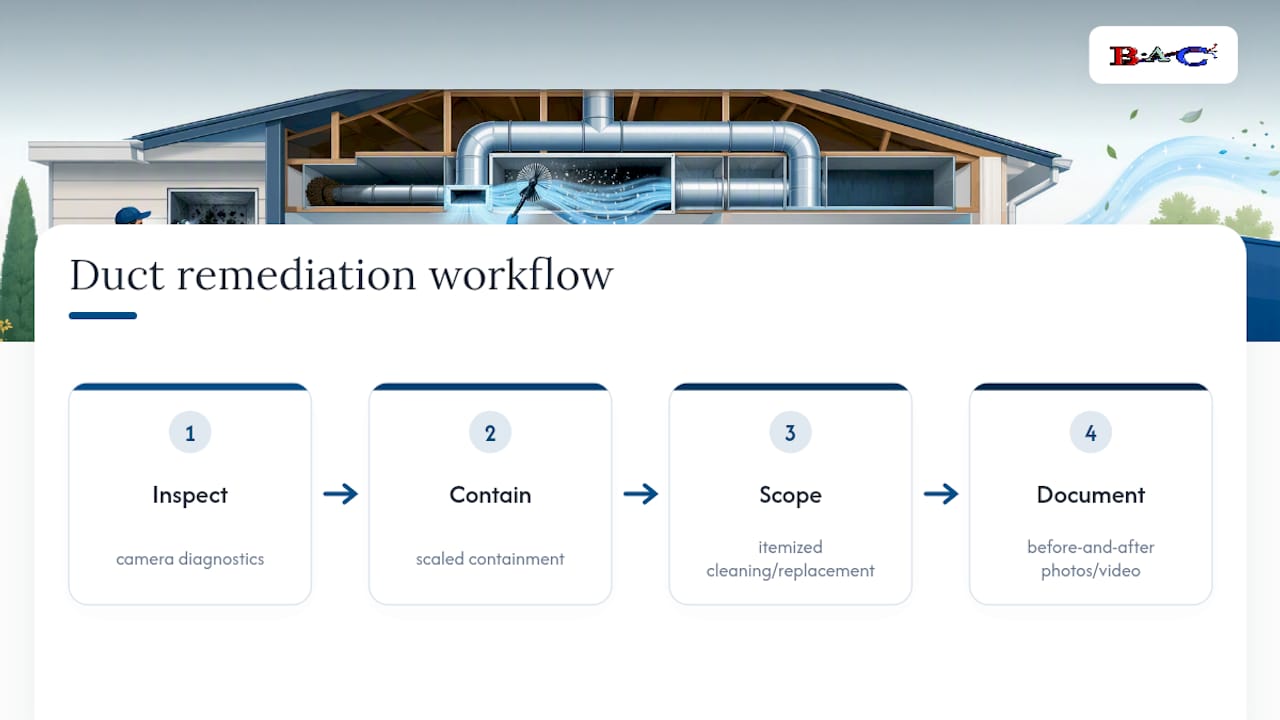
Before you sign anything, ask for a written, itemized quote, insist on before-and-after photos or video, and confirm any replacement recommendation for porous materials is backed by a specific reason you can see for yourself. Ask about service plans or maintenance follow-up so the fix actually holds.
What’s the Smartest First Move if You Suspect Duct Mold?
The instinct to scrub first and ask questions later almost always backfires. Fixing the moisture source and documenting what you actually see, through photos or a lab tape test, matters more than any cleaning product on the shelf. Cleaning ducts while ignoring a leaking condensate line or a damp crawl space return just buys you a repeat problem in a few months. Get the evidence first, then make the call on cleaning versus replacement with real information instead of guesswork.
— John
Get an Air Duct Mold Inspection From Brighton Air Corp
If you’re staring at dark streaks on a register or a musty smell that only shows up when the blower kicks on, Brighton Air Corp gives you a faster path to an answer than guessing your way through DIY tests. The team has handled residential and commercial HVAC work in the region, including indoor air quality issues like duct contamination, supported by extensive combined technician experience and emergency response capabilities.

When you call for an inspection, ask for camera diagnostics, an itemized scope that separates cleaning from replacement, and documented before-and-after photos so you know exactly what you’re paying for. The company offers free estimates and financing options to help manage project costs. If you check your AC service history and it’s overdue anyway, bundle the two. Reach out through Brighton Air Corp to schedule an inspection and get a real scope of work in hand before you commit to any remediation spending.
This article is general information, not a substitute for advice from a qualified doctor. Consult a qualified healthcare professional about your own circumstances before acting on anything here.