
8 Low Refrigerant Symptoms You Can Spot and What a Tech Measures
8 Low Refrigerant Symptoms You Can Spot and What a Tech Measures
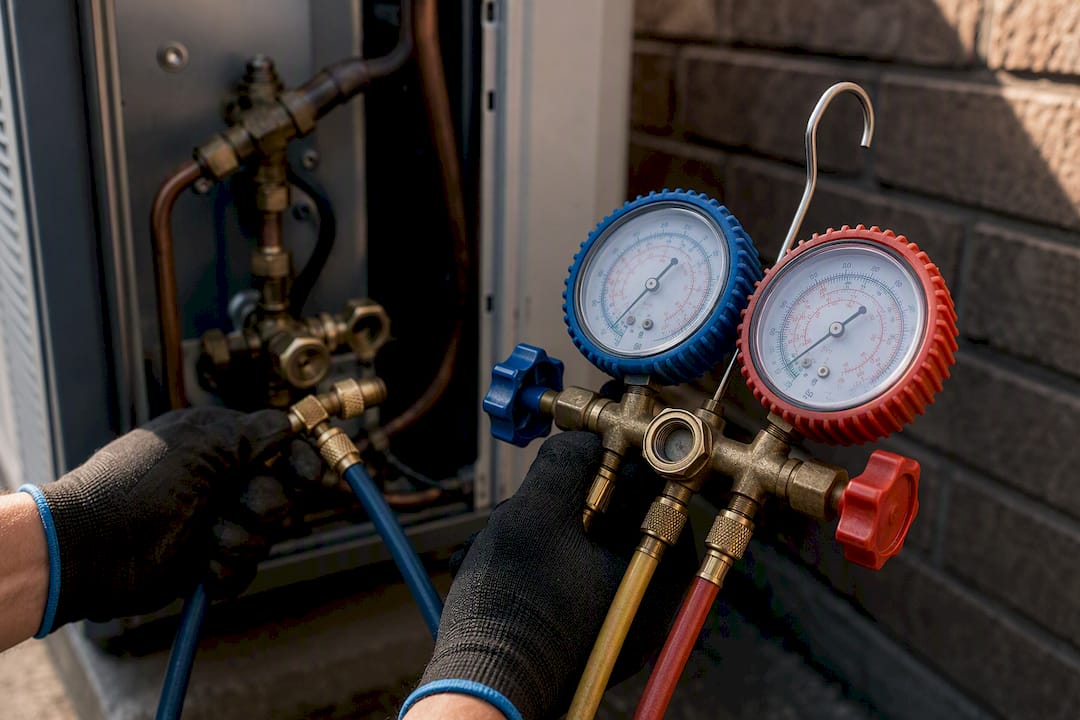
If your vents are blowing lukewarm air, you see ice on the coils or copper lines, or you hear hissing near the outdoor unit, your AC very likely has a refrigerant leak. Shut the system off if it’s iced over, skip the DIY refrigerant top off, and call an EPA Section 608–certified technician. They’ll confirm the problem with pressure gauges and a temperature-split reading before touching anything.
TL;DR:
- Low refrigerant often presents with iced coils, hissing sounds, and a temperature split below 10 degrees Fahrenheit between return and supply vents.
- DIY checks like inspecting for oily residue or noticing persistent long run times can suggest refrigerant loss, but only a certified technician can confirm with pressure and leak detection.
- Adding refrigerant without fixing the leak is ineffective and illegal; only EPA Section 608–certified technicians can perform accurate diagnosis and repairs.
- Expect a technician to measure pressure and temperature split, conduct leak detection, and provide written documentation before fixing the system.
- Ignoring refrigerant leaks can cause compressor damage, water overflow, or increased energy bills, especially on older or R22 systems.
Table of Contents
- Warning Signs Of Low Refrigerant You Can Check Yourself
- Why Adding Refrigerant Isn’t A Real Repair
- What A Technician Does To Confirm Low Refrigerant
- What Happens If You Keep Running The System Anyway
- A Safe Checklist Before The Technician Arrives
- How A Qualified Technician Actually Handles A Refrigerant Leak
- Get A Certified Refrigerant Diagnosis Before Small Leaks Get Expensive
- Sources
Warning Signs Of Low Refrigerant You Can Check Yourself
Not every AC problem points to refrigerant. Airflow issues, dirty coils, and failing capacitors mimic several of these symptoms, so the value is in the combination, not any single clue. A pinhole leak can leak for months before it produces a symptom big enough to notice, which is why homeowners often miss the early stage entirely.
Here’s the priority order technicians actually use when a homeowner describes what they’re seeing:
- Warm or lukewarm supply air. Hold a thermometer at a return vent, then at a supply vent near the same room. A properly charged system typically produces a temperature split of 18 to 22 degrees Fahrenheit between the two. A split of 10 degrees or less usually means the refrigerant isn’t absorbing heat the way it should.
- Ice or frost on the evaporator coil or the copper suction line. Low pressure inside the coil drops its surface temperature below freezing, so moisture in the air ices over instead of just condensing. This is one of the clearest signs of low refrigerant, and it’s also the one that turns into water damage fastest if ignored.
- Hissing or bubbling sounds. A steady hiss near refrigerant lines or the outdoor unit usually means gas escaping through a small hole. Bubbling or gurgling points to a mix of liquid and vapor moving through a line that should be carrying one or the other cleanly, a sign the charge is already low.
- Long run times with no relief. The system runs and runs but never quite hits the thermostat setpoint, because a partial charge can’t move enough heat per cycle.
- A sharp jump in your energy bill. Compare the current month’s electric bill to the same month last year, not last month, since summer heat swings will distort a month over month comparison on their own.
- High indoor humidity and uneven room temperatures. A low charge cuts dehumidification along with cooling, so rooms feel damp and sticky even when the thermostat reads close to target.
- Oily residue or damp spots at fittings. Refrigerant carries a trace of compressor oil, and that oil leaves a visible dark ring at flare fittings when refrigerant escapes slowly over weeks or months. It’s a low-tech clue, but a reliable one, and it’s easy to photograph before your technician arrives.
- Short cycling or compressor protection shutdowns. Some systems sense abnormal pressure and trip a safety switch rather than risk compressor damage, so unexplained shutoffs deserve the same attention as ice or hissing.
Fast fact: Homeowners commonly report the same handful of signs together: warm supply air, coil icing, hissing, rising bills, and stubborn indoor humidity. When three or more of those show up at once, low refrigerant is the most likely explanation, not a coincidence of separate problems.
Why Adding Refrigerant Isn’t A Real Repair
Refrigerant runs through a sealed loop and never gets “used up” the way fuel does. If the level drops, gas escaped somewhere, or the system was charged wrong to begin with. There’s no third explanation.
That’s also why federal rules exist around who can touch it at all.
- Only EPA Section 608–certified technicians may legally handle refrigerant, and knowingly venting it or topping off a system without finding and fixing the leak violates that certification.
- Topping off masks the underlying leak instead of fixing it, and an improperly charged system often runs less efficiently than one left alone.
- A full evacuation and recharge lets a technician add the exact manufacturer-specified charge while recycling whatever refrigerant gets recovered from the old system.
- Some states and municipalities layer additional leak-repair or reporting requirements on top of the federal rules, so local code can matter as much as the EPA baseline.
What A Technician Does To Confirm Low Refrigerant
A real diagnosis takes measurements, not guesswork. Here’s the sequence most techs follow once they’re on site.
- Gauge readings at the service ports. Suction and head pressure get checked against the manufacturer’s pressure chart for that day’s outdoor temperature, since the “correct” pressure shifts with ambient conditions.
- Temperature split across the evaporator. A healthy system lands in that 18 to 22 degree range mentioned earlier. Anything well below it, paired with low gauge pressure, all but confirms a refrigerant shortage rather than an airflow problem.
- Leak detection. Electronic sniffers, UV dye traced with a black light, or a bubble solution at suspect joints narrow down exactly where the system is losing charge.
- Evacuation and recharge, once the leak is fixed. Recovered refrigerant gets recycled through certified equipment, and the system gets refilled to the exact OEM spec rather than an eyeballed guess.
Pro Tip: Ask for the pressure readings and temperature split numbers in writing before and after the repair. That paper trail is the only way to prove the fix actually worked, not just that the system got quieter for a week.
Expect a diagnostic visit to run somewhere between 45 minutes and two hours depending on how well hidden the leak is. A thorough service report should list the readings, the suspected or confirmed leak location, and the repair performed, not just “recharged system” on a line item.
What Happens If You Keep Running The System Anyway
Ignoring these symptoms doesn’t just mean a warmer house. It usually means a bigger repair bill later.
- A compressor forced to run on low refrigerant overheats, and compressor replacement is one of the most expensive single repairs on any AC system, often rivaling a big chunk of a full replacement cost on an aging unit.
- Melting ice from a frosted coil can overflow the condensate pan, leading to ceiling stains, warped flooring, or drywall damage if the unit sits in an attic or closet.
- Reduced efficiency compounds monthly. A system straining to hit its setpoint for twelve hours a day burns noticeably more power than the same unit at full charge, and that gap shows up on every bill until it’s fixed.
- Older R22 systems complicate the math further, since that refrigerant was phased out of production years ago and any recharge now depends on limited reclaimed supply, which pushes many homeowners toward replacement instead of repeated repair.
A Safe Checklist Before The Technician Arrives
You can rule out a few false alarms yourself and hand your technician better information at the same time.
- If you see ice, shut the unit off. Let it thaw fully before anyone restarts it, since running an iced coil longer only stresses the compressor further.
- Check your filter and clear the outdoor unit. A clogged filter or a condenser buried in leaves and debris can cause airflow problems that look a lot like low refrigerant on the surface, and it’s worth ruling out with a look at your seasonal maintenance checklist first.
- Write down what you’re seeing. Note dates, your thermostat settings, and photograph any ice or oily residue at the fittings, plus pull your last two summers of energy bills for comparison.
- Don’t touch the refrigerant lines or service valves. Only an EPA 608–certified technician should open the system, both for legal reasons and because a wrong move can turn a simple leak into a bigger repair.
Pro Tip: When the technician arrives, ask directly what the gauge pressures and temperature split were, and whether the plan is a targeted leak repair or a full recharge. Their answer tells you a lot about how thorough the diagnosis actually was.
How A Qualified Technician Actually Handles A Refrigerant Leak
A proper visit starts with gauges on the service ports, a temperature-split reading across the evaporator, and a leak search using electronic detection or dye rather than a guess based on symptoms alone. That data decides whether the fix is a targeted leak repair, a coil replacement, or a conversation about full system replacement when the unit is old enough that a coil swap doesn’t make financial sense.
Brighton Air Corp has worked on New Jersey homes and businesses since 1993, and that history shows up in how thoroughly technicians document findings before recommending a repair path. With over 150 years of combined technician experience across the team, 24/7 emergency availability, and free estimates before major work, homeowners get a written diagnosis, a clear repair versus replace recommendation, and financing options when a bigger fix is the right call. Every repair comes with a stated warranty period and a follow-up check to confirm the temperature split holds.
— John
Get A Certified Refrigerant Diagnosis Before Small Leaks Get Expensive
Brighton Air Corp sends EPA Section 608–certified technicians to locate the leak, repair it, and recharge your system to the exact manufacturer spec, not just top it off and hope. That distinction matters most on the hottest week of the year, when a masked leak turns into a dead compressor.

Brighton Air Corp offers next-day and emergency diagnostic appointments across its New Jersey service area, backed by transparent diagnostic fee pricing explained up front rather than buried in a service ticket. If your system is also running muggy or uneven room to room, it’s worth pairing the refrigerant check with a look at indoor air quality improvements while a technician is already on site. Call Brighton Air Corp or request a free estimate to get a certified technician out to check your gauges, your temperature split, and your coil before the next heat wave finds the leak for you.
Sources
The diagnostic standards referenced throughout this article come from the EPA’s Section 608 certification program and its refrigerant recharge guidance, both of which govern who can legally handle refrigerant and how. Manufacturer troubleshooting resources from Carrier and Trane informed the symptom and diagnostic sections above. Technicians rely on manufacturer-specific pressure charts tied to outdoor temperature, which is why two identical looking systems can have different “correct” gauge readings on the same day.