
HVAC Emergency Diagnostic Fee Explained for Homeowners
HVAC Emergency Diagnostic Fee Explained for Homeowners
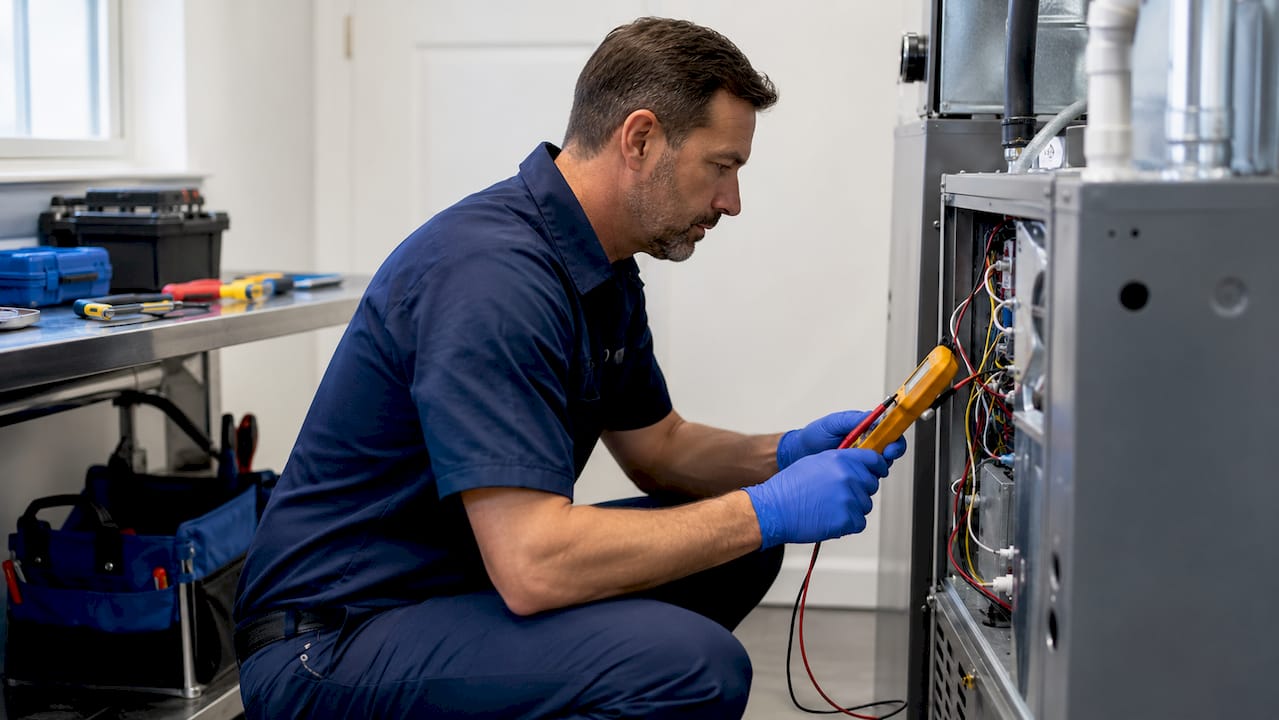
An HVAC emergency diagnostic fee is the charge a technician applies to identify urgent heating or cooling system failures during nights, weekends, or holidays. This fee is distinct from a standard diagnostic charge. Emergency diagnostic fees typically run $150 to $300, compared to $75 to $200 for routine visits. The fee covers the technician’s time, travel, tools, and the expertise required to diagnose a system under pressure. Most reputable providers credit this fee toward the repair cost if you approve the work during the same visit, which keeps your total bill from doubling.
What is an HVAC emergency diagnostic fee and what does it cover?
An HVAC emergency diagnostic fee is the industry’s standard term for a specialized service call charge applied outside normal business hours. It is not the same as a trip fee or a repair estimate. The diagnostic fee covers technician time, tools, and expertise to identify the specific fault in your system. Some companies bundle the trip charge into this fee; others bill it separately. Always ask which structure applies before you schedule service.
The fee exists because emergency calls demand more from a company than a scheduled appointment. A technician must be available, dispatched quickly, and equipped to handle a wide range of failures without advance notice. That operational readiness costs money, and the diagnostic fee is how companies recover it. Understanding this helps you evaluate quotes more fairly.
One detail most homeowners miss: manufacturer warranties rarely cover labor or diagnostics, only replacement parts. That means you will likely pay an emergency diagnostic fee even if your system is still under warranty. Budget for it regardless of your warranty status.
What factors influence the cost of HVAC emergency diagnostic fees?
Several variables push emergency diagnostic costs up or down, and knowing them helps you anticipate the bill before a technician arrives.
- Time of service. Late-night calls cost more than early-evening calls. Holiday calls cost the most. After-hours premiums add 50% to 100% on top of standard labor rates. A call on Christmas Eve at midnight will cost significantly more than the same call on a Tuesday afternoon.
- Travel distance. Technicians dispatched from a distant service center charge more to cover fuel, drive time, and vehicle overhead. Urban markets with dense technician coverage tend to have lower travel costs than rural areas.
- System complexity. A standard central air unit takes less time to diagnose than a commercial rooftop system or a multi-zone heat pump. More complex systems require more time and specialized tools, which raises the fee.
- Technician certification level. A senior technician with EPA Section 608 certification and 20 years of experience commands a higher rate than a junior tech. For complex failures, the senior tech is worth it.
- Regional cost of living. HVAC labor rates in New Jersey and the New York metro area run higher than national averages. Local overhead, insurance, and licensing costs all factor into what companies charge.
- Company overhead for 24/7 readiness. Maintaining a dispatch center, on-call staff, and stocked service vehicles around the clock is expensive. Emergency service pricing compensates for overtime pay and 24/7 operational costs. That overhead is real, and it shows up in your bill.
Pro Tip: Schedule non-urgent diagnostics during regular business hours whenever the situation is safe. You can save $100 to $300 simply by waiting until Monday morning if your home remains habitable overnight.
How does the emergency diagnostic fee relate to total repair costs?
The diagnostic fee is only one layer of an emergency repair bill. Understanding the full cost picture prevents sticker shock when the invoice arrives.
Total emergency HVAC repair costs range from $400 to $1,500 for most residential failures. Complex repairs during peak holidays can exceed $5,000. The diagnostic fee is typically the smallest line item. Labor, parts, and after-hours premiums drive the larger numbers.
| Cost component | Typical range | Notes |
|---|---|---|
| Emergency diagnostic fee | $150–$300 | May be credited toward repair |
| After-hours labor premium | 1.5x–2x standard rate | Applied per hour of repair work |
| Minimum service block | 1–2 hours billed minimum | Even short repairs trigger this |
| Replacement parts | Varies widely | Availability affects total cost |
| Holiday surcharge | Additional flat fee | Varies by company policy |
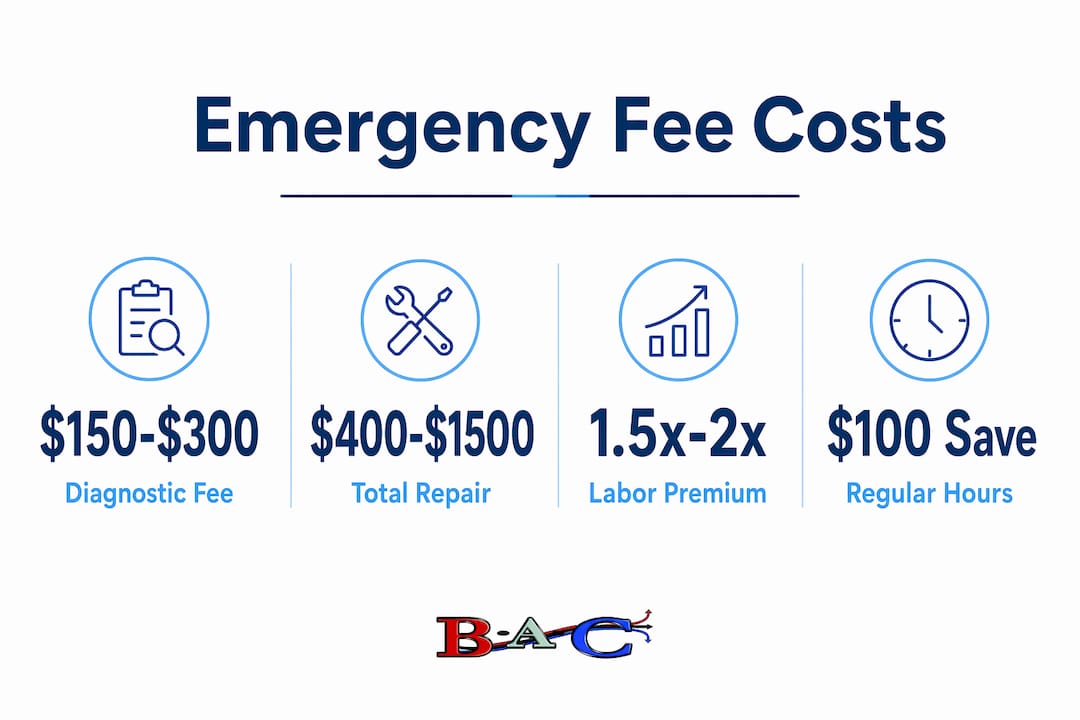
The credit policy matters more than most homeowners realize. If a company credits the $200 diagnostic fee toward a $900 repair, your net cost drops to $700. If they do not credit it, you pay $1,100. Confirming the credit policy upfront is one of the highest-value questions you can ask before the technician leaves the driveway.
A less obvious risk: if the technician lacks the specialized part on the first visit, you may face a second diagnostic or labor charge when they return. This can increase your final bill unexpectedly. Ask the dispatcher whether the technician carries common parts for your system type before scheduling.
Pro Tip: Request an itemized estimate before any work begins. A reputable company will list the diagnostic fee, labor rate, parts cost, and any surcharges separately so you can see exactly what you are paying for.
What questions should homeowners ask before scheduling emergency service?
Asking the right questions before a technician arrives protects you from billing surprises and helps you identify trustworthy providers.
- Is the diagnostic fee credited toward the repair? This is the single most important question. Get the answer in writing or recorded on the call log.
- What is the exact fee for an emergency or after-hours visit? Confirm whether the quoted amount covers travel, the service call, and the diagnostic, or whether those are billed separately.
- Is there a minimum labor charge? Most companies bill a minimum of one to two hours even for short repairs. Knowing this upfront prevents confusion on the final invoice.
- Are your technicians licensed and insured in New Jersey? Licensing protects you legally and signals professional accountability. Ask for the license number if you have any doubt.
- What happens if a follow-up visit is needed? Multiple visits due to part unavailability increase total costs significantly. Confirm whether a second trip triggers a new diagnostic fee or whether the first fee covers the full diagnosis.
- Do you charge differently for holidays versus weekends? Some companies tier their surcharges. A Saturday call may cost less than a call on Thanksgiving. Knowing the tier structure helps you decide whether to wait.
Very low diagnostic fees under $75 are a warning sign. They often signal unlicensed contractors or companies that recover revenue through high-pressure upselling once they are inside your home. A fair, transparent fee is a sign of a professional operation, not a reason to shop elsewhere.
Pro Tip: Call at least two providers before committing. Compare not just the diagnostic fee but the full billing structure, credit policy, and technician credentials. The lowest fee rarely means the lowest total cost.
When does an HVAC problem actually require emergency service?
Not every HVAC failure justifies an emergency call. Calling after hours unnecessarily costs you $100 to $300 in premiums that a morning appointment would eliminate.
Situations that genuinely qualify as HVAC emergencies include:
- Safety hazards. A gas leak, carbon monoxide detection, or electrical burning smell requires immediate action. Do not wait.
- Habitability risks. Temperatures below 55°F in winter or above 95°F in summer create health risks, especially for infants, elderly residents, or people with medical conditions.
- Active escalating damage. A refrigerant leak that is actively damaging the compressor, or a frozen pipe risk from a failed heating system, justifies emergency dispatch.
Situations that can typically wait until regular hours include:
- A single zone that is slightly warmer or cooler than expected
- Minor unusual noises without performance loss
- A thermostat display issue with the system still running normally
- Reduced airflow without complete system failure
Assessing whether a failure is a true emergency involves three questions: Is there a safety risk? Is the home uninhabitable? Is damage actively getting worse? If the answer to all three is no, a morning appointment is the financially sound choice. For common heating system breakdowns that stop short of a full failure, waiting is often the right call.
Key Takeaways
An HVAC emergency diagnostic fee is a legitimate, structured charge that covers technician expertise, travel, and tools during urgent after-hours calls, and understanding its components is the best way to avoid billing surprises.
| Point | Details |
|---|---|
| Emergency fee range | Emergency diagnostic fees typically run $150–$300, higher than standard $75–$200 visits. |
| Credit toward repair | Most reputable providers credit the diagnostic fee toward repair costs if work is approved on the same visit. |
| After-hours premiums | Labor rates during emergencies run 1.5x to 2x standard rates, adding significantly to total costs. |
| Low fees are a red flag | Fees under $75 often signal unlicensed contractors or high-pressure upselling tactics. |
| True emergency criteria | Call after hours only for safety hazards, habitability risks, or actively escalating damage. |
What I’ve learned about emergency diagnostic fees after years in the field
The most common mistake homeowners make is treating the diagnostic fee as the whole cost. It is not. The diagnostic fee is the entry point. Labor premiums, parts markups, and minimum service blocks are where the real money moves. I have seen homeowners approve a $200 diagnostic call expecting a $400 total bill and walk away paying $900 because they did not ask about the minimum labor block or the holiday surcharge tier.
The second mistake is chasing the lowest diagnostic fee. A $49 emergency fee sounds like a deal until the technician quotes you $1,800 in repairs you do not need. Low fees can signal contractors who upsell aggressively once they are in your home. A fair fee from a licensed, insured technician is money well spent.
My honest advice: before any emergency call, spend three minutes confirming the credit policy, the after-hours rate structure, and the technician’s license number. Those three questions take less time than the hold music and save you more money than any coupon. Also, be honest with yourself about whether the situation is truly an emergency. I have dispatched technicians at 2:00 AM for systems that were running fine by morning. That call cost the homeowner $280 in premiums for a thermostat that needed a battery.
— John
Brightonaircorp’s approach to transparent emergency HVAC service
Brightonaircorp has served New Jersey homeowners and property managers since 1993, with over 150 years of combined technician expertise across the team. When you call for emergency HVAC service, you get a licensed technician dispatched promptly, a clear explanation of the diagnostic fee before work begins, and a credit toward your repair cost when you approve the work on the same visit.

Brightonaircorp handles everything from furnace failures and AC breakdowns to boiler repairs and refrigeration emergencies, 24 hours a day, 7 days a week. The billing structure is itemized and explained upfront, so you know exactly what you are paying for before the technician touches your system. Contact Brightonaircorp today to get a straight answer on emergency diagnostic costs and schedule service with a team that has been earning trust in New Jersey for over three decades.
FAQ
What is an HVAC emergency diagnostic fee?
An HVAC emergency diagnostic fee is the charge a licensed technician applies to identify urgent system failures during after-hours calls, typically ranging from $150 to $300. It covers travel, tools, and the technician’s time to diagnose the problem.
Is the diagnostic fee separate from the repair cost?
The diagnostic fee is a separate charge, but most reputable providers credit it toward the repair cost if you approve the work during the same visit. Always confirm this credit policy before scheduling service.
Why are emergency HVAC fees higher than standard fees?
Emergency fees include after-hours labor premiums of 1.5x to 2x standard rates, plus costs for 24/7 dispatch readiness, technician overtime, and rapid response logistics. These surcharges are highest on holidays and late-night calls.
Does my HVAC warranty cover the diagnostic fee?
Manufacturer warranties typically cover replacement parts only, not labor or diagnostic charges. You will likely pay the emergency diagnostic fee even if your system is under warranty.
How do I know if my HVAC problem is a real emergency?
A genuine HVAC emergency involves a safety hazard, a home that is uninhabitable due to extreme temperatures, or damage that is actively getting worse. If none of those conditions apply, waiting until regular business hours can save $100 to $300 in after-hours premiums.