
How to Set Up an HVAC Preventive Maintenance Program
How to Set Up an HVAC Preventive Maintenance Program
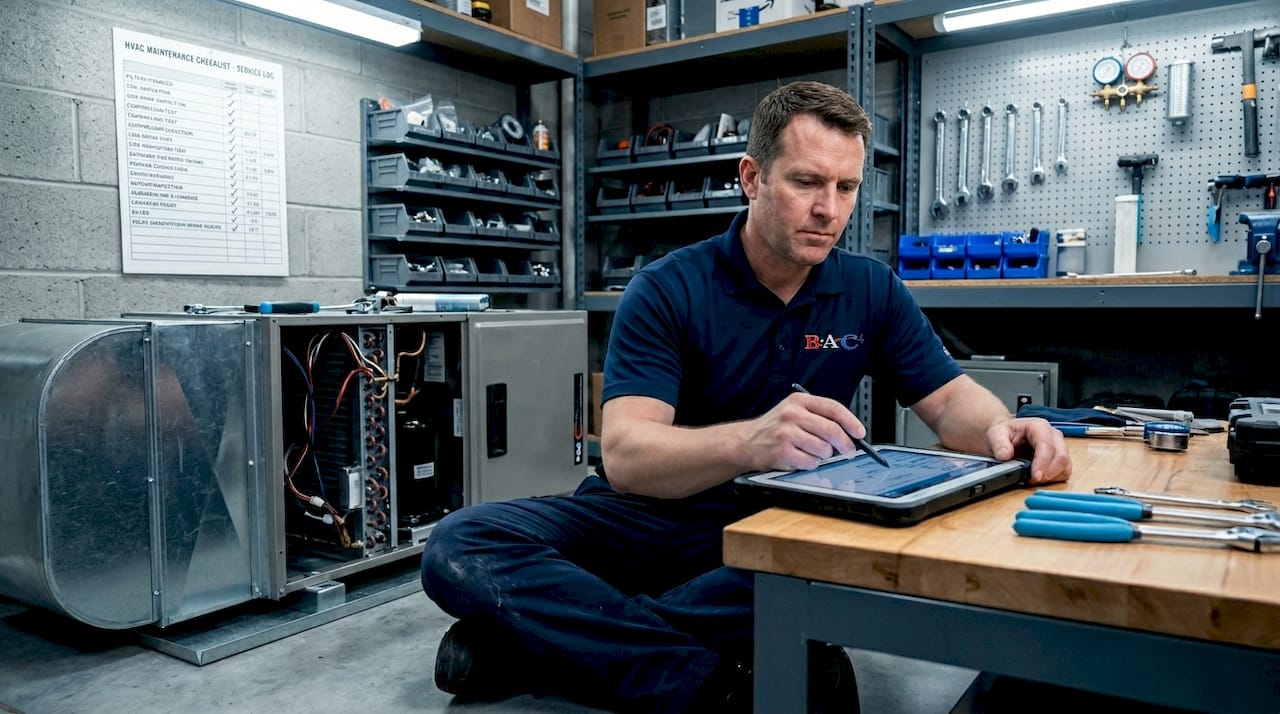
Without a structured maintenance plan, your HVAC system quietly costs you money every single day. Dirty filters reduce airflow, worn components draw more power, and small problems become expensive repairs. The good news: when you set up an HVAC preventive maintenance program correctly, you can cut energy consumption by 15 to 25 percent and reduce unplanned breakdowns by up to 70%. This guide walks you through exactly what to do, from building your asset inventory to measuring real results, so you spend less on repairs and more on everything else.
Table of Contents
- Key takeaways
- How to set up your HVAC preventive maintenance program
- Scheduling tasks by frequency and responsibility
- Common pitfalls to avoid in your program
- Measuring the long-term success of your program
- My honest take on what makes these programs actually work
- Let Brighton Air Corp help you build a better program
- FAQ
Key takeaways
| Point | Details |
|---|---|
| Start with an asset inventory | Document every unit’s make, model, location, and installation date before scheduling any tasks. |
| Layer tasks by frequency | Monthly, quarterly, and annual tasks target different failure modes more effectively than a single yearly visit. |
| Split in-house and pro tasks | Homeowners handle filter swaps and visual checks; licensed technicians handle coils, refrigerant, and electrical. |
| Track digitally, not on paper | Digital systems capture timestamps, photos, and work orders that paper checklists simply cannot replicate. |
| Measure results to prove value | Monitor energy bills and repair frequency before and after to confirm your program is working. |
How to set up your HVAC preventive maintenance program
Before you schedule a single task, you need a solid foundation. Jumping straight into checklists without knowing what equipment you have is one of the most common mistakes property managers make. A successful PM program requires four core elements: a complete asset list, defined task frequencies, clear ownership of each task, and a reliable tracking system.
Building your asset inventory
Start by walking every inch of your property with a notepad or phone. Log each HVAC unit with its make, model, serial number, physical location, and installation date. Pull out or download every manufacturer manual you can find, because those documents tell you exactly what service intervals the equipment requires.
Here is what your asset list should capture for each unit:
- Unit identifier (e.g., “Rooftop Unit 1” or “Basement Furnace”)
- Make, model, and serial number
- Installation date and expected service life
- Location on property (floor, zone, building wing)
- Warranty expiration date
- Assigned technician or service contact
Pro Tip: Attach a printed QR code to each unit that links directly to its digital record. When a technician needs specs in the field, they scan and get the full history instantly, no filing cabinet required.
Choosing your scheduling tools
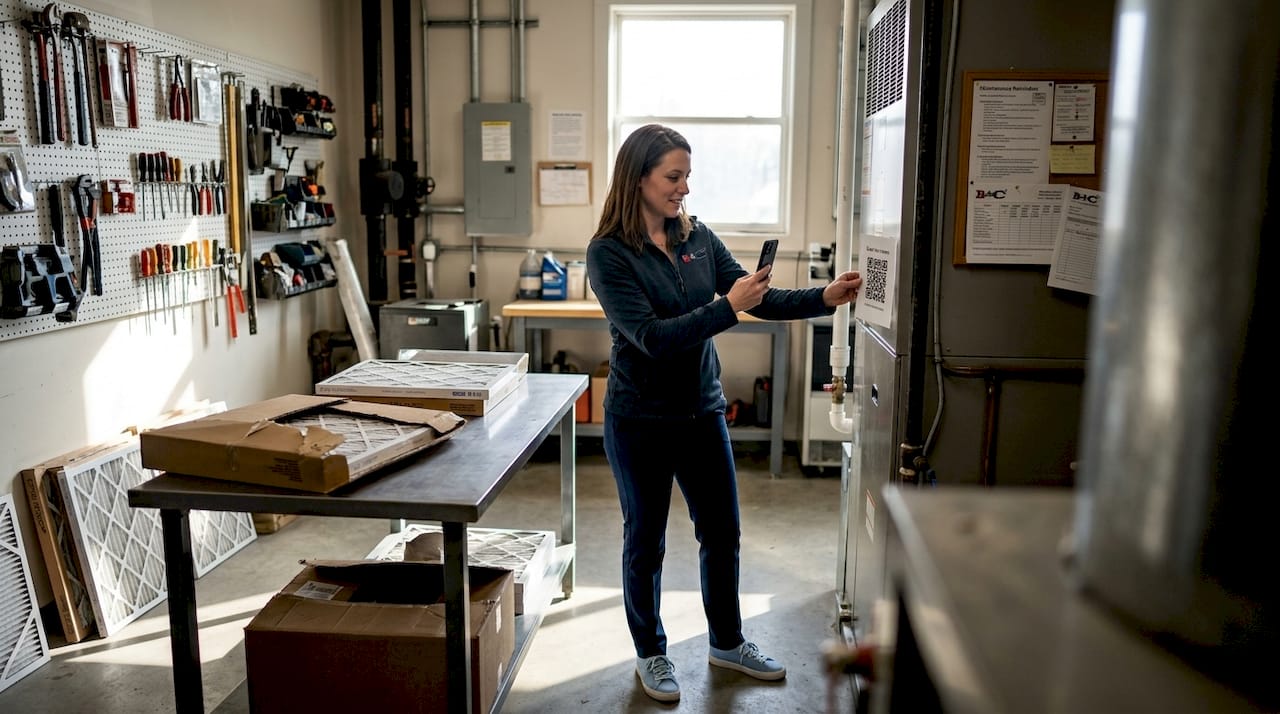
For most homeowners managing one or two systems, a well-organized spreadsheet works fine. For property managers overseeing 10 or more units, spreadsheet systems break down fast. Specialized maintenance software, often called a CMMS (Computerized Maintenance Management System), automates task generation, sends reminders, and builds a searchable history with timestamps and photos. That history becomes critical when you need to validate a warranty claim or prove compliance.
| Tool type | Best for | Key limitation |
|---|---|---|
| Spreadsheet | 1 to 5 units, simple tracking | No automation, easy to miss tasks |
| Shared calendar (Google, Outlook) | Small teams, basic scheduling | No photo capture or work order tracking |
| CMMS software | 10+ units, property managers | Learning curve, monthly cost |
Scheduling tasks by frequency and responsibility
Once your asset list is ready, layering tasks across multiple frequencies is what separates an effective program from a box-checking exercise. Different components degrade on different timelines, so a single annual inspection leaves months of preventable wear unaddressed.
Here is a practical breakdown of what to do and when:
- Monthly (homeowner or in-house staff): Check and replace air filters, inspect thermostat settings, clear debris from outdoor condenser units, and listen for unusual sounds or vibrations.
- Quarterly (in-house with occasional pro support): Inspect drain lines and flush if needed, check fan belts for wear, clean accessible coil surfaces, and test carbon monoxide detectors near HVAC equipment.
- Bi-annually, before cooling and heating seasons (professional technician): Twice-yearly professional visits cover refrigerant levels, electrical connections, coil cleaning, and full system performance testing. Schedule spring visits for your AC and fall visits for your heating system.
- Annually (professional technician): Full duct inspection, blower motor lubrication, heat exchanger inspection, and full safety review.
| Task type | Frequency | Who is responsible |
|---|---|---|
| Filter replacement | Monthly | Homeowner or building staff |
| Drain line flush | Quarterly | In-house or light-touch pro |
| Coil cleaning | Bi-annually | Licensed technician |
| Refrigerant check | Bi-annually | Licensed technician only |
| Full system inspection | Annually | Licensed technician |
| Duct inspection | Annually | Licensed technician |
Pro Tip: Adjust your schedule based on your local climate and property use. A coastal New Jersey home faces salt air corrosion, which accelerates coil degradation. A busy commercial property with high foot traffic needs more frequent service than a lightly used vacation home.
Common pitfalls to avoid in your program
Even a well-designed maintenance program falls apart without consistent execution. The most common failure point is treating the program as paperwork. You create the schedule, print the checklist, and then real life gets in the way. Tasks slip, nobody follows up, and six months later your system fails on the hottest day of the year.
Watch out for these execution mistakes:
- Incomplete asset tracking: Missing one unit from your inventory means it never gets serviced. Walk the entire property during setup, not just the obvious equipment locations.
- No accountability structure: Every task needs a named owner and a completion deadline. “Someone will handle it” means nobody handles it.
- Ignoring warning signs: A program that continues unchanged when systems are still breaking down is not working. Rising energy bills, frequent cycling, or unusual odors are signals to escalate your service frequency.
- Paper-only documentation: Paper checklists cannot track trends or trigger follow-up work orders automatically. When something fails during an inspection, you need a system that flags it, not just a checkbox.
Pro Tip: If you are managing more than a handful of units, even basic maintenance software pays for itself quickly. Digital systems capture who completed each task, when, and with photographic evidence, which is exactly what you need for warranty claims and audits.
A maintenance program is only as strong as the system supporting it. The checklist matters less than whether anyone actually follows through, documents results, and acts on what they find.
Measuring the long-term success of your program
You cannot manage what you do not measure. Once your program is running, tracking its outcomes tells you whether it is actually working or just consuming time.
Start by logging your baseline data before the program launches:
- Average monthly energy bill by season
- Number of repair calls per year and average cost
- Date of last major component failure or replacement
- System age and estimated remaining service life
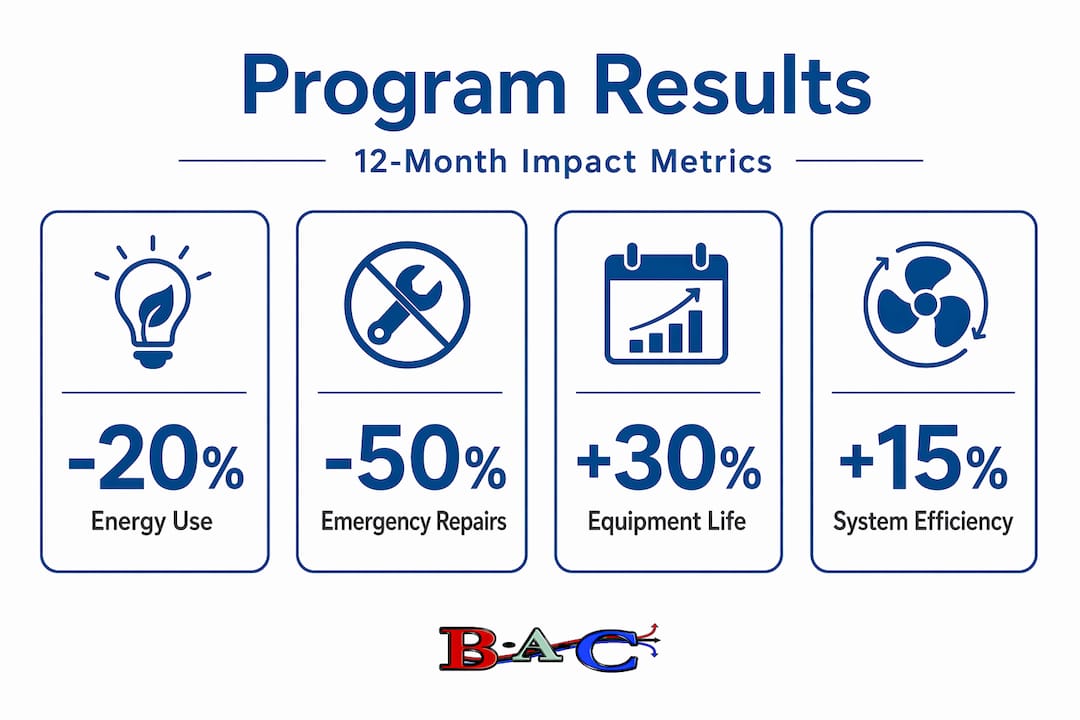
After six months of consistent maintenance, compare those numbers. A well-executed PM program delivers documented ROI exceeding 500% over time, extending equipment life by 5 to 8 years and cutting total maintenance costs in half. Reactive repairs, by contrast, cost 3 to 5 times more once you factor in emergency service premiums and downtime.
| Metric | Before program | Expected after 12 months |
|---|---|---|
| Monthly energy cost | Baseline | 15 to 25% lower |
| Emergency repair calls | Baseline | Reduced by up to 70% |
| Equipment lifespan | Manufacturer average | Extended 5 to 8 years |
| Maintenance cost per year | High and unpredictable | Lower and predictable |
Documented maintenance history also protects you legally and financially. Many HVAC manufacturers require proof of regular servicing to honor warranty claims. If you ever sell a property, a clean maintenance log is a legitimate selling point that gives buyers confidence in the systems they are inheriting. As your equipment ages or your property usage changes, revisit the schedule annually and adjust task frequencies to reflect real-world wear.
My honest take on what makes these programs actually work
I have seen dozens of homeowners and property managers set up maintenance programs that looked great on paper and then fell apart within three months. The problem was almost never the checklist. It was the absence of real ownership.
What I have learned is that the infrastructure around the tasks matters more than the tasks themselves. A named person, a calendar reminder that cannot be dismissed without logging a reason, and a simple record of what was found during each visit. Those three things separate programs that stick from programs that fade.
I also think people underestimate how much local environment affects their schedule. Here in New Jersey, humidity and coastal exposure hit systems harder than a standard manufacturer schedule accounts for. I always tell people to treat the manufacturer’s recommended intervals as a minimum, not a target.
On the technology side, I used to be skeptical about maintenance software for residential use. Then I watched a property manager catch a refrigerant leak early because her software flagged an energy consumption spike between monthly reports. That catch alone saved thousands in compressor replacement costs. The tools are worth it, even for smaller portfolios.
The short version: build the system around accountability, document everything, and adjust the schedule based on what you actually observe. That is what makes a program last.
— John
Let Brighton Air Corp help you build a better program
Running a preventive HVAC service plan on your own takes real discipline, but you do not have to figure it out from scratch. Brighton Air Corp has been serving New Jersey homeowners and property managers since 1993, with over 150 years of combined technician expertise across residential and commercial systems.
Whether you need a one-time professional inspection to kick off your program or ongoing maintenance support through all four seasons, Brighton Air Corp brings the technical depth and local knowledge to get it done right. Their team handles everything from coil cleaning and refrigerant checks to full system diagnostics, and they offer service plans that give you predictable costs and priority scheduling. If you are ready to stop reacting to HVAC problems and start preventing them, reach out to Brighton Air Corp for a free estimate.
FAQ
How often should I schedule professional HVAC inspections?
Most homes and properties need at least two professional visits per year, once before the cooling season in spring and once before the heating season in fall. Properties with high usage or continuous operation may need monthly professional check-ins.
What is the first step to set up an HVAC preventive maintenance program?
The first step is creating a complete asset inventory by walking your property and documenting every unit’s make, model, location, serial number, and installation date before scheduling any tasks.
What is predictive maintenance for HVAC systems?
Predictive maintenance uses real-time data such as energy consumption patterns and sensor readings to forecast when a component is likely to fail, allowing you to intervene before a breakdown occurs rather than on a fixed calendar schedule.
How much can preventive maintenance actually save me?
A structured maintenance program can reduce energy use by 15 to 25 percent and cut emergency repair costs dramatically, since reactive repairs typically cost 3 to 5 times more than planned maintenance when you include emergency premiums and downtime.
Can I manage an HVAC maintenance program with just a spreadsheet?
For one or two units, a spreadsheet works well enough. Once you are managing 10 or more units, dedicated maintenance software becomes necessary to handle automated scheduling, task tracking, photo documentation, and compliance records reliably.