
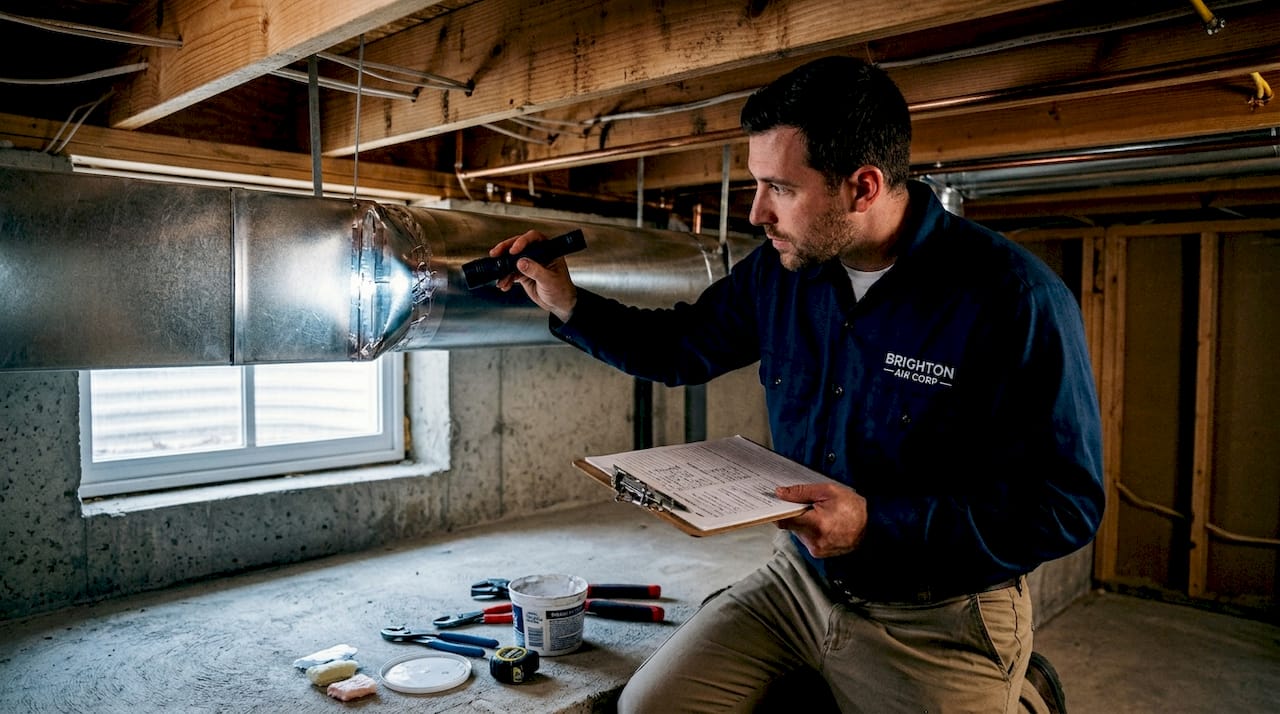
How to pass HVAC inspection for new construction in NJ
How to pass HVAC inspection for new construction in NJ
Picture this: your new home is nearly finished, the moving truck is booked, and then your HVAC inspection fails. Suddenly, your move-in date is pushed back by weeks while contractors scramble to fix duct leaks and track down missing test reports. This scenario plays out more often than most homeowners expect on New Jersey new construction projects. The good news is that a failed inspection is almost always preventable. This article walks you through exactly what New Jersey requires, how to prepare your system, and what to do if something goes wrong, so you can get your certificate of occupancy on schedule.
Table of Contents
- HVAC inspection basics for new construction in New Jersey
- What you need before scheduling an HVAC inspection
- Step-by-step: How to prepare your HVAC system for inspection
- Troubleshooting and common mistakes that can cause failure
- What to expect after passing (or failing) your HVAC inspection
- The overlooked step that makes or breaks a successful HVAC inspection
- Make passing your HVAC inspection stress-free
- Frequently asked questions
Key Takeaways
| Point | Details |
|---|---|
| Know required tests | New homes in NJ must pass blower door and duct leakage tests to comply with code. |
| Gather proper paperwork | Have all plans, test reports, and certifications ready before inspection day. |
| Correct leaks early | Fix ductwork and air leaks before drywall to avoid costly rework later. |
| Communicate with your team | Consistent follow-up with contractors helps avoid missed details and delays. |
| Save all records | Keep inspection data for warranty, resale, and future renovations. |
HVAC inspection basics for new construction in New Jersey
New Jersey enforces some of the most detailed energy codes in the country for new residential builds. Before you can receive a certificate of occupancy, your home must pass specific HVAC performance tests that verify both the building envelope and the duct system are tight enough to meet state energy standards.
The two core tests every new NJ build must pass are the blower door test and the duct leakage test. The blower door test measures how much air leaks through the walls, ceiling, floors, and other gaps in your home’s shell. The duct leakage test checks how much conditioned air escapes from your ductwork before it reaches the living spaces. Per NJ IECC requirements, duct leakage must be no more than 4% of the system’s design airflow rate, or no more than 3 cubic feet per minute per square foot of exterior duct surface area.
These thresholds matter because even a small amount of duct leakage adds up fast. A system leaking 5% of its airflow wastes energy, drives up utility bills, and puts extra strain on equipment. New Jersey adopted the International Energy Conservation Code (IECC) as its baseline, and your local code official enforces it on every new build.
Who is responsible for testing? In most cases, your HVAC contractor arranges the tests, but the homeowner and general contractor share responsibility for making sure the work is ready before the inspector arrives. Testing typically happens late in construction, after ductwork is installed but ideally before drywall goes up, so any problems can be fixed without tearing apart finished walls.
| Test | What it measures | NJ threshold |
|---|---|---|
| Blower door | Air leakage through building envelope | Varies by home size (ACH50) |
| Duct leakage | Air escaping from ductwork | ≤4% design airflow or ≤3 cfm/ft² |
New Jersey allows both third-party certified testers and local code officials to conduct these tests. Third-party testing is often faster to schedule and gives you a written report you can use to address issues before the official inspection. A pre-inspection HVAC service from a qualified contractor can catch problems early and save you from a costly re-inspection fee.
Common reasons NJ new builds fail include duct connections that were never properly sealed, insulation installed after testing instead of before, and thermostats that were not configured to the design specifications. Each of these is fixable, but fixing them after a failed inspection costs time and money that proper preparation avoids.
What you need before scheduling an HVAC inspection
With a clear idea of what’s required, your next step is gathering the right documentation and materials for inspection day. Walking into an inspection without the right paperwork is one of the fastest ways to fail before the tester even touches the equipment.
Here is what you need to have ready:
- Approved construction plans showing HVAC layout, duct routing, and equipment specifications
- Equipment manuals and spec sheets for every piece of HVAC equipment installed
- Contractor work summaries documenting what was installed and when
- Test certifications from any preliminary duct or blower door tests already performed
- Thermostat configuration records showing settings match the design load calculations
- Insulation installation certificates confirming R-values meet code
Your HVAC contractor should also have specific tools and materials on hand for inspection day. The table below breaks down what a fully prepared team brings:
| Item | Purpose |
|---|---|
| Blower door fan and frame | Depressurizes home for air leakage test |
| Duct blaster or flow hood | Measures duct leakage directly |
| Mastic sealant and metal tape | Seals duct joints on the spot if needed |
| Pressure gauges and manometers | Verifies test readings |
| Copies of all test reports | Provides documentation for inspector |
Pre-inspection tasks your contractor should complete before the tester arrives include sealing all visible duct joints with mastic or approved metal tape (never standard cloth duct tape, which fails over time), confirming all insulation is installed to the correct depth, and verifying the thermostat is wired and programmed correctly.
Per NJ code guidance, third-party testing for verification is a recommended practice that gives you an independent record of your system’s performance before the official inspection.
Pro Tip: Schedule your blower door and duct leakage tests before drywall is installed. If a leak shows up, your contractor can access and fix it in minutes instead of cutting through finished walls. This single scheduling decision can save you thousands of dollars and weeks of delays.
An HVAC compliance checklist reviewed with your contractor before scheduling the official test is one of the smartest moves you can make as a homeowner. It ensures nothing gets overlooked in the rush to finish construction.
Step-by-step: How to prepare your HVAC system for inspection
With your paperwork and materials in order, it’s time to prepare the physical system step by step.
-
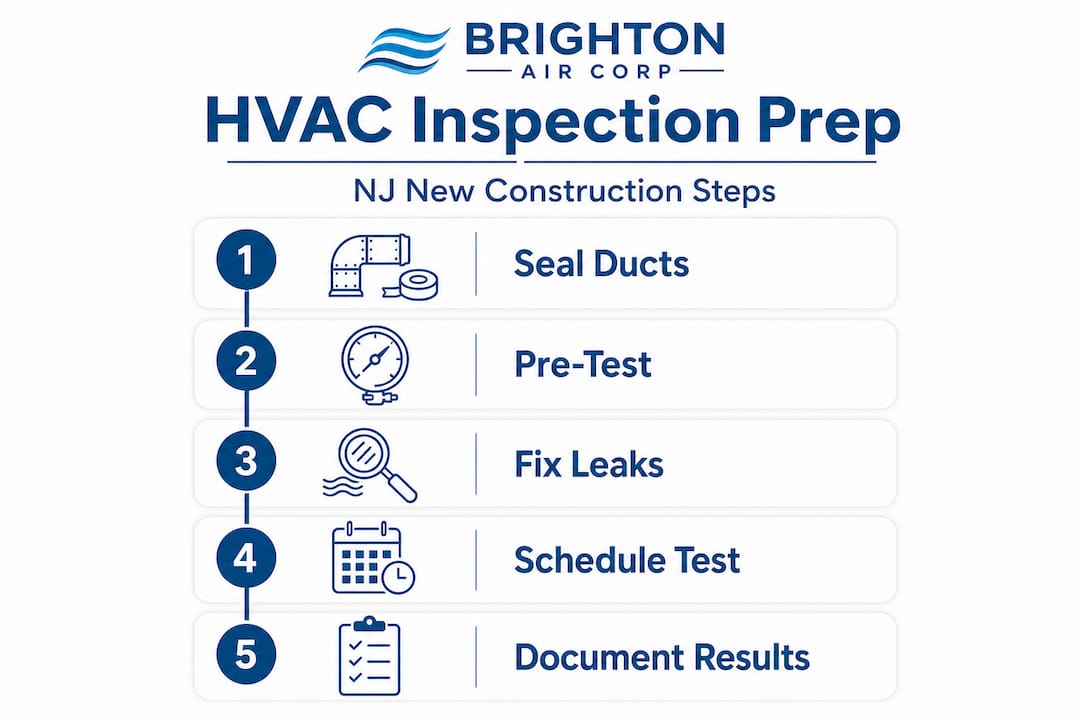
Seal all ductwork connections. Use mastic sealant on every joint, seam, and connection point. Metal foil tape rated for HVAC use is acceptable for straight seams. Avoid standard cloth duct tape entirely. Pay special attention to connections at the air handler, at each register boot, and at any flex duct transitions.
-
Verify insulation coverage. Walk the attic and crawl spaces with your contractor. Check that duct insulation meets the required R-value and that no sections of duct are exposed to unconditioned air. Missing insulation on even a short duct run can affect test results.
-
Confirm all registers and returns are open and unobstructed. Closed registers during testing can skew results. Every supply and return grille should be fully open and free of construction debris.
-
Check airflow against the design. Your HVAC contractor should have a Manual J load calculation on file. Compare the installed equipment capacity and the duct sizing to those numbers. A mismatch between design and installation is a common source of problems.
-
Prepare for the blower door test. Close all exterior doors and windows. Make sure fireplace dampers are shut. Temporarily seal any intentional openings like combustion air inlets with tape that can be removed after testing. Your contractor should walk the home with you before the test starts.
-
Document everything with photos. Take photos of sealed duct joints, insulation installation, and equipment labels before walls close in. These images protect you if questions arise later and give the inspector confidence that the work was done correctly.
-
Collect all test reports immediately after testing. Do not wait until closing or move-in. Get written copies of every test result the same day.
“Full testing for new builds is required; do not expect exceptions that are available for repairs or existing homes.” NJ DCA code guidance makes clear that new construction is held to a stricter standard than renovation or repair work.
Pro Tip: Ask your contractor for written copies of all test reports and any deficiency corrections made before the official inspection. If the inspector has a question about a specific duct connection or insulation detail, having photos and reports on hand turns a potential delay into a two-minute conversation.
Understanding the full HVAC system inspection process before construction begins helps you ask the right questions at every stage and keeps your project on track.
Troubleshooting and common mistakes that can cause failure
Even with the best preparation, issues can pop up. Here is how to spot and address them before they result in a failed inspection.
The most common failure points in NJ new construction HVAC inspections fall into two categories: physical leaks and documentation gaps. Most failures trace back to duct leaks above the allowed threshold and missing documentation that inspectors need to verify compliance.
Physical issues that cause failures:
- Duct joints sealed with cloth tape that has already peeled back
- Flex duct connections that were never clamped and sealed at the collar
- Disconnected return air ducts in attics or crawl spaces
- Supply boots that were never sealed to the subfloor or ceiling drywall
- Recessed light fixtures in conditioned ceilings that were not air-sealed
Documentation issues that cause failures:
- Missing test affidavits from the duct leakage test
- Equipment labels that do not match the approved plans
- No record of who performed the testing or their certification number
- Thermostat settings that were changed after the design was approved
| Problem | How to spot it | Quick fix |
|---|---|---|
| Duct leaks at joints | Smoke pencil or pressure test | Mastic sealant applied to joint |
| Disconnected flex duct | Visual inspection in attic | Reconnect and clamp properly |
| Missing affidavit | Review documentation packet | Contact tester for duplicate copy |
| Incorrect equipment | Compare model numbers to plans | Document any approved substitutions |
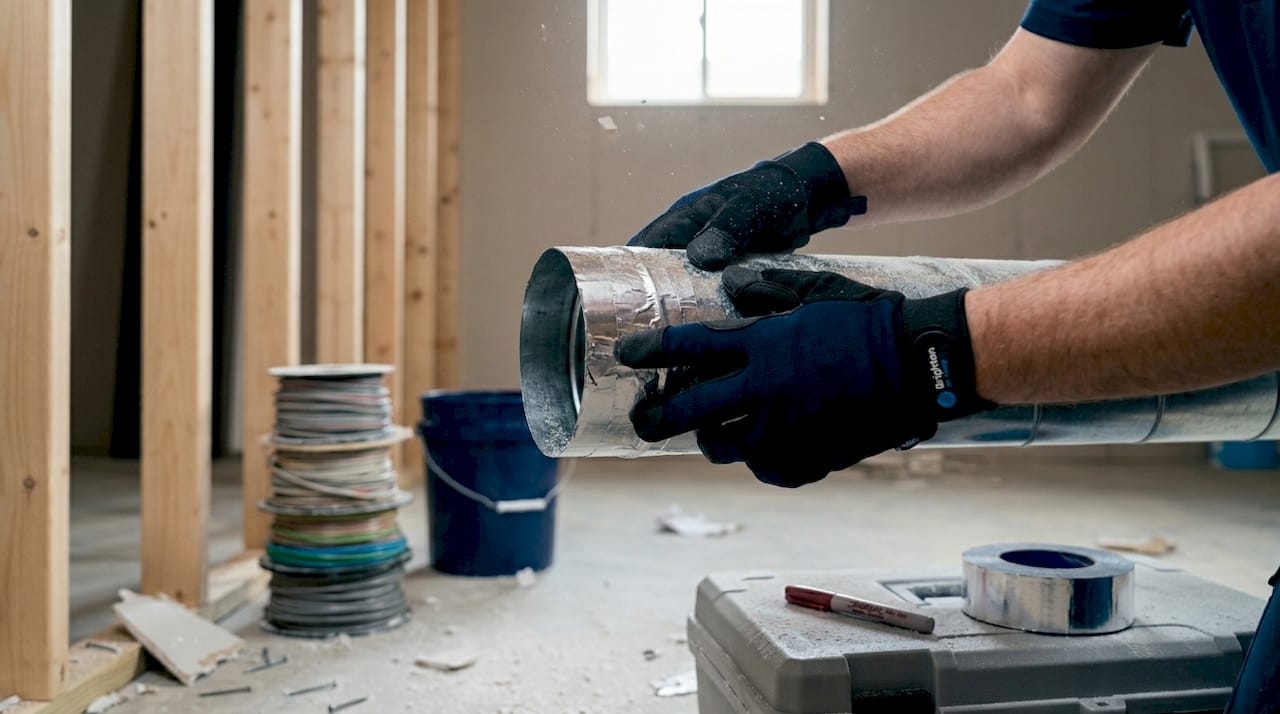
If you discover a leak after preliminary testing, mark it with tape or a marker and fix it the same day. Do not wait. Leaks that seem small during a walkthrough often push test results over the threshold when measured under pressure.
Building a communication plan with your contractor before rescheduling an inspection is critical. Set a specific date for the contractor to complete all fixes, a date for a re-test, and a date for the official re-inspection. Put it in writing. Verbal agreements about construction timelines have a way of slipping.
For more guidance on what to do after a failed result, reviewing resources on troubleshooting failed HVAC inspection can help you move forward efficiently.
What to expect after passing (or failing) your HVAC inspection
Once your system is checked, here is what you need to do after receiving your results.
If you pass:
- Collect the signed inspection report from the code official or third-party tester immediately.
- Submit the report to your local construction office as part of your certificate of occupancy application.
- Store copies of all test results, equipment manuals, and contractor certifications in a dedicated file. You will need these for warranty claims and potentially for future resale.
- Confirm with your contractor that all systems are set to normal operating mode after testing, since some settings are temporarily changed for the blower door test.
If you fail:
- Get a written list of every deficiency from the inspector. Do not rely on verbal notes.
- Contact your HVAC contractor the same day and share the deficiency list.
- Set a firm timeline for corrections and a re-test date.
- Request written confirmation from your contractor when each item is corrected.
- Schedule the re-inspection only after a successful preliminary re-test confirms the fixes worked.
Keeping inspection and test records matters beyond move-in day. Inspection records and test data are required for energy efficiency and code compliance verification in New Jersey, and they can also support warranty claims if equipment fails prematurely. If you sell the home, buyers and their inspectors may ask for this documentation.
Important: NJ energy compliance tracking for new homes relies on inspection data submitted at the local level. Homes that pass testing are part of the state’s broader effort to reduce residential energy consumption, which means your records contribute to a larger picture beyond your individual project.
The overlooked step that makes or breaks a successful HVAC inspection
After working on new construction HVAC projects across New Jersey for decades, we have seen a pattern that surprises most homeowners. The majority of failed inspections are not caused by bad equipment or poor installation technique. They are caused by assumptions.
A contractor assumes the duct boots were sealed by the framing crew. The framing crew assumes the HVAC team handles that. The homeowner assumes someone is coordinating it all. Nobody checks. The inspection arrives, and a basic item that takes ten minutes to fix has been sitting undone for weeks.
The most effective thing you can do as a homeowner is insist on explicit, documented communication at every stage. Ask for a walk-through of the ductwork before walls close. Ask your contractor to confirm in writing that the blower door test was scheduled before drywall. Ask for photos of sealed connections. This is not micromanaging. This is protecting your investment and your timeline.
We have seen homeowners who felt awkward asking these questions lose three to four weeks on their move-in schedule because one duct connection was never clamped. We have also seen homeowners who asked for a simple photo confirmation of every sealed joint sail through inspection on the first try.
Over-communicating with your build team is, in our experience, the single most reliable way to pass your HVAC inspection on the first attempt. It costs nothing and takes very little time. Think of it as the code requirement that does not appear in any manual.
Make passing your HVAC inspection stress-free
Navigating NJ new construction HVAC requirements is manageable when you have the right team behind you. Brighton Air Corp has been helping New Jersey homeowners and builders get through inspections without delays since 1993, with over 150 years of combined technician expertise on our team.

We handle everything from pre-inspection duct sealing and blower door testing to documentation prep and on-site support during the official inspection. If your system needs corrections, we diagnose and fix them fast so your re-inspection gets scheduled without unnecessary waiting. Whether you are just starting your new build or approaching the final stages, our team is ready to help. Reach out to Brighton Air Corp today for HVAC inspection help tailored to your project. Free estimates available.
Frequently asked questions
What is the blower door test and why is it required in NJ?
The blower door test checks how much air leaks from your new home’s shell, which is required to meet NJ energy code standards for efficiency and comfort. Without it, there is no objective way to verify that the building envelope performs as designed.
Do I need both a blower door test and a duct leakage test for my new house?
Yes, new construction in NJ requires both tests to confirm your HVAC system and building envelope meet code. Passing one but not the other is still a failed inspection.
Who performs the HVAC inspection and tests for a new build?
A third-party certified tester or local code official conducts the required tests and reviews all documentation. Third-party testers are often preferred because they provide independent written reports.
What if my HVAC fails inspection, can I still move in?
You cannot receive a certificate of occupancy until all inspection requirements are met, including HVAC. Inspection records confirming compliance must be on file before occupancy is approved.
Is any HVAC testing required for home renovations or only new builds?
Full testing is required only for new construction. Repairs and renovations are typically exempt from the same mandatory testing requirements that apply to new builds.