
How Mixed-Use Building HVAC Systems Work
How Mixed-Use Building HVAC Systems Work
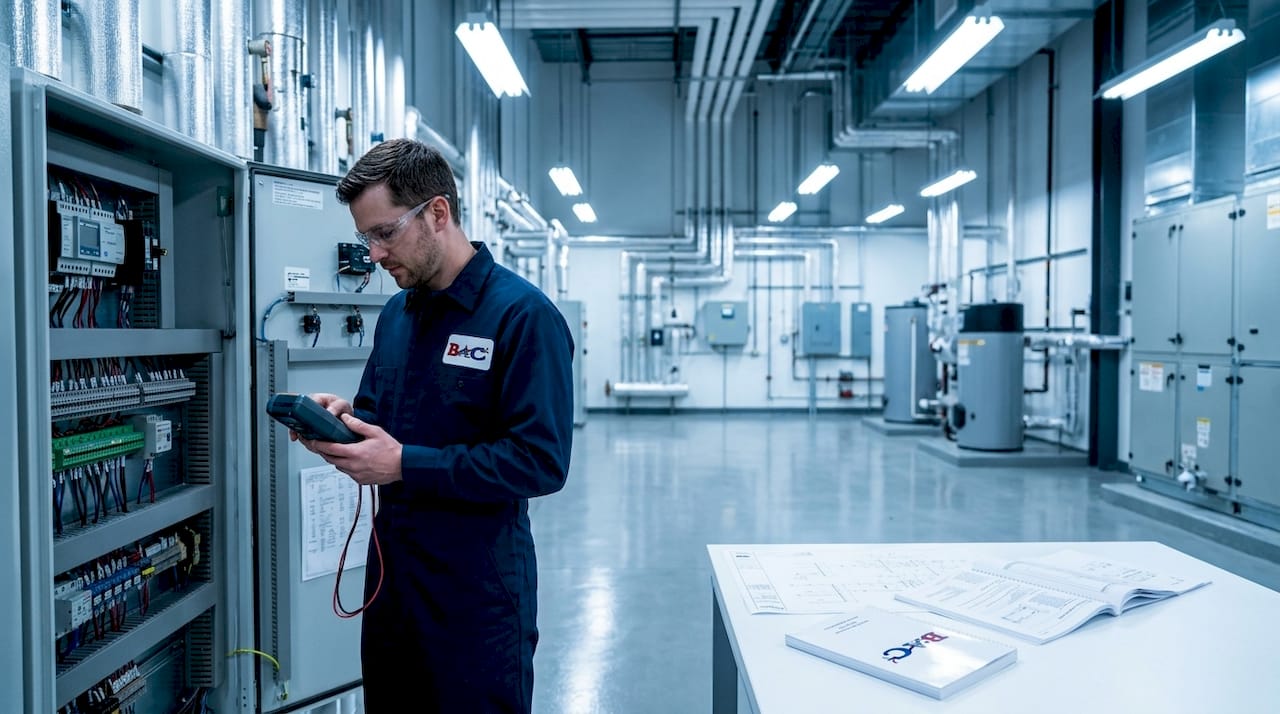
Mixed-use building HVAC systems are defined by one core challenge: serving residential, retail, and office zones simultaneously, each with conflicting thermal demands, occupancy schedules, and ventilation requirements. The industry term for this discipline is mixed-use HVAC design, and it relies on technologies like four-pipe fan coil units, variable refrigerant flow (VRF) systems, demand-controlled ventilation (DCV), and building automation systems (BAS) to deliver zone-specific comfort without wasting energy. Understanding how mixed-use building HVAC systems work is not optional for developers, architects, or facility managers. It is the difference between a building that performs and one that generates constant tenant complaints.
How mixed-use building HVAC systems work: the core architecture
A mixed-use HVAC system does not function as a single unified network. It operates as a collection of coordinated subsystems, each tuned to the zone it serves, all managed through a central control layer. The residential floors need quiet, consistent overnight conditioning. The ground-floor retail spaces need rapid temperature recovery after door openings. The office floors need ventilation tied to occupancy, not a fixed schedule.
The two dominant system architectures for this environment are four-pipe fan coil systems and VRF systems. Four-pipe fan coil units use separate chilled-water and hot-water circuits, which means any zone can call for heating or cooling at any time, independent of what adjacent zones are doing. VRF systems achieve similar zone independence through refrigerant flow modulation, making them well-suited for buildings where running hydronic piping is impractical.
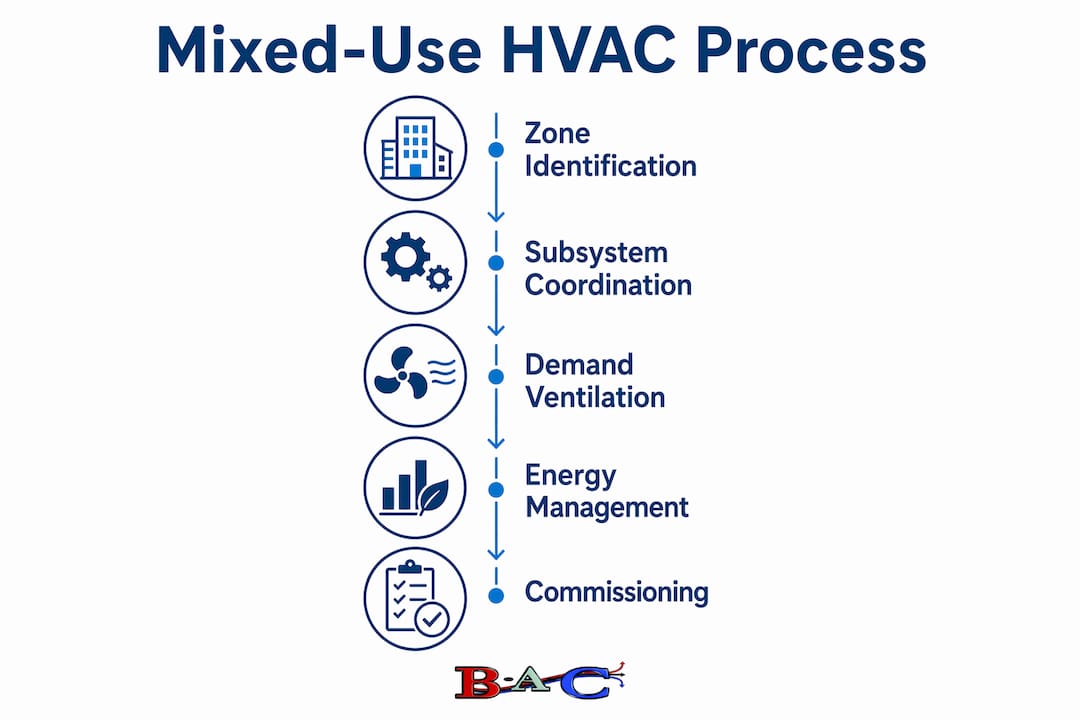
A building automation system ties these subsystems together. It collects sensor data from every zone, coordinates HVAC outputs with lighting and access control schedules, and uses variable-speed drives and smart dampers to modulate output continuously rather than cycling equipment on and off. This coordination layer is what separates a well-performing mixed-use building from one that burns energy inefficiently.
What makes HVAC needs in mixed-use buildings unique?
The core challenge is not technical complexity alone. It is the combination of simultaneous, competing demands that no single-zone system can resolve without deliberate design.
Consider a typical mixed-use tower in New Jersey. The south-facing retail facade absorbs solar heat gain all afternoon while the north-facing residential units on the same floor need heating. The gym on the third floor has 40 people generating metabolic heat at 6 a.m., while the offices above are empty. These are not edge cases. They are the daily operating reality of any mixed-use property.
Key HVAC considerations for mixed-use buildings include:
- Thermal load conflicts. Retail, office, and residential zones have different peak load times and magnitudes. A system sized for one zone will underperform or over-condition another.
- Occupancy schedule mismatches. Retail may operate 10 a.m. to 9 p.m. Offices run 8 a.m. to 6 p.m. Residential is occupied around the clock. Fixed scheduling fails all three.
- Ventilation diversity. Code-minimum ventilation for an empty office is very different from what a packed restaurant needs. ASHRAE 62.1 sets the floor, but occupancy-responsive control is what keeps air quality acceptable without over-ventilating empty spaces.
- Noise and vibration isolation. Mechanical equipment serving commercial floors must not transmit noise to residential units above. This affects equipment selection, mounting, and duct routing.
- Metering and cost allocation. Tenants expect to pay for what they use. Submetering HVAC energy by zone is a design requirement, not an afterthought.
Pro Tip: Engage the mechanical engineer and facility manager together during schematic design. Decisions made at that stage, like riser locations and zone boundaries, are nearly impossible to reverse after construction.
How four-pipe fan coil systems enable simultaneous heating and cooling
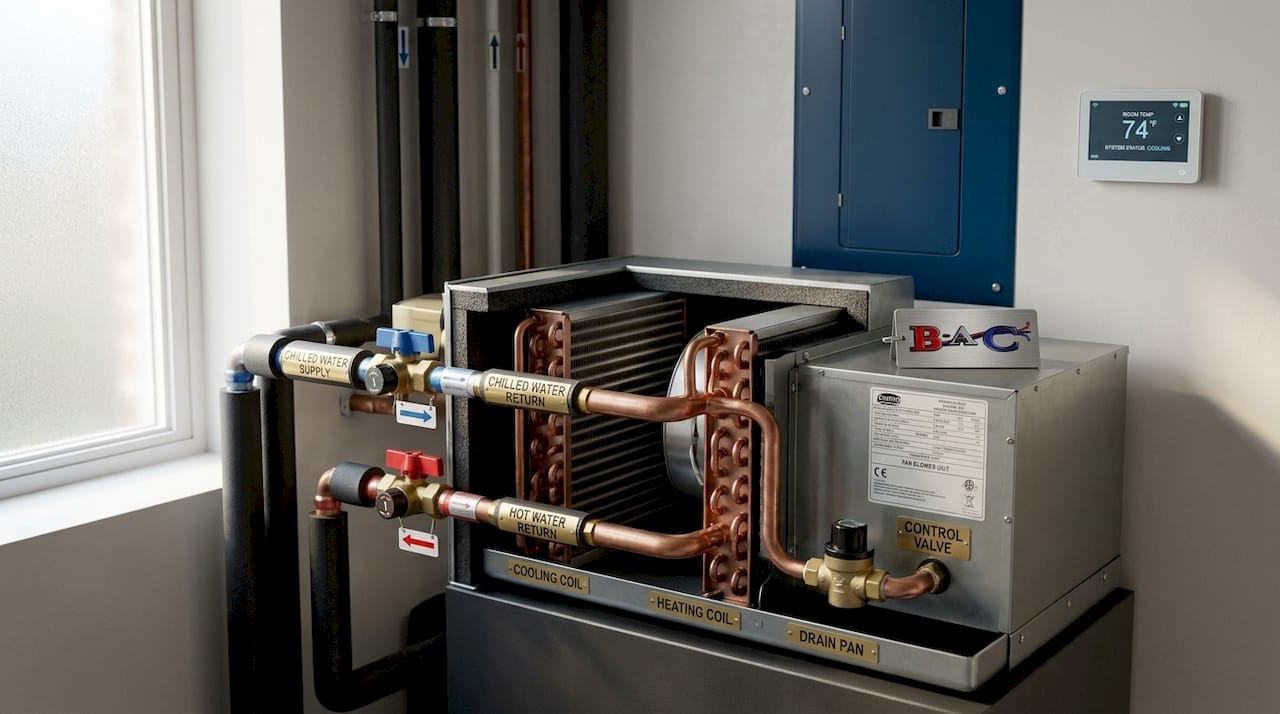
The four-pipe fan coil system is the most widely specified solution for mixed-use HVAC design, and for good reason. A four-pipe fan coil setup uses separate chilled-water and hot-water circuits to provide heating and cooling at the same time in different zones. Each fan coil unit has two coils: one connected to the chilled-water loop, one to the hot-water loop. The zone thermostat calls for whichever it needs, and the central plant delivers both simultaneously.
This is a meaningful departure from two-pipe systems, which switch the entire building between heating and cooling modes seasonally. In a two-pipe building, a warm spring day forces a choice: heat the residential floors that are still cold at night, or cool the retail spaces that are overheating in the afternoon sun. You cannot do both. That limitation makes two-pipe systems unsuitable for most mixed-use applications.
| Feature | Four-pipe system | Two-pipe system |
|---|---|---|
| Simultaneous heating and cooling | Yes, by zone | No, whole-building mode only |
| Zone independence | Full | Limited |
| Dehumidification control | Precise, year-round | Seasonal only |
| First cost | Higher | Lower |
| Operating efficiency in mixed-use | High | Low to moderate |
| Best application | Mixed-use, hotels, hospitals | Single-use residential or small commercial |
Four-pipe systems also provide year-round dehumidification because the chilled-water coil is always available. This matters in New Jersey’s humid summers, where latent load control is as important as sensible cooling. Hotels and mixed-use office buildings are the most common beneficiaries because individual zone control directly improves occupant comfort and reduces energy waste from over-conditioning.
Pro Tip: Specify a hydronic heating system with variable-flow pumping on the hot-water loop. It cuts pump energy significantly compared to constant-flow designs and pays back within a few years in a building of any meaningful size.
How demand-controlled ventilation and building automation improve efficiency
Demand-controlled ventilation is the practice of adjusting outdoor air supply based on real-time occupancy rather than worst-case design assumptions. The mechanism is straightforward: CO2 sensors measure occupant-generated carbon dioxide as a proxy for how many people are in a space. When CO2 rises, the outdoor air damper opens further. When the space empties, it returns to the code-minimum position.
The numbers behind this are significant. Outdoor air damper fractions shift from roughly 10 to 15 percent at low CO2 levels to as much as 50 percent at peak occupancy, all layered on top of ASHRAE 62.1 minimum ventilation requirements. That range represents a large portion of a building’s total heating and cooling load, because conditioning outdoor air is energy-intensive. In a mixed-use building where a conference room is empty 60 percent of the day, DCV captures real savings without compromising air quality.
Implementing DCV effectively in a mixed-use building requires four steps:
- Map zones by occupancy type. High-density spaces like conference rooms and retail floors benefit most from DCV. Private offices and corridors benefit less. Zone the CO2 sensing accordingly.
- Set minimum damper positions. CO2 alone cannot be the only control signal. ASHRAE 62.1 requires a minimum outdoor air fraction regardless of CO2 reading. Program this floor into the BAS before enabling DCV logic.
- Integrate with the BAS schedule. DCV works best when the BAS knows the building’s occupancy schedule. A retail floor that opens at 10 a.m. should pre-condition before occupants arrive, not react after CO2 climbs.
- Plan a sensor maintenance program. Sensor drift causes incorrect ventilation rates, leading to either energy waste from over-ventilation or air quality failures from under-ventilation. Calibration checks every six to twelve months are standard practice.
The BAS layer amplifies DCV’s value by coordinating it with lighting, elevator scheduling, and access control data. When the BAS knows a floor is unoccupied because badge readers show no entries, it can reduce HVAC output proactively rather than waiting for temperature or CO2 to drift. This is how smart HVAC systems avoid the subsystem conflicts that plague buildings where HVAC, lighting, and access control operate independently.
Why commissioning determines whether your HVAC system actually performs
A well-designed HVAC system and a well-performing one are not the same thing. Commissioning is the process that closes the gap. It verifies that what was installed matches what was designed, and that every control sequence operates correctly under every operating mode.
The commissioning process for a mixed-use building follows a specific sequence. Testing and balancing (TAB) comes first. TAB verifies airflow and water flow rates against design specifications before any controls testing begins. Discrepancies found during TAB are corrected before the final report is issued. Attempting to tune control loops before confirming correct flows is a common mistake that bakes operational problems into the system permanently.
Functional performance testing follows TAB. This phase verifies that control sequences operate as intended across all modes: occupied, unoccupied, economizer, freeze protection, and failure scenarios. Functional performance testing catches incorrect programming in roughly one-third of commercial projects. That statistic means a building that skips this step has approximately a one-in-three chance of operating with control logic that does not match design intent from day one.
For mixed-use buildings specifically, commissioning vertical communities requires validating sequences across competing occupancy schedules and shared systems. A residential floor calling for heat at midnight while the retail floor below is in unoccupied cooling mode is a real scenario that must be tested, not assumed to work. Skipping this verification is a direct path to tenant HVAC complaints and lease disputes.
Key commissioning deliverables for mixed-use buildings include:
- Verified TAB reports for all air handling units, fan coil units, and hydronic circuits
- Functional performance test results for each zone’s control sequence
- Mode-by-mode documentation of sequences of operation per zone
- Trend logs showing system response to occupancy changes and setpoint calls
- A retro-commissioning schedule for years two, five, and ten of building operation
Key takeaways
Mixed-use building HVAC systems perform reliably only when zone-specific architecture, occupancy-responsive ventilation, and thorough commissioning are designed and executed together from the start.
| Point | Details |
|---|---|
| Four-pipe systems are the standard | Separate hot and chilled water circuits allow simultaneous heating and cooling across independent zones. |
| DCV cuts ventilation energy waste | CO2-based damper control reduces outdoor air conditioning load during low-occupancy periods. |
| BAS integration multiplies efficiency | Coordinating HVAC with lighting and access control prevents subsystem conflicts and improves response time. |
| TAB before controls tuning | Verifying airflow and water flow rates before functional testing prevents baked-in operational failures. |
| Commissioning is not optional | Functional performance testing catches control programming errors in roughly one-third of commercial projects. |
What I’ve learned designing HVAC for mixed-use properties
After years of working on mixed-use projects across New Jersey, the pattern I see most often is this: the mechanical design is solid, but the coordination between the design team and the facility manager breaks down before occupancy. The BAS gets handed over with no training, the DCV sensors never get calibrated after year one, and the four-pipe system starts behaving like a two-pipe system because nobody updated the seasonal changeover logic.
The buildings that perform well long-term share one trait. The facility manager was in the room during design development, not just at the commissioning walkthrough. They understood why the zone boundaries were drawn where they were, why the minimum damper positions were set at specific values, and what the BAS trend logs should look like under normal operation. That knowledge is what allows them to catch a drifting CO2 sensor before it causes an IAQ complaint, or recognize that a zone’s heating calls are spiking because a control valve is failing.
My honest advice to developers: budget for HVAC commissioning as a non-negotiable line item, not a value-engineering target. The cost of a thorough commissioning process is a fraction of one year of energy waste from a poorly tuned system, and far less than the legal exposure from a tenant who can document that their space was never conditioned correctly.
— John
How Brighton Air Corp supports mixed-use HVAC projects in New Jersey
Brighton Air Corp has delivered HVAC solutions for complex commercial and mixed-use properties across New Jersey since 1993, with over 150 years of combined technician expertise across the team.

Whether your project requires four-pipe fan coil installation, VRF system design, BAS integration, or full commissioning support, Brighton Air Corp brings the technical depth to execute correctly the first time. The team handles TAB verification, functional performance testing, and ongoing maintenance programs designed to keep mixed-use systems performing at design intent year after year. If you are planning a new development or managing an underperforming existing building, contact Brighton Air Corp for a consultation and free estimate. Getting the HVAC right from the start is the most cost-effective decision you will make on any mixed-use project.
FAQ
What HVAC system is best for a mixed-use building?
Four-pipe fan coil systems and VRF systems are the two primary choices for mixed-use buildings because both support simultaneous heating and cooling across independent zones. Four-pipe systems are preferred when a central hydronic plant is already planned; VRF systems suit buildings where refrigerant-based distribution is more practical.
How does demand-controlled ventilation work in mixed-use buildings?
DCV uses CO2 sensors to modulate outdoor air dampers above the ASHRAE 62.1 minimum, increasing ventilation when occupancy rises and reducing it when spaces are empty. Outdoor air fractions can shift from roughly 10 percent at low occupancy to 50 percent at peak load, representing significant energy savings across a mixed-use property.
Why is commissioning critical for mixed-use HVAC systems?
Commissioning verifies that installed controls match design intent through functional performance testing across all operating modes. Research shows incorrect programming appears in roughly one-third of commercial projects, making commissioning the primary defense against operational failures and tenant complaints.
How do building automation systems improve mixed-use HVAC efficiency?
A BAS integrates HVAC, lighting, and access control data to coordinate system outputs and prevent subsystem conflicts. By using variable-speed drives and smart dampers instead of simple on/off cycling, a well-configured BAS reduces energy consumption while maintaining zone-specific comfort.
How often should CO2 sensors be calibrated in a mixed-use building?
CO2 sensors used for demand-controlled ventilation should be calibrated every six to twelve months. Sensor drift causes incorrect ventilation rates, resulting in either energy waste from over-ventilation or air quality failures from under-ventilation.
Recommended
- Cranford Westfield Summit Scotch Plns Fanwood Kenilworth Clark Rahway Livingston AC Repair Install Service HVAC Contractor Emergency Heat Pump Repair HVAC System Installation
- Cranford Westfield Summit Scotch Plns Fanwood Kenilworth Clark Rahway Livingston AC Repair Install Service HVAC Contractor Emergency Heat Pump Repair HVAC System Installation
- Cranford Westfield Summit Scotch Plns Fanwood Kenilworth Clark Rahway Livingston AC Repair Install Service HVAC Contractor Emergency Heat Pump Repair HVAC System Installation
- Cranford Westfield Summit Scotch Plns Fanwood Kenilworth Clark Rahway Livingston AC Repair Install Service HVAC Contractor Emergency Heat Pump Repair HVAC System Installation