
How Emergency Boiler Repair Works: What to Expect
How Emergency Boiler Repair Works: What to Expect
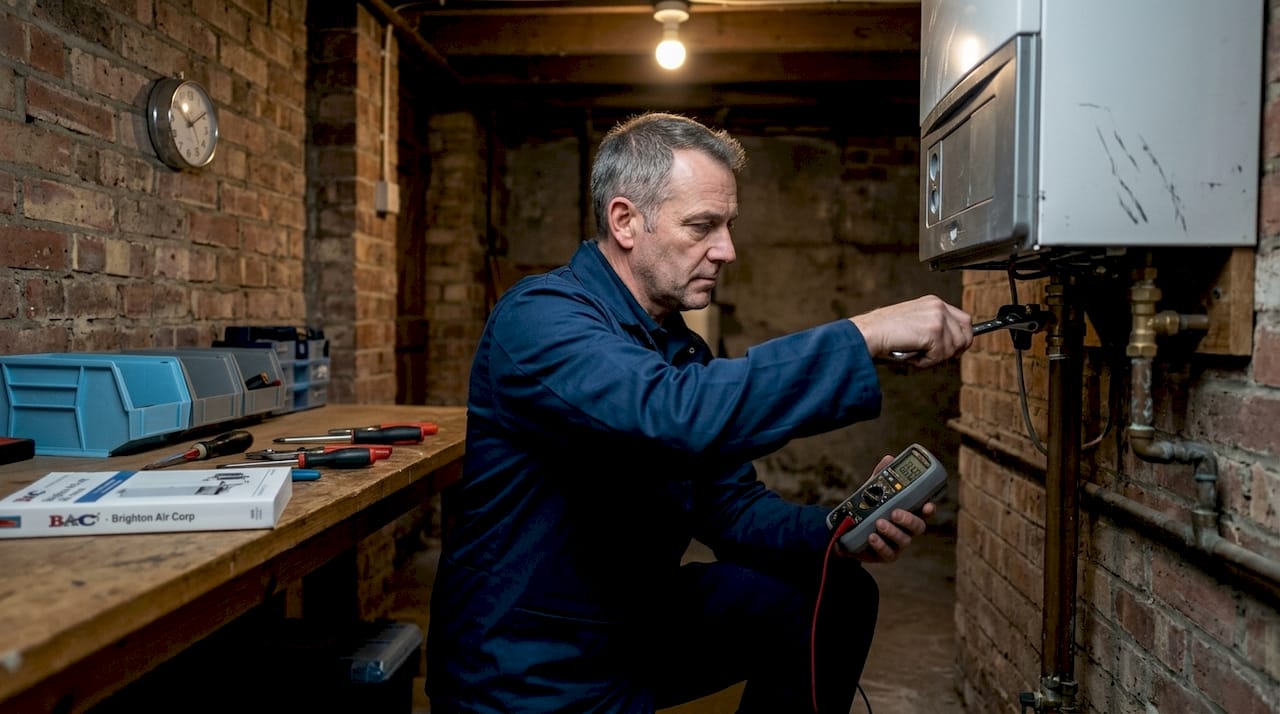
Most homeowners assume emergency boiler repair means a technician shows up, glances at the unit, and fixes it in twenty minutes. That’s rarely how it goes. Understanding how emergency boiler repair works, what triggers it, and what a technician actually does on site will help you stay calm, make better decisions, and avoid costly mistakes. This guide walks you through every stage of the process, from recognizing a genuine emergency to navigating post-repair maintenance, so you’re never caught off guard.
Table of Contents
- Key Takeaways
- How emergency boiler repair works and when to call
- The step-by-step boiler repair process
- Safety considerations every homeowner needs to know
- What to expect for costs and repair decisions
- Post-repair steps and maintenance tips
- My take on emergency boiler repair and what I’ve learned
- How Brightonaircorp handles your boiler emergencies
- FAQ
Key Takeaways
| Point | Details |
|---|---|
| Know true emergencies | No heat, leaks, strange noises, and CO alarms are genuine emergencies requiring immediate professional response. |
| Expect a structured process | Technicians follow a diagnostic sequence including safety checks, part replacement, and pressure adjustment. |
| CO safety is non-negotiable | Carbon monoxide is odorless; working alarms and knowing your shutoff valve location can save lives. |
| Prepare before the tech arrives | Have your boiler model, warranty details, and service history ready to speed up diagnosis and repair. |
| Post-repair maintenance matters | Scheduling annual service after an emergency repair significantly lowers the chance of repeat failures. |
How emergency boiler repair works and when to call
Not every boiler hiccup qualifies as an emergency. Knowing the difference between a minor inconvenience and a situation that demands an urgent boiler service call can save you both money and unnecessary stress.
These situations genuinely require immediate attention:
- No heat or hot water in freezing temperatures, especially in homes with young children or elderly residents
- Visible water leaks around the boiler, which can cause electrical hazards and structural water damage
- Unusual noises such as banging, clanking, or loud rumbling sounds that suggest pressure buildup or a failing pump
- Carbon monoxide alarm activation, which requires evacuation and emergency services before any repair work begins
- A yellow or orange boiler flame instead of the normal blue. A yellow or orange flame signals incomplete combustion and possible CO production. Switch the boiler off immediately if this happens.
- No response from controls after a cold spell, suggesting a frozen condensate pipe or failed ignition
Delaying action on any of these issues creates compounding risk. Delaying repairs increases the chance of property damage and serious safety hazards, particularly with gas appliances. What begins as a small leak can soak insulation, corrode components, and turn a $300 fix into a $1,500 job.
Compare that to situations that can wait for a scheduled appointment: minor pressure drops you can top off yourself, a single radiator staying cold (likely an airlock), or an intermittent error code that clears on its own. Those aren’t emergencies. Use your judgment on timing, but err toward caution when gas or safety is involved.
Pro Tip: Write your boiler’s model number and service date on a sticky note inside the utility cabinet. When you’re panicking at midnight in a cold house, you’ll be glad you did.
The step-by-step boiler repair process
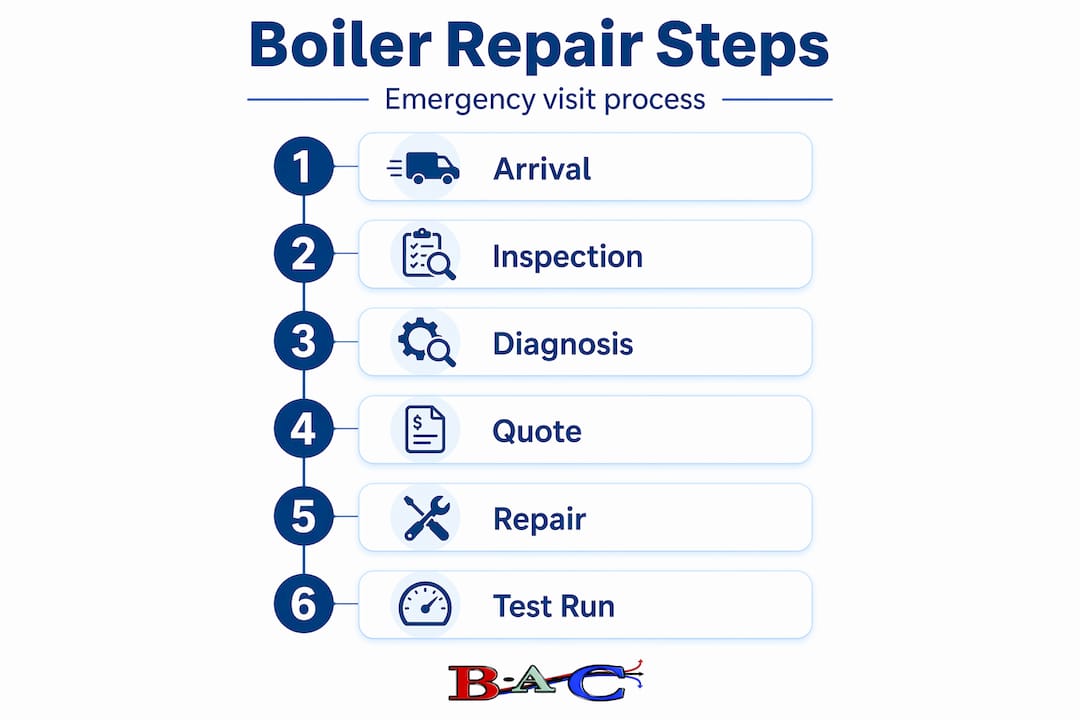
Knowing what happens during a professional emergency repair removes the anxiety of the unknown. Here’s what a qualified technician actually does from the moment you call.
-
Initial call and triage. You describe the symptoms, and the dispatcher gathers key details: boiler type, age, current error codes, whether gas is on, and whether CO alarms have triggered. This shapes how urgently the tech responds and what parts they might bring.
-
On-site safety assessment. Before touching the boiler, the technician checks for gas odors, tests ambient CO levels with a detector, and inspects the immediate area for leaks or water damage. Safety comes before diagnosis.
-
Diagnostic inspection. The tech assesses the heat exchanger, pressure gauge, expansion vessel, ignition system, and thermostat. Technicians diagnose the problem first, then proceed with targeted fixes. This targeted approach saves time and prevents unnecessary part swaps.
-
Repair execution. Common emergency tasks include replacing a faulty diverter valve, repressurizing the system, clearing a blocked condensate pipe, replacing an ignition electrode, or repairing a leaking pipe joint. The technician uses the diagnosis to drive every decision.
-
Carbon monoxide safety check. After repairs, the tech performs a flue gas analysis to confirm combustion is complete and safe. This step is non-negotiable for gas appliances.
-
Communication and options. The technician explains what was found, what was fixed, and what might need attention in the near future. If a major component is failing, you’ll hear your options for repair versus full replacement at this point.
-
Documentation and follow-up. You should receive a written service report detailing the fault, the fix, any parts replaced, and a safety certificate if applicable. Keep this on file. It protects your warranty and your insurance claim if anything goes wrong later.
Pro Tip: Ask the technician to show you the fault code on the boiler display before they clear it. Photograph it with your phone. That code is your evidence and your starting point if the problem returns.
Safety considerations every homeowner needs to know
Boiler emergencies and safety risks go hand in hand. These are the things you need to understand before, during, and after a repair.
- Carbon monoxide is invisible and odorless. Many CO risks go completely undetected without working alarms. Place CO alarms 1 to 3 meters from appliances, test them monthly, and replace them every 5 to 10 years.
- Know your gas shutoff valve. Knowing shutoff valve locations can be life-saving during a boiler failure. Locate it now, not during an emergency.
- If you suspect a gas leak, do not switch any lights on or off. Open windows, leave the building, and call your gas utility’s emergency line from outside.
- Ventilate before re-entry if your CO alarm has triggered. Do not go back inside until emergency services have cleared the property.
- Use licensed technicians only. In the U.S., HVAC technicians handling gas appliances must hold state-level certifications. Unlicensed repairs void warranties and create liability. Working with certified technicians is the standard for both safety and warranty compliance.
When in doubt, get out. A boiler can be replaced. A CO exposure cannot be undone. Call emergency services first, then worry about the repair.
What to expect for costs and repair decisions
Walking into an emergency repair without any financial context is how homeowners get taken advantage of. Here’s how to approach the cost conversation with clarity.

What drives emergency repair costs:
Most urgent boiler service calls include a call-out fee, labor costs (often billed hourly), and parts. The total varies widely based on the fault type, parts availability, and time of day. Transparent quotes should always break these out separately.
| Factor | Lower end | Higher end |
|---|---|---|
| Call-out fee | $75 | $150+ after hours |
| Labor (per hour) | $90 | $175 |
| Common parts (e.g., valve) | $50 | $300+ |
| Full diagnostic assessment | $100 | $200 |
Transparent quotes help homeowners make informed decisions, especially when facing the repair versus replacement question.
When replacement beats repair:
A gas boiler typically lasts 10 to 15 years with proper maintenance. If your unit is older than 12 years and is facing recurrent faults, rising repair bills, and difficulty sourcing parts, replacement is likely the smarter financial move.
Before the technician arrives, gather your boiler model, serial number, installation date, and any warranty documentation. Having this information ready shortens repair time and improves communication. It also tells the tech immediately whether parts are still covered.
Ask for a written quote before approving any work. If you get pushback on that request, take it as a red flag.
Post-repair steps and maintenance tips
Fixing the immediate problem is only half the job. What you do in the weeks and months after an emergency repair determines whether you’re back in the same situation next winter.
- Schedule an annual service. Regular servicing catches small problems before they become emergencies, improves efficiency, and keeps warranties valid. Book it for late summer before the heating season begins.
- Monitor your pressure gauge. A healthy boiler typically runs between 1 and 1.5 bar when cold. If it frequently drops below 1 or spikes above 2, you have a leak or an expansion vessel issue worth investigating.
- Check the flame color periodically. A steady blue flame means clean combustion. Any yellow or flickering behavior warrants a call to your HVAC provider.
- Clear vents and flue terminations. Debris, bird nests, and ice can block flues and create dangerous backdraft conditions. Inspect them visually at least once per season.
- Keep a simple boiler log. Note the date of any service, error codes, pressure readings, and repairs. This log is invaluable for diagnosing future issues and demonstrating care to potential home buyers.
Pro Tip: Set a calendar reminder for October 1st every year to test your boiler before the cold hits. Catching a fault in fall costs far less than an emergency repair call on the coldest night in January.
My take on emergency boiler repair and what I’ve learned
I’ve seen a lot of homeowners handle boiler emergencies, and the ones who come out ahead share one trait: they treated maintenance as ongoing, not as something you think about when things break.
In my experience, the calls that escalate into the most expensive repairs share a common thread. The homeowner noticed something odd, a banging sound, a pressure drop, a slight smell, and decided to wait. Waiting turned a $200 repair into a $1,200 one. Every time.
What I’ve also found is that the anxiety around emergency repairs comes mostly from not knowing what to expect. When homeowners understand the process, they stay calmer, ask better questions, and make smarter decisions in the moment. The technician notices. That clarity often results in cleaner diagnoses and faster resolutions.
My honest take on the repair versus replace question: if a tech is pushing hard for replacement on a boiler under 10 years old, get a second opinion. Replacement is sometimes necessary. But it’s also the higher-margin recommendation. Know the difference.
Stay informed, keep your CO alarms working, and schedule that annual service. It’s the simplest, most cost-effective thing you can do for your home’s heating system.
— John
How Brightonaircorp handles your boiler emergencies
When your heat goes out in the middle of a New Jersey winter, you need more than a phone number. You need a team that shows up, knows what they’re doing, and gives you straight answers.

Brighton Air Corp has served New Jersey homeowners and businesses since 1993 with over 150 years of combined technician experience across the team. Their 24/7 emergency boiler repair services mean a licensed technician can reach you any hour of the day or night, not just during business hours. Every service call follows a structured diagnostic process, includes a safety check, and ends with a clear written report. Pricing is transparent upfront, and the team walks you through every option before any work begins.
Whether you need an urgent fix tonight or want to set up annual maintenance to prevent future emergencies, Brighton Air Corp has the expertise and availability to back you up. Reach out through their website to get started.
FAQ
What qualifies as an emergency boiler repair?
An emergency repair is needed when you have no heat or hot water, a visible water leak, unusual noises, or a triggered carbon monoxide alarm. These situations pose safety risks and should not wait for a scheduled appointment.
How long does an emergency boiler repair typically take?
Most emergency repairs take between one and three hours, depending on the fault type and parts availability. Complex issues like heat exchanger failure may take longer or require a return visit.
Is it safe to stay home during a boiler emergency?
It depends on the fault. For issues like low pressure or a minor leak, staying home is generally fine. If your CO alarm has triggered or you smell gas, evacuate immediately and call emergency services before calling a repair company.
How do I know if I should repair or replace my boiler?
If your boiler is over 12 years old and facing repeated faults, replacement is often more cost-effective than ongoing repairs. A boiler under 10 years old with an isolated fault is almost always worth repairing.
What should I do while waiting for the emergency technician to arrive?
Turn off the boiler using its power switch, note any error codes displayed, and write down when the problem started and what symptoms you noticed. If you smell gas or your CO alarm is sounding, leave the property and call your gas utility’s emergency line first.
Recommended
- Cranford Westfield Summit Scotch Plns Fanwood Kenilworth Clark Rahway Livingston AC Repair Install Service HVAC Contractor Emergency Heat Pump Repair HVAC System Installation
- Cranford Westfield Summit Scotch Plns Fanwood Kenilworth Clark Rahway Livingston AC Repair Install Service HVAC Contractor Emergency Heat Pump Repair HVAC System Installation
- Cranford Westfield Summit Scotch Plns Fanwood Kenilworth Clark Rahway Livingston AC Repair Install Service HVAC Contractor Emergency Heat Pump Repair HVAC System Installation
- Cranford Westfield Summit Scotch Plns Fanwood Kenilworth Clark Rahway Livingston AC Repair Install Service HVAC Contractor Emergency Heat Pump Repair HVAC System Installation