
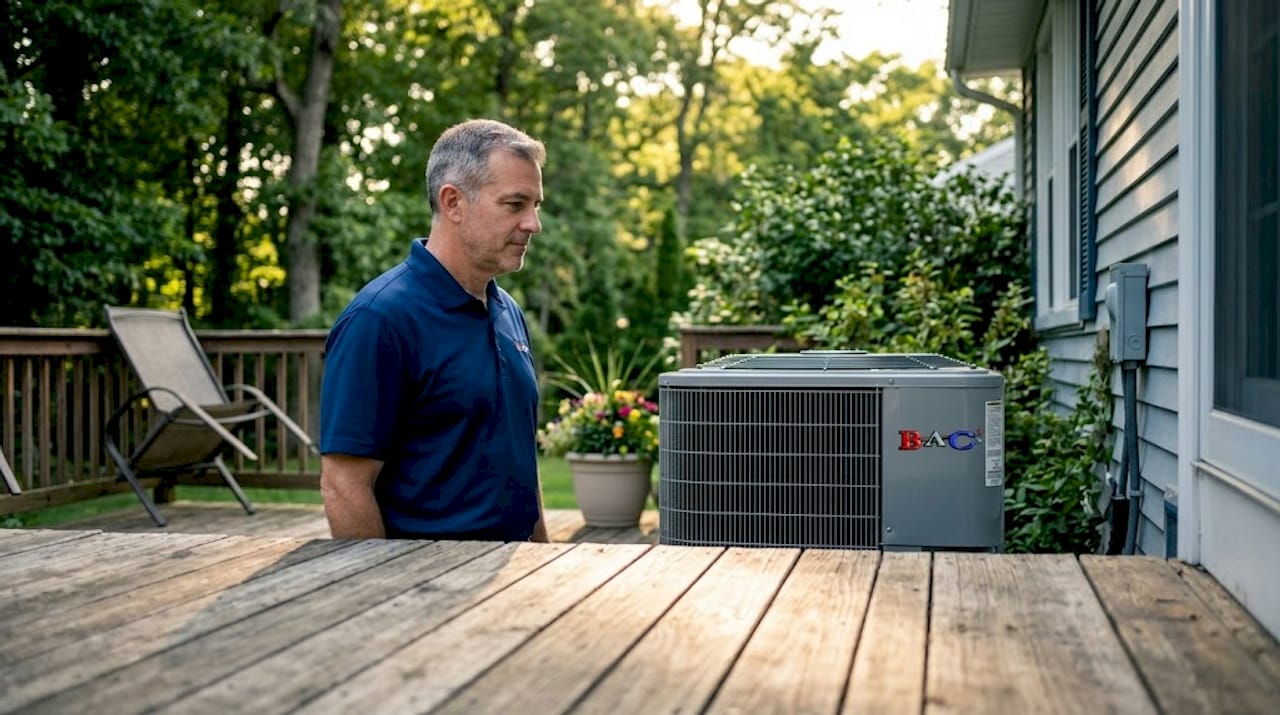
How central air conditioning works: a homeowner's guide
How central air conditioning works: a homeowner’s guide
Most homeowners believe their central air conditioner blows cold air into the house. It seems logical. The air coming out of the vents is cool, so the system must be making cold air somewhere, right? Actually, that is not how it works at all. Your central AC system is doing something far more interesting: it is pulling heat out of your home and dumping it outside. Once you understand this, everything about how your system performs, how to troubleshoot it, and how to get the most out of it starts to make much more sense.
Table of Contents
- Core principles: How central air conditioning really works
- Step-by-step: The refrigeration cycle in action
- Split vs. packaged systems: Which setup runs your home?
- Common homeowner issues: Zoning, comfort, and energy efficiency
- What most homeowners miss about central air conditioning
- Improve your home comfort with expert AC solutions
- Frequently asked questions
Key Takeaways
| Point | Details |
|---|---|
| AC removes heat | Central air conditioning cools your home by transferring heat outside, not by making cold air. |
| Cycle stages matter | Each component—evaporator coil, compressor, condenser—plays a key role throughout the cooling cycle. |
| System type impacts needs | Split and packaged systems each affect installation, noise, and maintenance in different ways. |
| Zoning affects comfort | Most homes have one cooling zone, which can mean uneven temperatures unless ducts are balanced. |
| Efficiency can be improved | Understanding airflow and zoning empowers you to ask for the right upgrades or maintenance. |
Core principles: How central air conditioning really works
Let’s break down the real science behind how your central air conditioning functions. And do not worry, you do not need an engineering degree to follow along.
The single most important thing to understand is this: central air conditioning cools a home by moving heat out of indoor air using a refrigeration cycle, then delivering the cooled air through ducts. The system does not manufacture cold. Instead, it uses a special fluid called refrigerant to absorb heat from your indoor air and carry it to the outside unit, where it gets released into the outdoor air.
Think of it like a sponge. The refrigerant soaks up heat from inside your home, travels outside, and then squeezes that heat out into the open air. Then it comes back inside and does the whole thing again. That continuous loop is called the vapor-compression refrigeration cycle, and it relies on pressure changes to move heat rather than creating cold from scratch.
Here is why this matters for you as a homeowner in New Jersey:
- Your thermostat triggers the process when indoor temperature rises above your set point
- The indoor unit houses the evaporator coil and blower, which together pull heat from your air
- The outdoor unit releases that heat outside using the condenser coil and compressor
- Refrigerant acts as the courier, cycling between liquid and gas states to carry heat from indoors to outdoors
- Air is never actually “cooled” from nothing. The heat is simply relocated
“Understanding that your AC removes heat rather than creates cold completely changes how you think about efficiency and comfort. If heat keeps entering your home faster than the system can remove it, no thermostat setting will fix that.”
This matters on a practical level too. If your home has poor insulation or a lot of heat gain through windows, your AC has to work much harder to keep removing that heat. Running the system longer does not mean it is broken. It may just mean heat is entering faster than the system can manage.
Step-by-step: The refrigeration cycle in action
With the science understood, here is what actually happens when your central AC system turns on and cools your home. Walking through this sequence helps you spot what might go wrong and why routine care makes such a big difference.
- Your thermostat detects heat. When the indoor temperature rises above your set point, the thermostat sends a signal to start the system.
- The blower pulls warm indoor air across the indoor evaporator coil. This coil contains cold refrigerant in liquid form.
- Refrigerant absorbs heat from the air. As warm air passes over the coil, the refrigerant soaks up that heat and changes from liquid to gas.
- The blower pushes the now-cooler air back through your duct system and into your rooms.
- The warm refrigerant gas travels outside through a copper line to the compressor in the outdoor unit.
- The compressor pressurizes the gas, raising its temperature even higher so it can release heat outdoors effectively.
- The condenser coil releases that heat outdoors, and the refrigerant cools back down and converts to liquid again.
- The liquid refrigerant returns indoors through the expansion valve, drops in pressure, cools down again, and the cycle repeats.
In a typical split central AC system, this refrigerant circuit runs continuously until your home reaches the thermostat target, then cycles off and restarts as needed.
| AC component | Location | Primary job |
|---|---|---|
| Evaporator coil | Indoor unit | Absorbs heat from indoor air |
| Blower fan | Indoor unit | Moves air across the coil and through ducts |
| Compressor | Outdoor unit | Pressurizes refrigerant gas |
| Condenser coil | Outdoor unit | Releases absorbed heat outside |
| Expansion valve | Indoor unit or line set | Drops refrigerant pressure to cool it |
| Refrigerant | Circulates both units | Carries heat from indoors to outdoors |
Pro Tip: The evaporator coil needs strong, consistent airflow to absorb heat efficiently. A dirty filter, blocked return vent, or closed supply register reduces that airflow and causes the coil to freeze up. A frozen coil stops your system from cooling at all, so checking your air filter monthly during peak summer heat is one of the simplest ways to avoid a breakdown.
Split vs. packaged systems: Which setup runs your home?
Not all homes use the same type of central AC setup. Let’s look at the two main configurations and why it matters for your space, your budget, and how a technician will service your system.
Central AC systems are typically implemented as either split systems, which have separate indoor and outdoor units connected by refrigerant lines, or packaged systems, which place most components in a single outdoor cabinet. Both use the same vapor-compression refrigeration cycle, but they are set up differently.
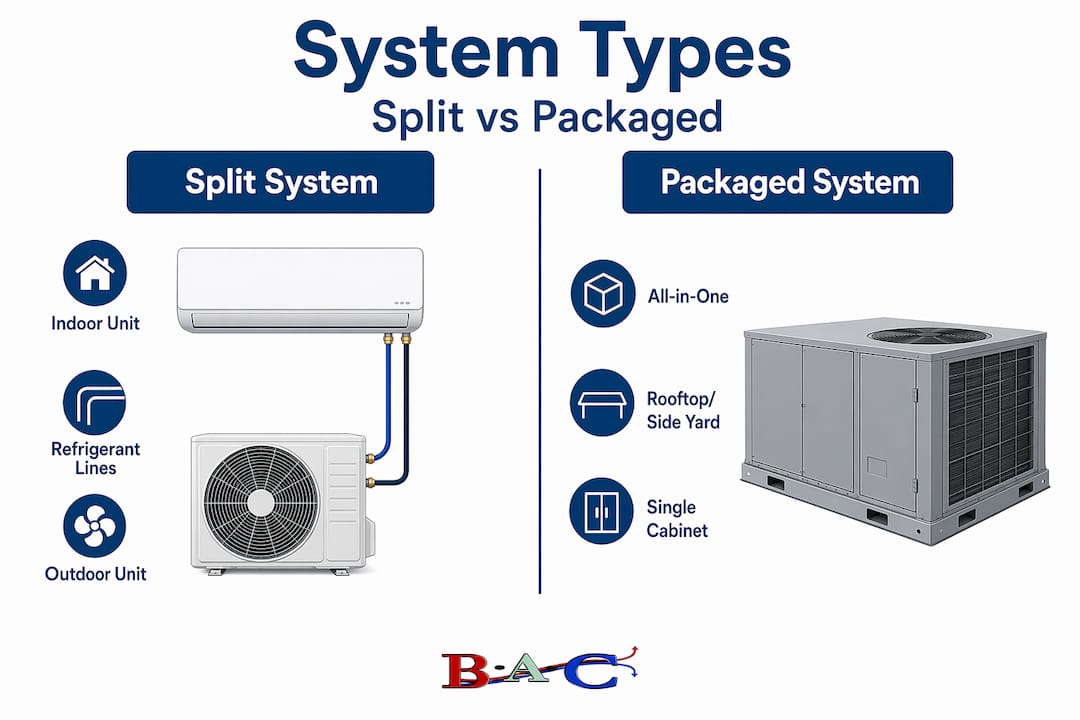
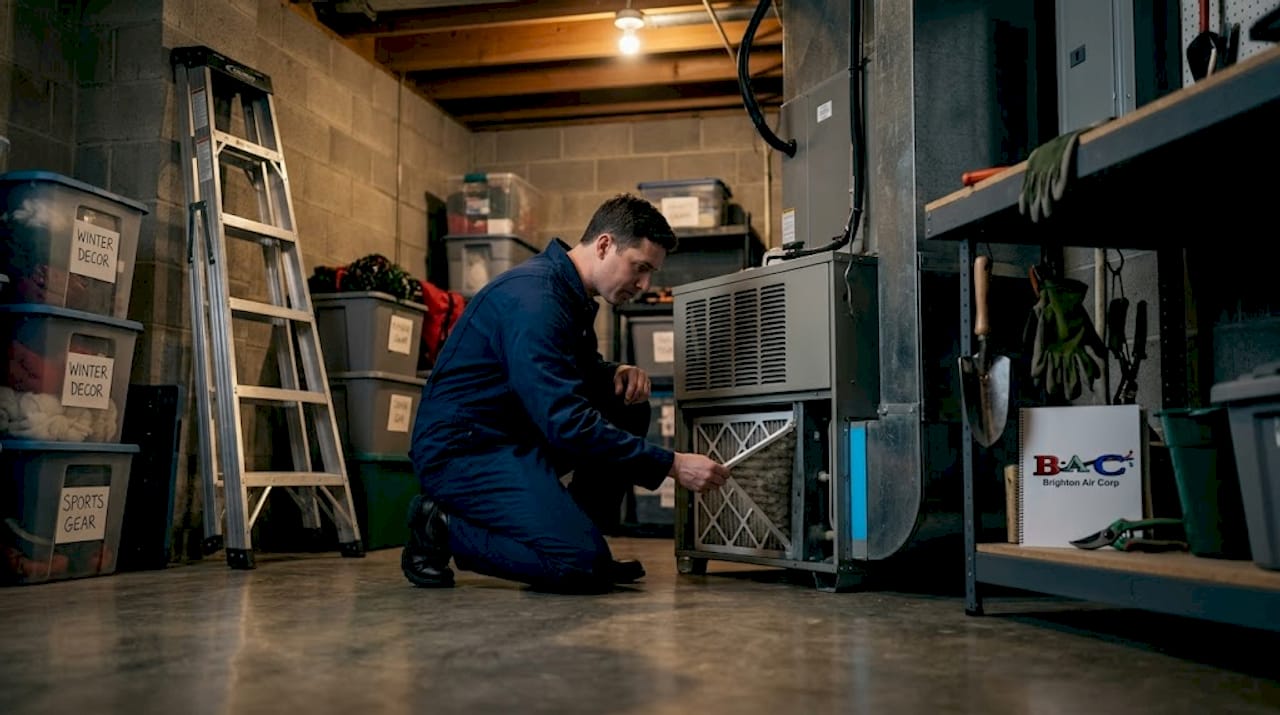
Split systems are by far the most common setup in New Jersey homes. The indoor unit typically sits in a basement, utility closet, or attic and contains the evaporator coil and air handler. The outdoor unit contains the compressor and condenser coil. Refrigerant lines run between the two.
Packaged systems combine everything, including the evaporator, compressor, and condenser, into one cabinet that sits outside, typically on the ground or roof. These are common in homes without basements or sufficient attic space, and they connect directly to the duct system through the wall or roof.
| Feature | Split system | Packaged system |
|---|---|---|
| Indoor unit location | Basement, attic, or closet | No indoor unit |
| Outdoor unit | Compressor and condenser only | All components combined |
| Common in NJ homes | Very common | Less common, specific homes |
| Noise indoors | Lower (compressor is outside) | Very low (no indoor equipment) |
| Space requirements | Requires indoor mechanical space | Requires ground or roof space outside |
| Service access | Two separate locations | Single outdoor cabinet |
| Installation flexibility | High | Moderate |
Why does knowing your system type matter? Because it affects every service call. A technician servicing a split system has to check two locations. A packaged system has all components in one spot, which can simplify some repairs but may expose components to weather wear more directly. If you are planning an upgrade or replacement, knowing your system type helps you ask the right questions and understand what a contractor is actually proposing.
- If you have a basement: You almost certainly have a split system
- If your home has no basement and limited attic space: A packaged system may be what you have
- If you are adding AC to an older New Jersey home: A split system is typically the preferred choice for flexibility and efficiency
Common homeowner issues: Zoning, comfort, and energy efficiency
System design can impact real-life comfort and energy bills. Here is what New Jersey homeowners should watch for and how to optimize for better results.
One of the most frustrating realities of central AC is that it typically treats the home as one thermal zone. If some rooms are much warmer or colder than others, comfort and efficiency can both suffer because of duct balancing and zoning limitations. In a standard setup, the system responds to one thermostat in one location. That means a bedroom on the second floor with a sunny southern exposure might be cooking while the basement is too cold.
Here is what typically causes uneven cooling in a home:
- Duct leaks or poor duct design allow cooled air to escape before reaching certain rooms
- Rooms far from the air handler receive less airflow because of pressure drop through longer duct runs
- High heat gain zones like rooms with large west-facing windows gain heat faster than the system can remove it
- Improper system sizing means the unit cycles off too quickly to fully dehumidify and balance temperatures
- Closing supply vents is a common instinct but almost always makes things worse by unbalancing the system
Energy waste compounds the problem when homeowners respond by lowering the thermostat drastically. Dropping from 76 to 68 degrees does not cool down a specific hot room faster. It just makes the system run much longer, driving up your energy bill and wearing out equipment faster.
Practical ways to improve comfort and efficiency:
- Duct sealing and balancing: A technician can test airflow and seal leaks to make your duct system deliver air where it is actually needed
- Zoning systems: A zoned system uses dampers inside the ducts and multiple thermostats to control different areas independently
- Smart thermostat upgrades: A programmable or smart thermostat reduces runtime when you are away and can learn your schedule to pre-cool efficiently
- Regular maintenance: Cleaning coils, checking refrigerant levels, and replacing filters keeps the system running at rated efficiency
- Supplemental solutions: For persistently hot rooms, a mini-split unit can provide targeted cooling without changing your main system
Pro Tip: Never close multiple supply vents to “redirect” airflow to problem areas. Your blower is designed to push against a specific amount of resistance. Closing vents increases static pressure and forces the blower to work harder, which can lead to premature motor failure and coil icing. If airflow balance is an issue, ask a technician to test and adjust your duct system properly.
What most homeowners miss about central air conditioning
Here is an honest take that most cooling guides will not give you: the single biggest mistake New Jersey homeowners make is treating central AC as a set-it-and-forget-it appliance. People change filters occasionally, call for service when something breaks, and otherwise ignore the system. That approach costs money and comfort.
Conventional wisdom says maintenance means clean filters and an annual tune-up. Those things matter, but airflow balance across the entire system is just as critical and almost nobody talks about it. A system that has great refrigerant levels but poor duct design will never cool your home evenly, no matter how many tune-ups you schedule.
We also see a lot of homeowners respond to discomfort by asking for a bigger AC unit. Bigger is almost never the answer. An oversized system short-cycles, meaning it turns on, cools quickly, and shuts off before it has removed enough humidity. New Jersey summers are humid. A system that runs longer at a matched capacity does a far better job of keeping your home feeling comfortable than a massive unit that blasts cold air for five minutes and shuts off, leaving sticky indoor air behind.
The deeper point is this: understanding how your system works puts you in a stronger position when a contractor comes to your door. You know to ask about airflow testing, not just refrigerant. You know that a comfort problem might be a duct problem, not an equipment problem. That kind of knowledge saves you money and gets you better results.
Improve your home comfort with expert AC solutions
If reading through this guide made you think about your own home’s cooling performance, that reaction is worth acting on.

At Brighton Air Corp, we work with New Jersey homeowners every day who are dealing with exactly these issues: uneven cooling, high energy bills, aging systems, and confusion about what kind of upgrade actually makes sense. Our technicians have the training to assess your system’s airflow, check duct performance, and recommend targeted solutions rather than just selling you new equipment. Whether you need a maintenance check, a full system evaluation, or guidance on zoning upgrades, our team is ready to help. Visit Brighton Air Corp services to learn more or schedule a consultation. We have been serving New Jersey families since 1993, and we know what it takes to keep homes comfortable through every summer.
Frequently asked questions
What does a central air conditioner actually do?
A central air conditioner removes heat from your home’s indoor air and releases it outside, then circulates the now-cooler air back through your home’s duct system.
Why are some rooms always warmer or cooler than others with central air?
Uneven temperatures are usually caused by duct balancing issues or because the system treats the whole home as a single thermal zone, which makes it difficult to account for rooms with higher heat gain or longer duct runs.
What is the difference between a split and a packaged central AC system?
Split systems have separate indoor and outdoor units connected by refrigerant lines, while packaged systems place most components in a single outdoor cabinet and connect directly to your ducts.
Does central air conditioning create cold air?
No. Central AC moves heat out of your home using refrigerant rather than generating cold air, which is why improving insulation and reducing heat gain directly improves how effectively your system performs.