
Avoid Failures: Generator Maintenance Schedule for Homes & Facilities
Avoid Failures: Generator Maintenance Schedule for Homes & Facilities
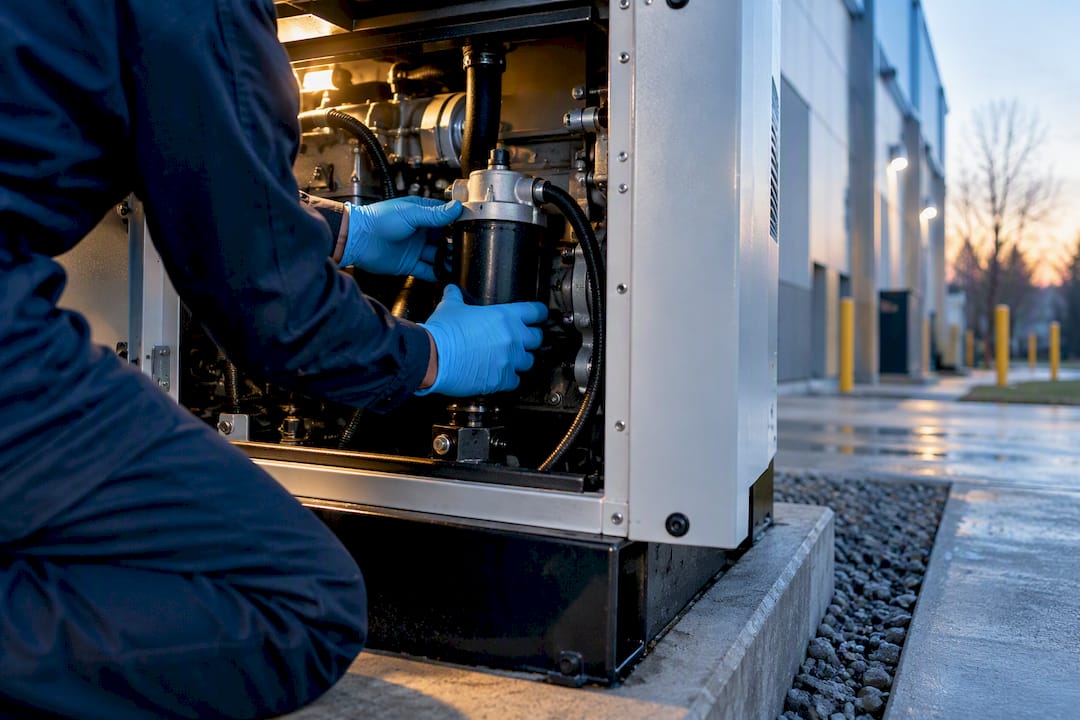
Run your standby generator weekly under no load for 10 to 20 minutes, get a professional annual service, and never skip the two things that cause most failures: the 25-hour or first-year break-in service and consistent battery care. Add quarterly inspections and hour-based milestones at 100, 200, and 400 hours depending on your unit. Everything else on this schedule builds around those anchors.
TL;DR:
- Weekly generator exercises are critical to keep batteries charged and oil settled, yet they are the most often skipped maintenance task.
- Monthly loaded tests with recorded readings help identify early signs of issues like transfer time delays and voltage fluctuations.
- Annual professional service should include oil changes, load testing, and inspection of critical components, with diesel units requiring fuel sampling for microbial contamination.
- Battery replacement every 3 to 4 years is a proactive measure to prevent no-start failures, especially in cold climates or after frequent cycling.
- Tasks like valve lash adjustment, load-bank testing, and fuel polishing must be performed by qualified technicians due to safety and calibration requirements.
Table of Contents
- What Is the Ideal Generator Maintenance Schedule?
- Step-by-Step Generator Upkeep Plan by Interval
- Does Fuel Type Change the Maintenance Schedule?
- How Do You Maintain Generator Fuel and Batteries?
- When Should You Call a Professional for Generator Service?
- Brighton Air Corp’s Field Perspective on Generator Service
- What Are the Warning Signs a Generator Needs Service?
- What Safety Precautions Matter During Generator Maintenance?
- What Environmental Rules Apply to Generator Fluid Disposal?
- How Do Weather and Load Affect Maintenance Frequency?
- Why Most Generator Schedules Fail in Practice
- Get Your Generator Professionally Serviced Before the Next Outage
- Standards and Reference Guides for Generator Maintenance
- Sources
- FAQ
What Is the Ideal Generator Maintenance Schedule?
A generator maintenance checklist works best when it’s organized by time interval, not by task type. That way, you’re not hunting through a manual every time you want to know what’s due this month. Below is the baseline schedule most standby and portable generators follow, adapted from manufacturer guidance and NFPA-aligned best practices.
| Interval | Core tasks | Who typically does it |
|---|---|---|
| Weekly | Self-exercise cycle, visual walkaround, check for leaks or alarms | Owner/facility staff |
| Monthly | Loaded exercise run (30+ min for many commercial systems), record voltage/frequency/oil pressure, ATS transfer check | Owner or technician |
| Quarterly | Battery terminal cleaning, belt/hose inspection, fuel-water separator drain, enclosure/vent check | Owner or technician |
| Semi-annual | Coolant condition check, air filter inspection, controller log review | Technician recommended |
| Annual | Full service: oil and filter change, spark plugs (gas units), load-bank or full-load test, documentation update | Technician required |
| 25 hours / first year | Break-in oil and filter change | Technician recommended |
| 100/200 hours | Schedule A tasks: oil, filter, air filter, battery check | Owner or technician |
| 400 hours | Extended inspection, valve lash check on some air-cooled models | Technician required |
A few things worth flagging on that table:
- The weekly exercise cycle is the single most skipped task, and it’s the one that keeps the battery charged and prevents oil settling.
- Facilities under NFPA 110 need documented monthly exercise and annual load testing, not just a “it started fine” note.
- Anything involving load-bank testing, valve adjustment, or fuel system work belongs to a technician, not a DIY job.
Step-by-Step Generator Upkeep Plan by Interval
Each interval has a specific job to do, and skipping the verification step is where most owners go wrong. Here’s what to actually check, not just what to run.
-
Weekly exercise (10 to 20 minutes, no load). Confirm the unit starts within a normal crank cycle, listen for irregular noise, and walk the perimeter checking for fuel or oil leaks, a lit battery charger indicator, and a clear enclosure free of debris or vegetation. This is also when carbon monoxide safety matters most for portable units. Never run a portable generator in a garage or near windows, even briefly.
-
Monthly loaded run (30+ minutes for NFPA-covered systems). Many facility managers treat this as optional because the unit “ran fine” during the weekly exercise, but a no-load run doesn’t stress the engine the way a loaded run does. During the monthly test, record oil pressure, coolant temperature, voltage output, frequency (should hold near 60 Hz), and the transfer switch’s actual switchover time. A transfer time creeping past a few seconds beyond spec is an early warning sign, not a fluke.
-
Quarterly inspection. Pull the battery terminals and check for corrosion, inspect belts and hoses for cracking, drain the fuel-water separator if equipped, and open the enclosure to check for rodent nests or moisture intrusion. Facility units exposed to road salt or coastal air need this checked more often; salt accelerates terminal corrosion noticeably.
-
Annual service and hour milestones. This is where oil and filter changes happen (unless hour-based intervals trigger it sooner), along with air filter replacement, spark plug service on gas units, and coolant system checks. Manufacturers often bundle these into what’s called Schedule A, typically due every 200 hours or annually, whichever comes first. Air-cooled engines commonly need a valve lash adjustment roughly every two years or 400 hours; this is not a DIY task, since clearances outside spec cause hard starting or power loss.
-
Full-load or load-bank test (annual, mandatory for many commercial systems). If a building’s actual electrical load can’t push the generator to 100% of nameplate capacity during a real event, a stepped load-bank test is the only way to verify performance under true stress. This test reveals wet-stacking and cooling limitations that a short exercise cycle simply won’t expose.
Pro Tip: *Log every test result, even when everything looks fine.
Acceptable ranges vary by model, but as a general guide: oil pressure should sit within the manufacturer’s published band at operating temperature, coolant temperature should stabilize and not climb during a loaded run, and voltage output should hold within about 5% of nameplate rating. Anything outside those bands during a monthly or annual test is a signal to call a technician before the next outage, not after.
Does Fuel Type Change the Maintenance Schedule?
Yes, and this is where a lot of generic checklists fall short. Diesel standby units carry a fuel-related risk that gasoline and propane units don’t: stored diesel degrades chemically within 6 to 12 months, developing microbial growth and sludge that clogs filters mid-outage.
- Diesel units need annual fuel sampling, filter replacement on schedule, and fuel polishing if contamination shows up, especially in tanks older than a year.
- Diesel units running light or intermittent loads are prone to wet-stacking, unburned fuel residue building up in the exhaust system, which the monthly loaded run helps prevent.
- Gasoline and propane portable units face a different problem: stale gas gums up carburetors fast, so fuel stabilizer and periodic draining matter more than sampling.
- Spark plugs on gas units need inspection roughly every season of heavy use, sooner in dusty or high-humidity environments.
- Batteries, ATS components, and controller boards follow roughly the same cadence regardless of fuel type.
How Do You Maintain Generator Fuel and Batteries?
Fuel sampling should pull from the bottom of the tank, not the top, since contamination and water settle there first and a clean surface sample can mask a bad tank. Lab testing against ASTM D975 standards catches water content, particulate levels, and microbial contamination before they clog a filter mid-outage. Tanks over a year old, or any tank that fails sampling, should get polished rather than simply topped off.
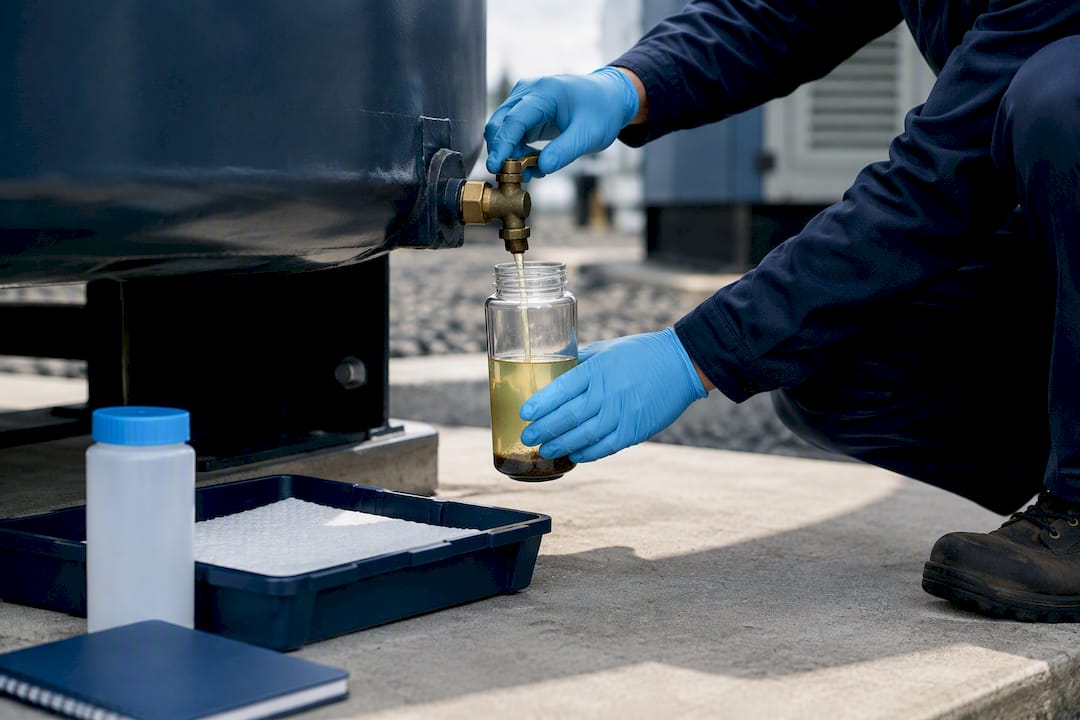
Battery care is simpler but just as easy to neglect: check float voltage monthly, and have a technician run a load test at least once a year, since a battery can hold voltage at rest and still fail under starting load.
Batteries are the single most common cause of generator no-starts, which is why proactive replacement every 3 to 4 years beats waiting for a failure to tell you it’s time.
When Should You Call a Professional for Generator Service?
Some tasks are simply outside safe DIY territory, not because they’re complicated to explain, but because they require calibrated tools or carry real injury risk. Valve lash adjustment, load-bank testing, and ATS contact resistance measurement all fall into this category.
- Valve lash adjustment (air-cooled engines, roughly every 2 years or 400 hours)
- Full-load bank testing and stepped load verification
- ATS contact resistance measurement and calibration
- Diesel fuel polishing and contamination remediation
Residential standby units should get at least one professional visit annually; NFPA-covered facilities need more frequent, documented service to satisfy insurers and the authority having jurisdiction.
Pro Tip: Before your technician arrives, pull your maintenance log, clear physical access to the unit, and have any known fault codes written down. A tech who isn’t spending the first 20 minutes digging through your enclosure gets to the actual diagnosis faster.
Brighton Air Corp’s Field Perspective on Generator Service
Since 1993, a local HVAC and generator service provider has operated in New Jersey, drawing on extensive technician experience. A typical generator visit includes a full mechanical inspection, oil and filter service where due, battery load testing, transfer switch verification, and a written record of all readings taken. That documentation matters for warranty claims and, for commercial clients, for compliance records an insurer or inspector may request. The company also offers 24/7 emergency response for units that fail unexpectedly, on top of scheduled maintenance visits.
What Are the Warning Signs a Generator Needs Service?
A generator rarely fails without warning. Slow or repeated cranking before it starts usually points to a weakening battery or a starter drawing more current than it should. Black or white exhaust smoke during a loaded run signals either an overfueling issue or coolant entering the combustion chamber, neither of which improves on its own.
Unusual noise is another tell. A knocking sound under load often means fuel or ignition timing is off; a high-pitched whine can indicate a failing bearing or belt tension issue. Voltage or frequency readings that drift outside the normal band during your monthly test, even slightly, deserve a follow-up before the next scheduled service, not a shrug.
Watch the transfer switch too. If it hesitates or takes noticeably longer to switch power sources than it did in previous tests, the ATS may need contact cleaning or a technician’s inspection. A generator that trips its own breaker repeatedly during exercise, rather than just once, usually has an underlying load or wiring issue rather than a fluke.
Finally, pay attention to fuel odor near a diesel tank or visible fuel staining on the ground beneath a unit. Both point to seal or line degradation that’s easy to fix now and expensive to fix after a failure during an actual outage.
What Safety Precautions Matter During Generator Maintenance?
Generators combine electrical, mechanical, and combustion hazards, so a few precautions apply every time, not just during major service.
Always disconnect the battery negative terminal before working near wiring or the starter to prevent accidental cranking while your hands are near moving parts. Let the engine cool fully before touching the exhaust manifold, radiator cap, or any coolant line; a hot cooling system under pressure can cause serious burns if opened too soon.
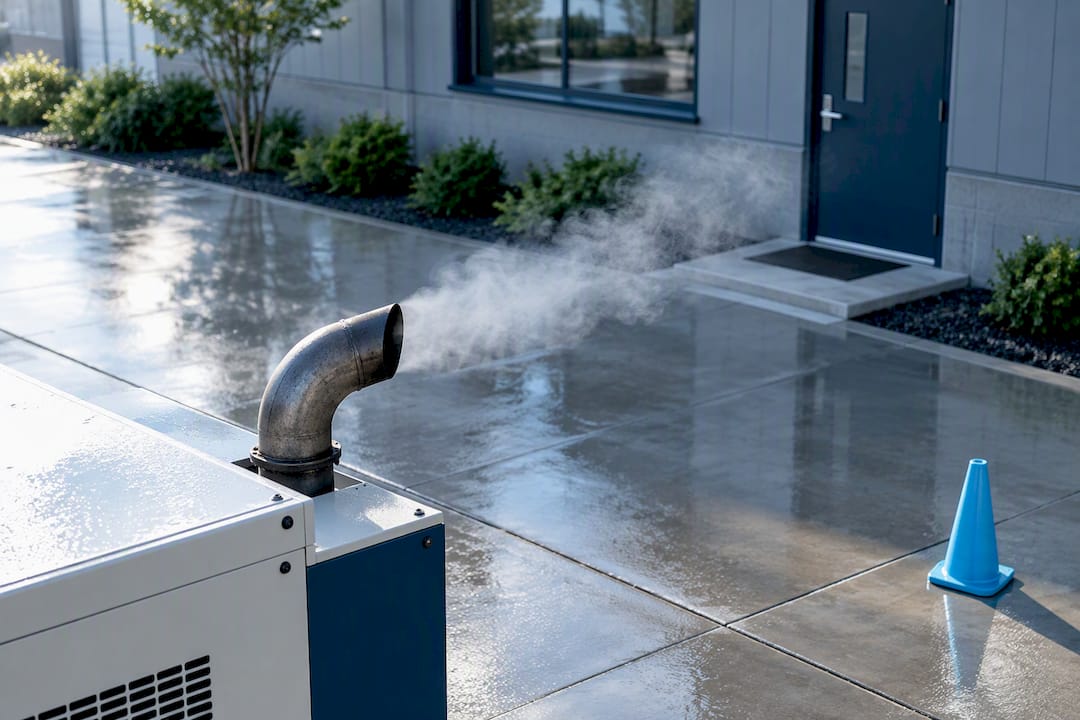
Carbon monoxide is the most serious risk with portable units specifically. CDC guidance on CO exposure is unambiguous: never run a portable generator inside a garage, basement, or within several feet of doors and windows, even with ventilation fans running. CO is colorless and odorless, and by the time symptoms appear, exposure is already dangerous.
Wear eye protection when checking battery electrolyte levels or cleaning corroded terminals, since battery acid splash is a real risk during cleaning. Keep a fire extinguisher rated for electrical and fuel fires within reach during any fuel system work, and never smoke or use open flame near a fuel tank being sampled or drained.
For facility units, lock out and tag the transfer switch before any electrical testing, and confirm with building staff that no critical loads depend on the generator during the test window.
What Environmental Rules Apply to Generator Fluid Disposal?
Used oil, coolant, and contaminated diesel fuel all count as regulated waste in most jurisdictions, and pouring any of them down a drain or onto the ground is both illegal and genuinely damaging to groundwater. Used oil should go to a certified recycling facility or auto parts store that accepts it, and most municipalities list approved drop-off points.
Coolant, particularly ethylene glycol based antifreeze, is toxic to pets and wildlife and needs the same recycling treatment as oil, never disposal in regular trash or storm drains. Contaminated diesel fuel removed during polishing or tank cleaning requires handling as hazardous waste in many states, so ask your service technician how they document and dispose of it, especially for commercial accounts subject to environmental audits.
Battery disposal has its own rule set. Lead-acid batteries are almost universally recyclable and most retailers that sell replacements will take the old one back, sometimes with a core credit. Never discard a generator battery in household trash.
If your facility operates under state environmental permits tied to backup power, keep disposal records alongside your maintenance log. An inspector asking where three years of used coolant went is a question you want a paper trail for, not a guess.
How Do Weather and Load Affect Maintenance Frequency?
A generator sitting in coastal New Jersey salt air corrodes faster than one in a dry inland garage, and that difference should shorten your quarterly inspection interval, not just your annual one. Salt accelerates terminal and enclosure corrosion, so coastal units often need battery terminal checks every two months rather than quarterly.
Extreme cold changes the picture too. Cold-soaked batteries lose a meaningful share of their cranking capacity, which is exactly why winter is when weak batteries fail, right when you need the generator most. Facilities in cold climates often add a pre-winter battery load test on top of the standard annual schedule.
Load pattern matters as much as weather. A generator that only ever runs light loads during monthly exercise is more prone to wet-stacking than one that regularly sees a real load, which is why the monthly loaded run, not just a no-load start, is non-negotiable for diesel units especially.
Frequent short-cycle outages, common in areas with unstable grid power, put more wear on starters and batteries than the occasional multi-day outage does. If your area sees rolling outages several times a year, tighten your battery and starter inspection interval accordingly, since the manufacturer’s baseline schedule assumes occasional use, not near-constant cycling.
Why Most Generator Schedules Fail in Practice
The gap between a printed maintenance schedule and a generator that actually starts during an outage almost always comes down to two things: nobody verifies the weekly exercise actually ran under real conditions, and fuel and batteries get treated as consumables instead of the two components most likely to cause failure.
Conventional advice treats every interval as equally important, which is misleading. A missed quarterly belt check is a minor gap. A skipped monthly loaded run on a diesel unit compounds wet-stacking month over month until the generator can’t hold a real load when it counts. If you only have bandwidth to do two things well, verify the monthly loaded test with recorded readings, and treat battery replacement as scheduled maintenance rather than a reactive fix.
Facility managers chasing NFPA compliance sometimes over-focus on paperwork and under-focus on the physical inspection that paperwork is supposed to reflect. A log full of “pass” entries means nothing if nobody actually checked coolant temperature trends over time. The number on the page should come from a real reading, not a habit.
— John
Get Your Generator Professionally Serviced Before the Next Outage
Brighton Air Corp offers the kind of annual preventive service and 24/7 emergency response that turns this schedule from a checklist into something actually maintained, backed by decades of combined technician experience across New Jersey. Rather than juggling separate vendors for HVAC and backup power, Brighton Air Corp covers both under one service relationship, with the same team that knows your property handling both systems.

A first visit typically includes a full inspection, battery load test, transfer switch verification, and a written record of every reading taken, the same documentation your insurer or an NFPA inspector might ask to see. Late summer and early fall, ahead of storm season, is the ideal window to book this, before demand for emergency repairs spikes. While you’re thinking about outage preparedness, homeowners with septic systems should also review how to keep a septic system running during a power outage, since a generator without the right transfer setup can leave more than just the lights off.
Visit the Brighton Air Corp services page to see the full scope of generator maintenance offered, or request a visit directly through the AC and generator service page to get on the schedule before the next storm watch.
Standards and Reference Guides for Generator Maintenance
- NFPA-aligned standby generator maintenance practices (Munich Re)
- Generac break-in maintenance guidance
- PNNL standby generator O&M best practices
- CDC/NIOSH carbon monoxide safety guidance
Sources
- How do I perform the break-in maintenance for a home standby generator
- Generator old diesel fuel problems
- Standby generator O&M best practices (PNNL)
FAQ
What Maintenance Does a Generator Require?
A generator needs weekly exercise runs, monthly loaded tests with recorded readings, quarterly inspections of the battery and belts, and an annual professional service covering oil, filters, and load testing. Diesel units also need annual fuel sampling since stored diesel can degrade within 6 to 12 months.
What Is the 20/20 Rule for Generators?
There’s no single standardized “20/20 rule” recognized across generator manufacturers or NFPA guidance, so treat any version you see online with some skepticism. If someone mentions it to you, ask what specific interval or load percentage they mean, since usage varies by manufacturer and system.
What Is the Average Cost to Service a Generator?
Published pricing varies by scope of work, unit size, and region, and Brighton Air Corp’s current service pricing is available through its AC and generator service page rather than a flat published rate. Costs typically depend on whether the visit is routine maintenance, a break-in service, or a repair addressing a specific fault.
How Many Hours Should a Generator Be Serviced?
Most manufacturers set Schedule A service, covering oil, filter, and battery checks, at roughly every 200 hours or annually, whichever comes first. New units also need a break-in service at 25 hours or within the first year, a step that’s easy to overlook but removes metal particles shed during initial engine seating.