
New Jersey Furnace Replacement: $3,800–$16,000 and Why Permits Matter
New Jersey Furnace Replacement: $3,800–$16,000 and Why Permits Matter
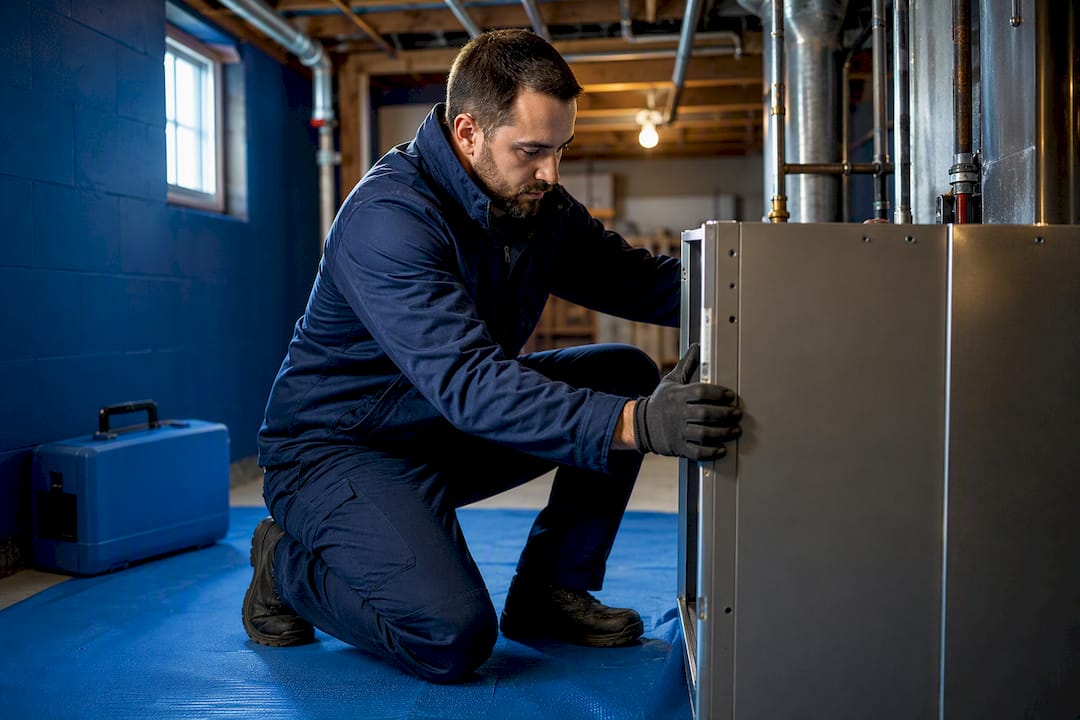
Most New Jersey homeowners pay a substantial amount installed for a new furnace, depending on efficiency tier, home size, and how much ductwork or venting work comes with the job. If your existing unit is past 15 years old or the repair estimate is climbing, the smart move is scheduling an in-home assessment now, before you’re doing this in a January cold snap. That visit should also flag which permits and rebates apply to your specific setup.
TL;DR:
- Most furnace installations in New Jersey range from $3,800 to over $12,500 depending on the unit’s efficiency tier and the scope of ductwork or venting modifications required.
- Proper load calculation, ductwork condition, venting type, and fuel line work significantly influence the final cost, often more than the brand or AFUE rating.
- Permits and inspections are mandatory, with filing handled by the contractor, and skipping this step can lead to fines, warranty issues, or insurance complications.
- State and utility rebates depend on the specific territory, often favoring electrification like heat pumps, but require accurate paperwork and eligibility verification.
- Replacing a furnace in early fall before the cold season can reduce costs and scheduling delays compared to winter emergencies, and age above 15 years favors replacement over repairs.
Table of Contents
- Furnace Replacement Cost NJ: Price Bands by Type and Efficiency
- What Factors Actually Drive Your Final Price?
- Do You Need a Permit to Replace a Furnace in NJ?
- What Rebates and Financing Actually Apply to NJ Furnaces?
- Gas, Oil, Electric, or Heat Pump: Which Fits Your NJ Home?
- When Should You Schedule a Furnace Replacement?
- Should You Repair or Replace Your Furnace?
- Why Homeowners Trust Brighton Air Corp for Furnace Assessments
- What to Have Ready Before You Request an Estimate
- An Editor’s Take on Furnace Pricing in New Jersey
- Get a Straight Answer on Your Furnace Replacement Cost
- Sources
Furnace Replacement Cost NJ: Price Bands by Type and Efficiency
Contractors quote furnace jobs in tiers, and knowing which tier you’re shopping in keeps you from comparing apples to oranges. Here’s how the New Jersey market typically breaks down for a straightforward install in a home with existing ductwork in decent shape.
- Entry-level gas furnace (80% AFUE): roughly $3,800 to $6,200 installed. These use standard metal venting and work well in homes where the flue and ductwork already meet code.
- Mid-efficiency gas furnace (92 to 95% AFUE): roughly $5,500 to $8,800 installed. This is where most New Jersey replacements land, balancing upfront cost against real fuel savings over the season.
- High-efficiency condensing furnace (95%+ AFUE): roughly $7,500 to $12,500 installed. These require PVC condensing venting and a condensate drain, which adds labor even before you factor in the pricier equipment.
- Oil furnace replacement: often runs $6,000 to $11,000, since oil systems frequently need tank inspection or a fuel-line update alongside the furnace itself.
- Electric furnace or heat pump conversion: varies widely, often $6,000 to $16,000, depending on whether existing electrical service can support it or needs a panel upgrade.
What’s normally included: the furnace unit, standard installation labor, basic venting connections, and a startup/testing check. What’s usually billed separately: major ductwork replacement, extending or relocating gas lines, electrical panel upgrades, and asbestos abatement in older duct insulation. If a contractor’s quote looks unusually low, ask specifically what’s excluded. That’s almost always where the surprise invoice comes from later.
What Factors Actually Drive Your Final Price?
Two homes with identical square footage can get wildly different furnace quotes, and it’s rarely about the brand of equipment. It’s about what’s hiding behind the walls and in the basement.
- Load calculation and sizing. A licensed contractor should run a proper load calculation (often a Manual J), not just match the old unit’s BTU rating. Oversized furnaces short-cycle, wear out faster, and waste fuel, even though a bigger unit sounds like it should perform better.
- Ductwork condition. Sealing minor leaks might add a few hundred dollars. Partial duct replacement in a problem zone can run into the low thousands. Full duct replacement in an older home, especially one with undersized trunk lines, is its own separate project.
- Venting type. Standard 80% AFUE furnaces vent through existing metal flues or masonry chimneys, sometimes requiring a chimney liner. Condensing furnaces vent through PVC pipe routed to an exterior wall, which is usually simpler but not always, depending on furnace placement.
- Fuel conversions and gas-line work. Switching from oil to gas, or extending a gas line to a new furnace location, adds both material and permit costs.
- Labor rates and local market. Northern and central New Jersey markets near major metro areas tend to run higher on labor than more rural counties, and permit review timelines vary by municipality too.
Pro Tip: Ask every contractor for their load calculation in writing before they quote a furnace size. If they skip this step and just eyeball it against your old unit, that’s a red flag worth walking away from.
Do You Need a Permit to Replace a Furnace in NJ?
Yes. New Jersey requires permits and inspections for furnace replacement under the Uniform Construction Code (N.J.A.C. 5:23), and skipping this step isn’t just a paperwork issue. It can void your equipment warranty and create real problems if you sell the home later.
Here’s what the process typically looks like:
- The applicable subcode (usually Mechanical, sometimes Electrical if you’re upgrading service) gets filed with your local construction office.
- Municipal forms often require declarations about the equipment’s mechanical characteristics, a cost estimate for the job, and sometimes a chimney verification, similar to what Florham Park’s furnace replacement application requests, including its F370 chimney form.
- A licensed contractor typically files the permit on your behalf, not the homeowner directly.
- The town schedules a mandatory inspection after installation before the job is considered closed out.
- Skipping the permit risks fines, forced removal and reinstallation, and denied insurance claims tied to combustion or carbon monoxide incidents.
Every municipality’s exact form numbers and review timelines differ slightly, so ask your contractor which forms your specific town uses before work starts.
What Rebates and Financing Actually Apply to NJ Furnaces?
New Jersey’s rebate landscape is genuinely fragmented, and that catches a lot of homeowners off guard. Incentives depend heavily on which utility territory you’re in, not just what state you live in.
- NJ Clean Energy programs offer stronger incentives for electrification, meaning heat pumps typically see bigger rebate dollars than a standard gas furnace swap.
- High-efficiency gas furnaces still qualify for targeted rebates in some utility territories, though the amounts are usually more modest than heat-pump incentives.
- Federal tax credits exist for qualifying high-efficiency equipment, separate from the state utility programs.
- Contractor paperwork matters more than most homeowners realize. Documentation errors are a common reason rebate claims get delayed or denied.
- Ask about 0% financing or on-bill repayment options directly. Utilities sometimes offer these but don’t always advertise them upfront.
Because rules shift by territory and by program year, verify current terms directly with NJ Clean Energy or your contractor before assuming a rebate applies to your project. A contractor who handles the documentation correctly is often the difference between actually collecting the rebate and missing the deadline entirely.
Gas, Oil, Electric, or Heat Pump: Which Fits Your NJ Home?
The right fuel choice depends on what’s already running to your house and how long you plan to stay in it. Natural gas remains the default for most New Jersey homes with existing gas service, simply because it’s the lowest-friction, lowest-cost replacement path. Oil still makes sense where gas lines aren’t available, though tank age and fuel-line condition often add unplanned costs. Electric resistance furnaces are rare as primary heat in NJ due to higher operating costs, but they show up in additions or smaller spaces. Heat pumps are gaining ground fast, especially paired with the stronger electrification rebates mentioned above.
- AFUE measures how much fuel a furnace converts to usable heat. An 80% AFUE furnace wastes 20 cents of every fuel dollar as exhaust; a 95%+ condensing unit wastes closer to 5 cents.
- Higher AFUE costs more upfront but pays back through lower fuel bills, particularly relevant given New Jersey’s heating-degree-day climate data.
- SEER2 and HSPF2 matter when you’re pairing the furnace project with new central air or a heat pump, since federal minimum efficiency standards changed for cooling equipment in recent years.
- Hybrid setups, a heat pump paired with a gas furnace as backup, can make financial sense once you run the full lifecycle cost comparison against incentives.
ENERGY STAR’s replacement guidance is a solid starting point if you want to compare efficiency claims across brands before your contractor visit.
When Should You Schedule a Furnace Replacement?
Timing changes both your price and your options. Replacing a furnace in September or October, before the first real cold snap, generally costs less and gives you a wider pool of available installation dates than trying to book someone in the middle of a January freeze.
- Expect roughly one to three weeks from initial assessment to permit approval to installation day, longer if ductwork or gas-line work is involved.
- Emergency winter replacements often mean higher costs and longer waits, since contractors are juggling breakdown calls across the whole region.
- Get written quotes from at least two contractors, confirm who’s filing the permit (see NJ contractor licensing requirements: what owners must know), and book installation during shoulder-season months if your current unit is still limping along.
Pro Tip: If your furnace is over 12 years old, get a replacement quote in September, even if it’s still running. That gives you leverage to schedule on your terms instead of a contractor’s overbooked emergency list.
Should You Repair or Replace Your Furnace?
The math is usually simpler than it feels in the moment.
- Age matters most. Furnaces beyond 15 to 20 years old are working against efficiency losses that no repair fixes.
- Apply the cost threshold. If a repair quote approaches roughly half of what a full replacement would cost, replacement is almost always the better financial move.
- Check parts availability. Older units sometimes need parts that are backordered or discontinued, which alone can tip the decision.
- Get it in writing. Ask a licensed contractor to document what’s causing the failure before committing either way.
Why Homeowners Trust Brighton Air Corp for Furnace Assessments
Brighton Air Corp has served New Jersey homes and businesses since 1993, with technicians carrying over 150 years of combined field experience across residential and commercial HVAC work. That matters when a job touches permits, gas lines, and rebate paperwork all at once.
An in-home assessment from Brighton Air Corp typically covers:
- A proper load calculation instead of a guess based on your old unit’s rating
- A duct and venting inspection to catch issues before installation day, not during it
- Permit and rebate documentation handled correctly the first time, reducing the risk of a denied claim
What to Have Ready Before You Request an Estimate
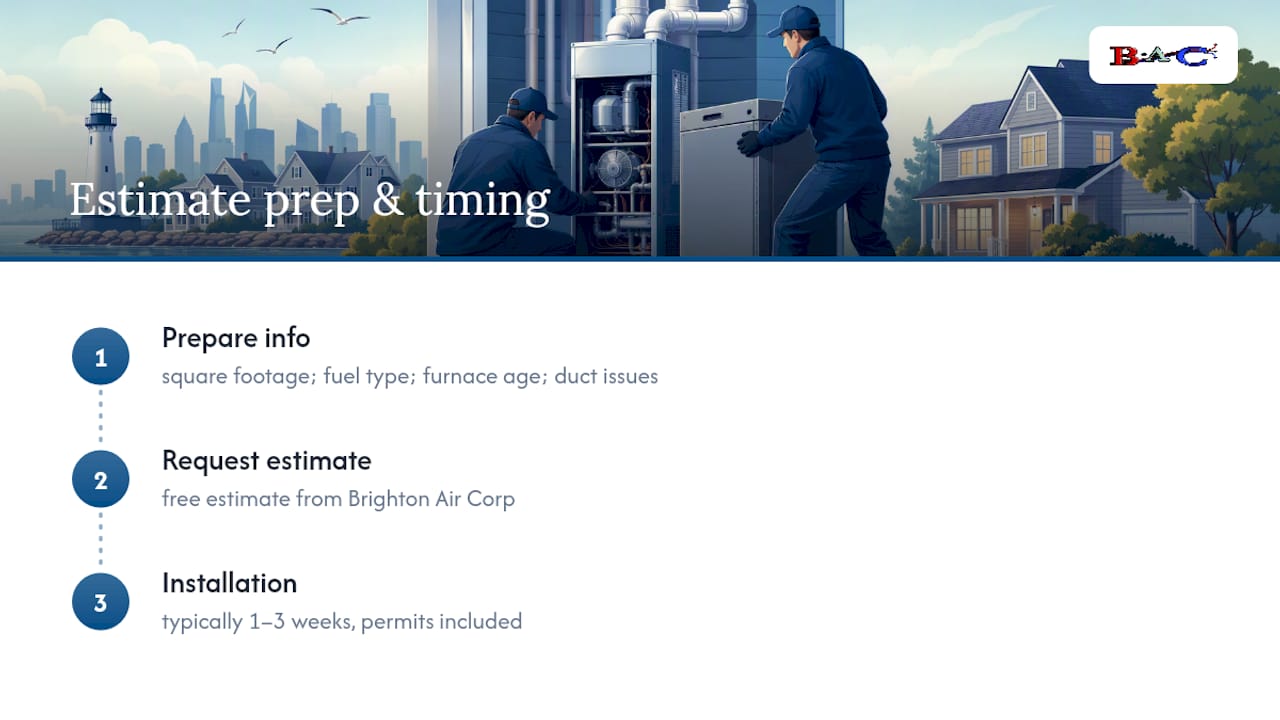
Speed up your quote by having your home’s square footage, current fuel type, furnace age, and any known duct issues written down. A free estimate from Brighton Air Corp usually leads to installation within one to three weeks, permits included.
An Editor’s Take on Furnace Pricing in New Jersey
Most furnace pricing content treats New Jersey like it’s interchangeable with anywhere else in the country. It isn’t. The permit process alone, filed through your municipality under the state’s Uniform Construction Code, adds a layer of paperwork and timeline that generic national guides skip entirely. That’s the gap I think matters most: homeowners budget for the equipment and forget that permit review, inspection scheduling, and utility-specific rebate rules are just as real a cost driver as AFUE ratings.
The conventional advice to “buy the highest efficiency you can afford” also deserves pushback. A premium condensing furnace installed sloppily, with a mis-sized load calculation or a rushed venting job, will underperform a mid-tier unit installed correctly. Installation quality and contractor licensing matter more than the sticker on the box. If you take one thing from this article, prioritize the in-home load calculation and permit handling over chasing the highest efficiency number on the spec sheet.
— John
Get a Straight Answer on Your Furnace Replacement Cost
Brighton Air Corp gives New Jersey homeowners something most furnace quotes skip: a contractor who handles the load calculation, the permit filing, and the rebate paperwork as one coordinated job instead of three separate headaches you have to manage yourself. That combination matters most when you’re comparing gas, oil, or heat-pump options and trying to figure out which rebates you actually qualify for in your utility territory.
If your furnace is showing its age or a repair quote just came back higher than you expected, schedule a free in-home estimate with Brighton Air Corp and get a written price, a permit plan, and a rebate check before the next cold snap makes the decision for you.
Sources
- Florham Park — Furnace replacement application (2026 printable form)
- New Jersey Clean Energy — Programs
- ENERGY STAR — Replace your heating and cooling equipment
- U.S. Energy Information Administration — New Jersey state energy profile