
Furnace Maintenance Best Practices for Homeowners
Furnace Maintenance Best Practices for Homeowners
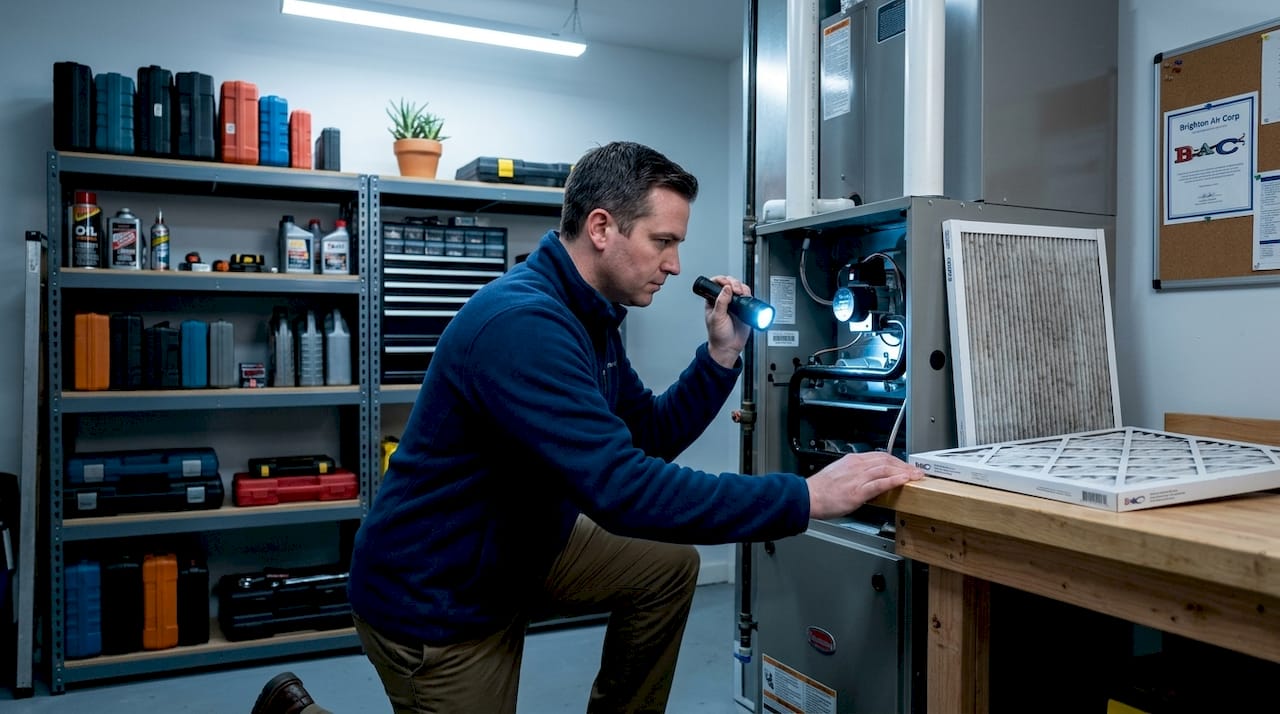
Your furnace works hardest when you need it most, which makes it the worst time to discover a problem. Following furnace maintenance best practices consistently is what separates a system that runs reliably for 20 years from one that fails on the coldest night in January. Regular maintenance improves efficiency by 15 to 20% and protects you from breakdowns that can cost between $3,000 and $6,000 to fix. This guide gives you a practical, step-by-step approach covering everything from DIY filter swaps to knowing exactly when to call a professional.
Table of Contents
- Key Takeaways
- 1. Furnace maintenance best practices: what makes a task actually worth doing
- 2. Replace or clean air filters on schedule
- 3. Clean the flame sensor annually
- 4. Test and update your thermostat
- 5. Inspect vents, ducts, and registers for blockages
- 6. Clear the area around your furnace
- 7. Test carbon monoxide detectors monthly
- 8. Check condensate drain lines in high-efficiency furnaces
- 9. Inspect the exhaust and intake vents
- 10. Listen for warning signs before they become emergencies
- 11. Schedule an annual professional tune-up each fall
- Furnace maintenance task comparison
- My take on what homeowners actually get wrong
- Keep your furnace running all winter with Brighton Air Corp
- FAQ
Key Takeaways
| Point | Details |
|---|---|
| Filter replacement is non-negotiable | Replace 1-inch filters every 30 to 90 days to prevent the leading cause of furnace failure. |
| Small DIY tasks prevent big repairs | A $10 filter and 20 minutes of cleaning prevent most common service calls. |
| Annual professional tune-ups matter | Schedule a professional inspection each fall to catch mechanical issues before heating season. |
| Warning signs need immediate attention | Short cycling, yellow flames, or odd smells require professional diagnosis without delay. |
| Safety devices need regular testing | Test carbon monoxide detectors monthly and replace batteries annually to protect your household. |
1. Furnace maintenance best practices: what makes a task actually worth doing
Not every tip you read online is worth your time. Effective home heating maintenance comes down to four criteria: safety, consistency, efficiency impact, and whether the task is realistic for you to perform yourself.
Safety comes first, always. Any task that involves gas lines, heat exchangers, or electrical connections belongs in the hands of a licensed technician. For the DIY tasks in this guide, always turn the furnace off at the thermostat and the power switch before touching anything internal.
Consistency beats perfection. A furnace filter changed every 60 days is far more valuable than one changed every 6 months when you finally remember. Build maintenance into your calendar the same way you schedule oil changes for your car.
Here is what separates high-impact tasks from low-impact ones:
- Safety impact: Does skipping this task create a risk of carbon monoxide exposure, fire, or gas leak?
- Efficiency impact: Does this task directly affect how hard the blower motor works or how much heat reaches your living space?
- Cost-effectiveness: Can you do this yourself in under 30 minutes for under $20, or does it require tools and training?
- Equipment lifespan: Does this task reduce wear on motors, heat exchangers, or igniters?
Tasks that score high across all four criteria are the ones worth prioritizing. The sections below cover exactly those tasks.
2. Replace or clean air filters on schedule
Clogged filters are the leading cause of furnace failures. When airflow is restricted, the heat exchanger overheats, the system shuts down, and you end up with a repair bill that a $10 filter could have prevented.
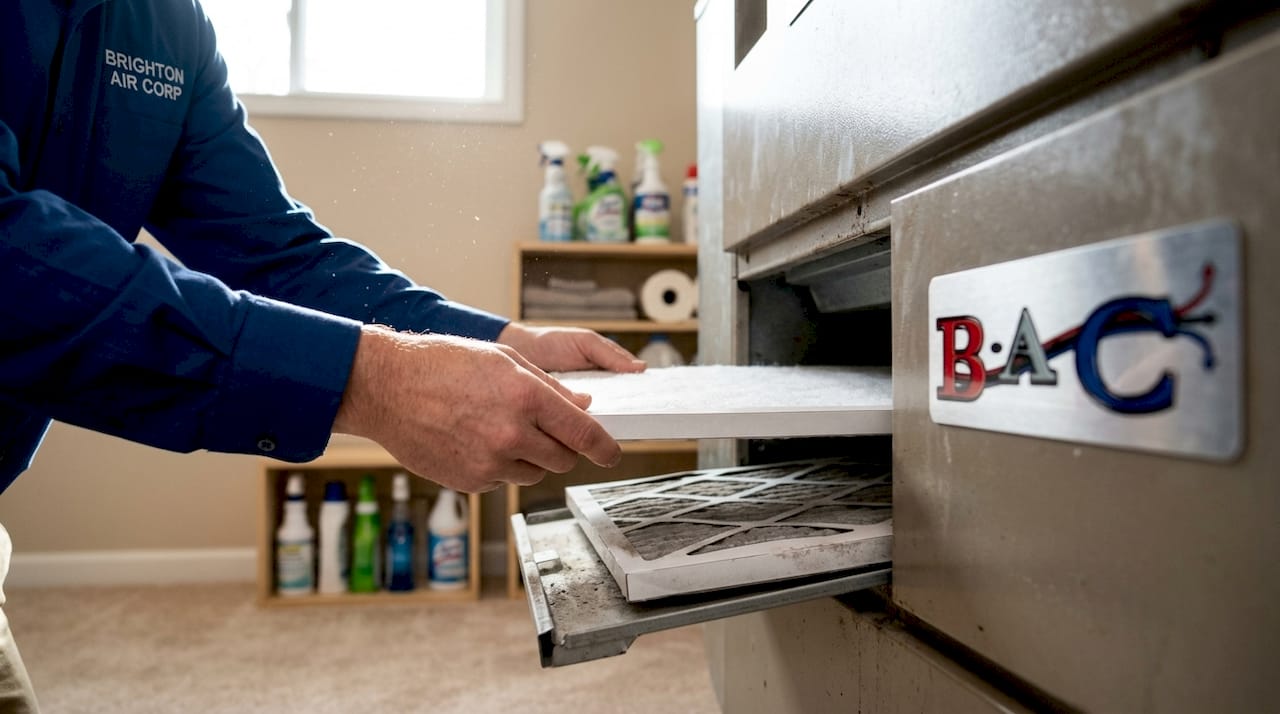
1-inch filters need replacement every 30 to 90 days, while 4-inch media filters last 6 to 12 months depending on how often your system runs and whether you have pets. Check the filter once a month by holding it up to a light source. If you cannot see light through it, replace it regardless of how recently you installed it.
Pro Tip: Buy filters in a 6-pack at the start of heating season. Keeping them on hand removes the excuse for skipping a swap.
3. Clean the flame sensor annually
The flame sensor is a small rod that tells your furnace whether the burner actually ignited. When it gets coated with residue, the furnace thinks the burner is off and shuts down the gas supply as a safety measure. The result is a furnace that starts, runs for a few seconds, and then shuts off repeatedly.
Cleaning it takes about 15 minutes. Turn off the furnace, locate the sensor near the burner assembly, remove it with a quarter-inch hex driver, and gently rub the rod with fine steel wool or a dollar bill. Reinstall and test. If the issue persists after cleaning, the sensor itself may need replacement, which is a straightforward call for a technician.
4. Test and update your thermostat
A thermostat that reads two degrees off can cause your furnace to run longer than necessary, adding wear and cost. Test yours by placing an accurate thermometer next to it. If the readings differ by more than two degrees, recalibrate or replace the thermostat.
While you are at it, replace the batteries even if the thermostat seems to be working fine. Weak batteries cause intermittent behavior that looks like a furnace problem but is actually a communication issue between the thermostat and the system. Programmable and smart thermostats add another layer of efficiency by reducing runtime during hours when full heating is unnecessary.
5. Inspect vents, ducts, and registers for blockages
Duct leaks waste 20 to 30% of heated air, which means your furnace could be working nearly a third harder than it needs to. Walk through your home and check every register. Make sure none are blocked by furniture, rugs, or debris.
In the utility area, inspect visible ductwork for gaps, separations, or sections where foil tape has peeled away. Seal any gaps with foil-backed HVAC tape, not the standard cloth duct tape that deteriorates over time. If your home has older flexible ductwork, consider having a professional perform a duct leakage test to identify hidden losses.
6. Clear the area around your furnace
A furnace needs airflow to operate safely. If you store boxes, seasonal items, or cleaning supplies near the unit, you are both restricting combustion air and creating a fire hazard. Keep at least two feet of clear space on all sides.
This also applies to the air intake and exhaust vents if your furnace uses PVC pipes that exit through the wall or roof. Debris, bird nests, and ice buildup in winter are all common culprits that trigger safety shutdowns.
7. Test carbon monoxide detectors monthly
A cracked heat exchanger is one of the most dangerous furnace problems because it allows combustion gases, including carbon monoxide, to mix with the air circulating through your home. You cannot see it, smell it, or taste it.
Carbon monoxide detectors should be tested monthly, and batteries should be replaced once a year even if they are still functioning. Place detectors on every floor of your home, with one near the sleeping area. If an alarm goes off, leave immediately and call 911. Do not re-enter until emergency responders confirm it is safe.
8. Check condensate drain lines in high-efficiency furnaces
If your furnace has an AFUE rating of 90% or higher, it produces condensation as part of the combustion process. That water exits through a condensate drain line. When that line clogs, the furnace shuts down as a protective measure.
Condensate drain clogs cause furnace shutdowns and can lead to mold growth if water backs up into the system. Inspect the drain line at the start of each heating season. Pour a cup of diluted bleach through it to clear biological buildup. Proper slope in the drain line is also critical. A line that sags or has a low spot will trap water rather than drain it, which is a design issue worth flagging for a technician.
Pro Tip: If your furnace shuts off for no obvious reason and you own a high-efficiency model, check the condensate drain before calling for a service visit. It is often the culprit.
9. Inspect the exhaust and intake vents
High-efficiency furnaces use two PVC pipes for exhaust and fresh air intake. These pipes typically exit through a side wall near the foundation. Blockages in either pipe cause the furnace to shut down on a safety lockout.
Blocked exhaust vents can cause carbon monoxide leaks and prevent proper combustion air supply. Check these pipes at the start of the season and after any major storm. Look for ice buildup in freezing weather, insect nests in fall, and debris accumulation at any time. Both pipes should extend at least 12 inches beyond the exterior wall and terminate with screened caps.
10. Listen for warning signs before they become emergencies
Your furnace communicates through sound and visual cues. Learning to read those signals is one of the most underrated furnace upkeep tips available.
Short cycling, yellow or flickering flames, odd noises, and burning smells are all warning signs that require immediate professional diagnosis. A healthy furnace flame should be steady and blue. Yellow or orange flames suggest incomplete combustion, which can indicate a dirty burner or a more serious problem with the heat exchanger. Banging sounds on startup usually point to delayed ignition. Squealing means a belt or bearing is wearing out.
Do not wait to see if the problem goes away on its own. Early diagnosis costs far less than emergency repairs.
11. Schedule an annual professional tune-up each fall
DIY tasks handle the surface-level upkeep. A professional technician handles everything else. Annual fall tune-ups reduce emergency calls and extend system life while keeping manufacturer warranties valid. Most HVAC warranties include a maintenance requirement in their terms.
During a professional tune-up, the technician checks the heat exchanger for cracks, measures combustion efficiency, tests gas pressure, inspects the inducer motor and blower wheel, lubricates moving parts, and verifies that all safety controls are operating correctly. These are not tasks you can replicate with a flashlight and a YouTube video.
Furnace maintenance task comparison
Here is a practical breakdown to help you prioritize your preventive furnace maintenance calendar:
| Task | Frequency | DIY Friendly | Estimated Cost | Safety Impact |
|---|---|---|---|---|
| Air filter replacement | Monthly to every 90 days | Yes | $10 to $30 | High |
| Thermostat battery check | Annually | Yes | Under $10 | Medium |
| Flame sensor cleaning | Annually | Yes with caution | $0 to $15 | High |
| CO detector testing | Monthly | Yes | $0 | Critical |
| Condensate drain flush | Annually before heating season | Yes | Under $5 | High |
| Exhaust and intake vent check | Seasonally | Yes | $0 | Critical |
| Duct inspection and sealing | Annually | Partial | $20 to $50 DIY | Medium |
| Professional tune-up | Annually | No | $100 to $200 | Very High |
My take on what homeowners actually get wrong
I have talked with enough homeowners and property managers over the years to know that most furnace problems are not mysterious. They are predictable. And they were preventable.
The filter is the single most neglected component in the entire system. I have seen units pushed to failure by filters that had not been changed in eight months. The homeowner spent $3,500 on a heat exchanger replacement that a $12 filter would have avoided. That tradeoff never gets less frustrating to see.
The other one that catches people off guard is deferring the professional inspection. I understand it. Everything seems fine, the heat is working, and spending $150 on a tune-up feels unnecessary. But a $150 annual tune-up regularly catches cracked heat exchangers, failing igniters, and gas pressure problems before they turn into emergency calls at 11 PM on a Friday in February.
For property managers especially, the math is simple. One emergency service call typically costs three to four times what annual preventive maintenance would have. Multiply that across several units and the case for a consistent maintenance schedule is obvious.
My honest advice: put filter changes in your phone calendar right now. Schedule your fall tune-up before September. And treat every strange noise or smell from your furnace as a signal worth investigating that week, not next month.
— John
Keep your furnace running all winter with Brighton Air Corp
Staying on top of DIY tasks is a great start, but the parts of your furnace that matter most require a trained eye. Brighton Air Corp has been serving New Jersey homeowners and property managers since 1993, with over 150 years of combined technician expertise across the team. From annual tune-ups and filter system evaluations to full safety inspections and emergency repairs, the Brighton Air Corp team is equipped to handle every layer of your furnace care. Schedule your fall maintenance appointment before the cold sets in and avoid the stress of a mid-winter breakdown.
FAQ
How often should I replace my furnace filter?
Replace 1-inch filters every 30 to 90 days and 4-inch media filters every 6 to 12 months. Homes with pets or allergy sufferers should change filters closer to the shorter end of that range.
What are the most important furnace upkeep tips for winter?
Replace the air filter, test your carbon monoxide detectors, check the exhaust and intake vents for blockages, and schedule a professional inspection before the heating season begins.
Can I perform furnace maintenance myself?
Many tasks like filter changes, thermostat checks, CO detector testing, and condensate drain flushes are DIY-friendly. Tasks involving gas lines, heat exchangers, or electrical components require a licensed HVAC technician.
What warning signs mean I need a professional right away?
Short cycling, a yellow or flickering burner flame, unusual banging or squealing sounds, and any burning smell are all signs that require professional diagnosis without delay.
How much does a professional furnace tune-up cost?
A professional annual tune-up typically runs between $100 and $200 and includes combustion efficiency testing, heat exchanger inspection, and safety control verification. That cost is significantly lower than most emergency repair bills.