
Facility Teams: Chiller Maintenance Metrics to Stop Surprise Downtime
Facility Teams: Chiller Maintenance Metrics to Stop Surprise Downtime
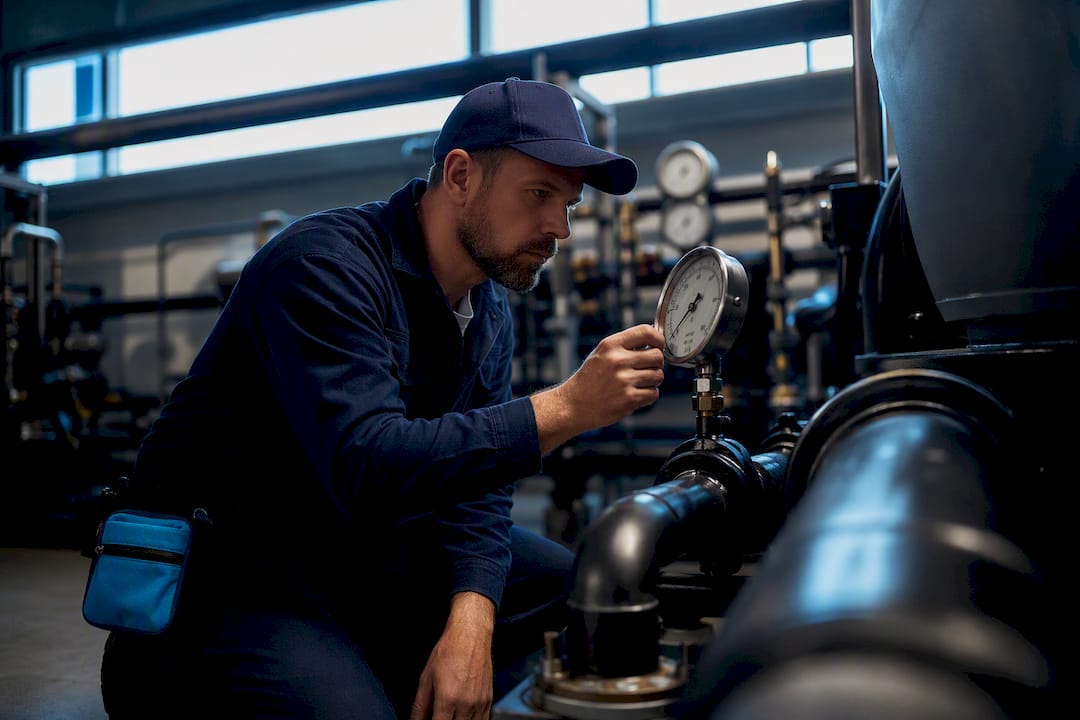
Consistent daily logging plus scheduled regular preventive maintenance at appropriate intervals for tubes, water treatment, refrigerant, and oil prevents most chiller failures and saves energy. Success looks like a stable delta-T, steady COP, and no surprise shutdowns. The one non-negotiable: verify flow proof and respond to any refrigerant leak immediately, before it becomes a compressor problem.
TL;DR:
- Consistent daily logging of key parameters such as delta-T, pressures, and motor amps helps detect issues like fouled tubes or electrical imbalance early.
- Weekly inspections should focus on cleaning strainers, checking fan belts, and verifying low-flow alarms to prevent escalations and unnecessary shutdowns.
- Monthly oil analysis, electrical torque checks, and refrigerant leak testing enable proactive maintenance that identifies internal wear before failures occur.
- Trend-based cleaning, oil sampling, and vibration analysis are more effective than fixed schedules for avoiding scale buildup and compressor damage.
- Detailed water chemistry management and prompt refrigerant leak repairs are crucial for preventing scale, corrosion, and unscheduled shutdowns.
Table of Contents
- Daily Chiller Maintenance Checks and the Daily Log
- What Weekly Chiller Service Tasks Catch Before They Escalate
- Monthly Preventive Chiller Upkeep: Oil, Electrical, and Refrigerant
- Annual and Major Chiller Repair Procedures
- Cooling Tower Maintenance and Water Chemistry That Actually Prevents Scale
- Why Do Chillers Fail, and What’s the First Response?
- Using a CMMS to Move From Reactive to Predictive Chiller Maintenance
- What Facility Teams Should Know About In-House Work vs. Contractor Visits
- What the Checklist Gets Wrong (and What Actually Prevents Downtime)
- Brighton Air Corp’s Approach to Scheduled Chiller Service and Emergency Response
- Sources
Daily Chiller Maintenance Checks and the Daily Log
A chiller tells you it’s struggling long before it trips. Daily readings catch that story early, and the numbers only matter if someone writes them down consistently.
Every shift, a technician should record:
- Chilled water supply and return temperatures, plus the calculated delta-T
- Condenser water temperatures in and out
- Suction and discharge pressures
- Motor amps on the compressor
- Oil pressure and oil level
- Pump status and flow switch status
A narrowing delta-T usually points to fouled tubes or a control valve problem, not a refrigerant shortage. Rising motor amps at a stable load often means bearing wear or electrical imbalance. Either trend deserves a work order that day, not at the next scheduled visit.
Log entries should carry a timestamp, the actual value, a photo of the gauge or screen where practical, and the technician’s initials. That combination turns a logbook into an audit trail you can actually use when something fails months later.
What Weekly Chiller Service Tasks Catch Before They Escalate
Weekly work targets the wear that daily glances miss. A pressure drop across the Y-strainer basket exceeding typical thresholds indicates it needs cleaning, and most teams under-maintain this single component, which then triggers avoidable low-flow alarms and unnecessary pump trips.
- Clean or inspect strainer baskets and note pressure drop before and after
- Walk the mechanical room for fan condition, belt tension, and visible piping leaks
- Check cooling tower basin water level and grab a quick chemical residual reading
- Test flow switches and safety interlocks by simulating a low-flow condition
Pro Tip: Keep a spare strainer basket on the shelf. Swapping a clean one in takes five minutes; scrubbing scale off the dirty one can wait until you’re not blocking production.
Monthly Preventive Chiller Upkeep: Oil, Electrical, and Refrigerant
Monthly tasks need instruments or lab work that daily walk-throughs can’t replace.
- Pull an oil sample and send it out for viscosity, total acid number (TAN), moisture content, and wear-metal analysis, which flags internal component wear before it shows up as noise or vibration
- Torque-check electrical terminals and run a thermal imaging scan on contactors and connections looking for hot spots
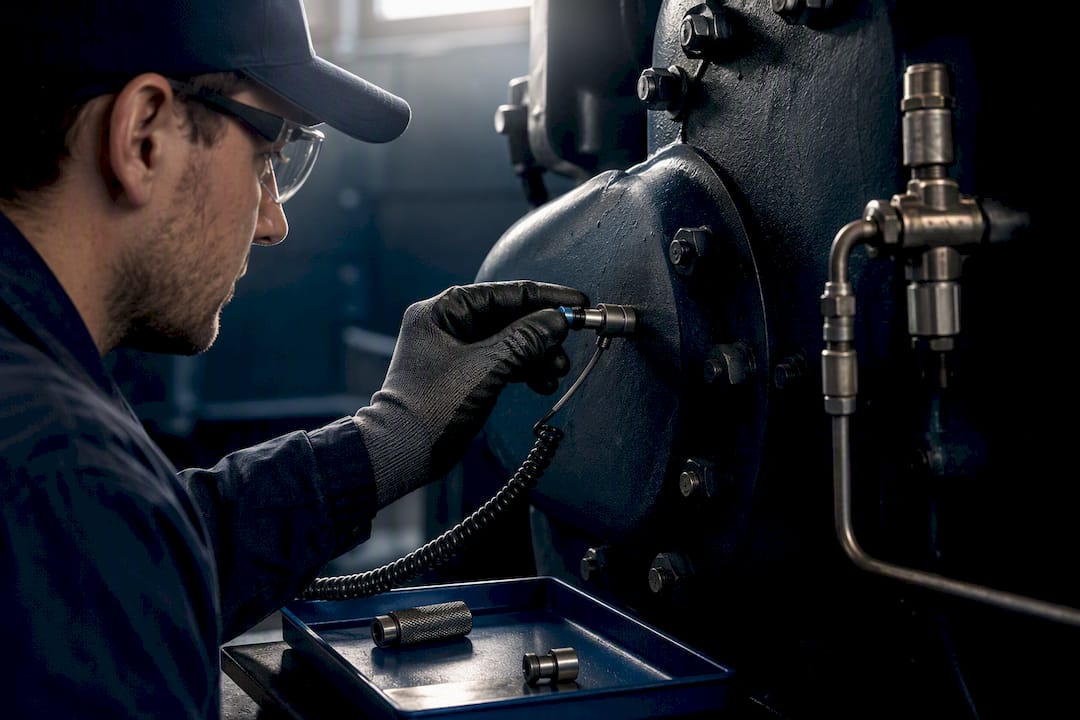
- Check refrigerant charge and scan for leaks with an electronic sniffer or a soap-bubble test at fittings and valve stems, logging and repairing any suspected leak under EPA guidelines
- Inspect the filter-drier and purge unit for pressure drop and non-condensable buildup
Rising TAN or metal content in an oil report is your cue to schedule a compressor inspection before the next sample, not after.
Annual and Major Chiller Repair Procedures
Annual work is where planned downtime, contractor labor, and lab testing come together. This is also where the checklist stops being a solo job.
- Decide between brush cleaning and chemical acid washing methods for condenser and evaporator tubes. Brush cleaning suits routine scale buildup; acid washing removes hardened scale but requires a thorough flush and pH restoration afterward
- Rather than cleaning on a fixed calendar date, track approach temperature rise as the trigger, since trend-based cleaning schedules outperform arbitrary annual dates
- Perform a full refrigerant weigh-in, repair any confirmed leaks, and document the recharge amount against nameplate capacity
- Run compressor vibration analysis and motor insulation megger testing, and inspect safety relief valves on schedule per centrifugal chiller preventive maintenance guidance
- Scope the vendor work order tightly around specific tasks and target completion windows to limit downtime during shoulder seasons
Cooling Tower Maintenance and Water Chemistry That Actually Prevents Scale
Water chemistry is the part of chiller preventive upkeep that gets ignored until scale or corrosion forces a shutdown. A working chemical program needs four components: scale inhibitors, corrosion inhibitors, biocides, and pH adjusters, with most process chillers running best in a pH range near neutral, typically slightly acidic to slightly alkaline.
- Test pH, conductivity, and biocide residual weekly to monthly, depending on tower usage and makeup water quality
- Send a full water sample to a lab quarterly for scale and corrosion index analysis
- Maintain a documented water management plan covering testing dates and biocide dosing for Legionella control and inspection recordkeeping
- Check glycol concentration seasonally and top up or replace when it drifts outside the manufacturer’s freeze-protection range
Facilities that automate chemical dosing with feed pumps and remote monitoring cut manual sampling labor while keeping condenser performance more stable than manual dosing typically achieves.
Why Do Chillers Fail, and What’s the First Response?
Most chiller faults trace back to one of two patterns: low flow or high head pressure. Low flow usually means a clogged strainer or a failing pump; high head pressure usually points to fouled condenser tubes or a cooling tower that isn’t rejecting heat properly.
- Pull the controller’s alarm and trend history before touching anything
- Verify flow proof on both chilled water and condenser water loops
- Compare current delta-T and pressures against the logged baseline
- Check for refrigerant leaks with a sniffer at suspect fittings
Short-term, a bypass valve adjustment or a temporary setpoint increase can keep production running while parts or a technician are en route. Long-term, that’s a symptom management, not a fix.
Pro Tip: If motor amps climb steadily over several days with no load change, don’t wait for a trip. Book vibration analysis or a compressor shop inspection before it fails on a Friday night.
Call for vibration analysis or compressor shop work when oil analysis shows rising wear metals or when amp draw trends upward without an explainable load increase.
Using a CMMS to Move From Reactive to Predictive Chiller Maintenance
Paper logs work until someone needs to prove a warranty claim or spot a slow drift across three weeks of readings. A CMMS-driven trending program that captures bearing temperature, delta-T, pressures, and motor current delivers higher availability and lower cost per ton than reactive repair cycles.
- Set threshold alerts (a specific pressure or temperature value) and trend alerts (a percent change over time) separately, since a slow creep matters as much as a hard limit
- Configure auto-escalation so a repeated threshold breach opens a work order without waiting for a technician to notice
- Keep photo and timestamp evidence attached to every closed work order for compliance and warranty documentation
- Review open versus closed work orders weekly so nothing sits unresolved past its escalation window
What Facility Teams Should Know About In-House Work vs. Contractor Visits
Daily logging, strainer cleaning, and basic visual inspections belong to in-house teams. That’s where 150-plus years of combined technician experience across Brighton Air Corp’s crews has shown the routine tasks are exactly where consistency breaks down first.
Contractor visits make sense for acid tube cleaning, megger testing, vibration analysis, and any refrigerant work requiring EPA-certified handling. If a facility team lacks a technician who can run a thermal imaging scan or a strainer manages to lose flow twice in a month, that’s a signal to bring in outside eyes rather than keep patching the same symptom.
What the Checklist Gets Wrong (and What Actually Prevents Downtime)
Most chiller maintenance advice treats frequency tables as the whole answer. Daily, weekly, monthly, annual. Check the boxes, file the paperwork, move on. That’s necessary but not sufficient, and it’s where a lot of facility teams get stuck believing they’re covered when they’re not.
The gap is almost always in interpretation, not collection. A team can log delta-T every single day for a year and still get blindsided by a compressor failure, because nobody set a threshold for what a slow, three-week drift actually means. Calendar-based tube cleaning is the clearest example: cleaning on a fixed date regardless of actual fouling wastes labor in clean seasons and misses the window in dirty ones. Trend-based triggers, tied to approach temperature, catch the real problem instead of an arbitrary date on a wall calendar.
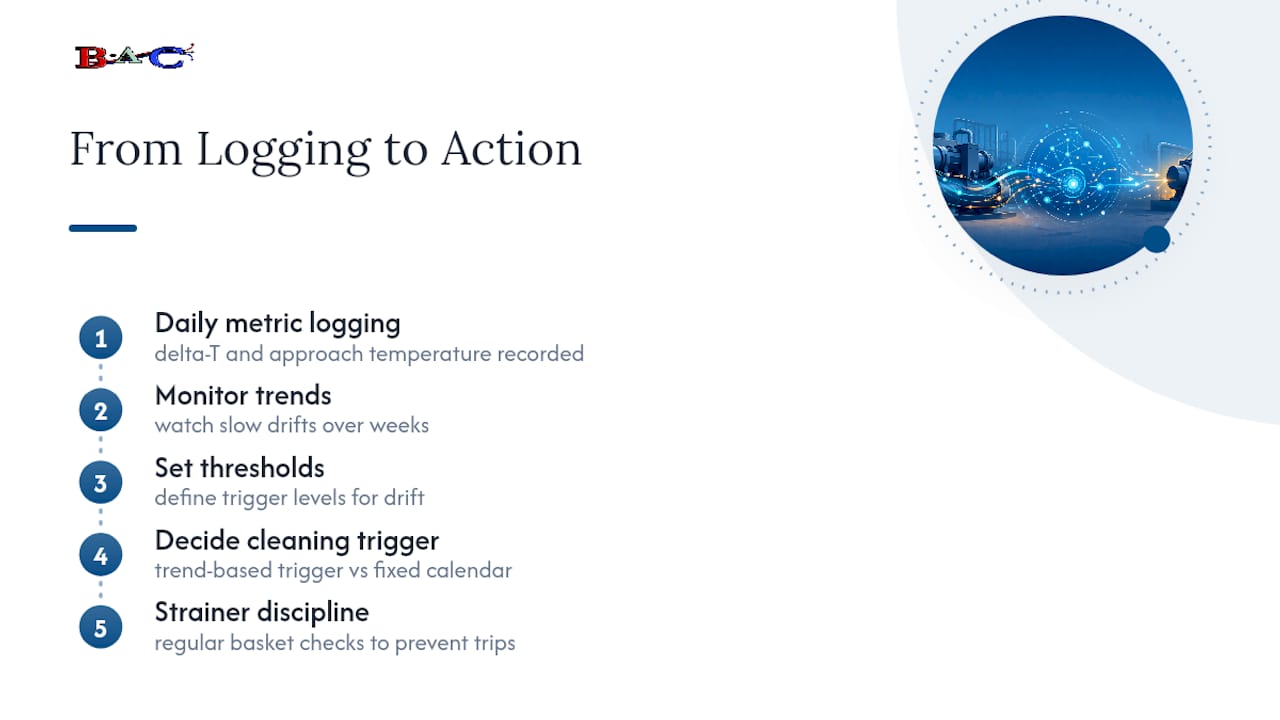
The other underrated piece is strainer discipline. It’s mundane, it’s cheap, and it’s the task most likely to get skipped when a facility is short-staffed, yet a neglected strainer basket causes more nuisance trips than almost any other single component.
Prioritize trend interpretation and strainer hygiene before you invest in fancier diagnostics. The instruments matter less than the habit of actually reading what they tell you.
— John
Brighton Air Corp’s Approach to Scheduled Chiller Service and Emergency Response
Brighton Air Corp has built preventive maintenance programs and handled emergency chiller service across New Jersey’s commercial and industrial facilities since 1993. A properly scoped PM contract for your chiller means fewer surprise breakdowns and a technician who already knows your equipment history when something does go wrong.

That history matters more than most facility managers expect. A tech showing up cold to an unfamiliar chiller wastes the first hour just reading gauges you already logged last week. Brighton Air Corp’s technicians work from your existing maintenance records, whether that’s daily logs, oil analysis reports, or a warehouse HVAC management plan already in place, so diagnostic time goes toward fixing the problem instead of rediscovering it.
A reputable HVAC service provider coordinates water-treatment vendors, schedules tube cleanings around your production calendar, and offers 24/7 emergency response when a compressor trips at 2 a.m. If your facility needs a maintenance plan built around your specific chiller and operating schedule, request a quote through Brighton Air Corp and get a technician looking at your equipment history before the next inspection is due.
Sources
The Chardon Labs maintenance checklist covers tube cleaning and water chemistry in depth. The Oxmaint CMMS guide explains trend-based scheduling. The Geson Chiller checklist guide organizes tasks by frequency. For documentation practices worth borrowing, the restaurant kitchen cleaning checklist shows how a well-formatted checklist holds up under daily use, and the BidWolf maintenance cost guide covers budgeting principles that apply directly to chiller PM contracts.
- Process Chiller Maintenance Plan Checklist - Chardon Labs
- Chiller plant maintenance: Checklist, schedule, and CMMS workflow
- Preventive maintenance of Centrifugal Chiller (technical PDF)