
Top Up Weekly? Homeowners' Safe Fix for Boiler Losing Pressure
Top Up Weekly? Homeowners’ Safe Fix for Boiler Losing Pressure
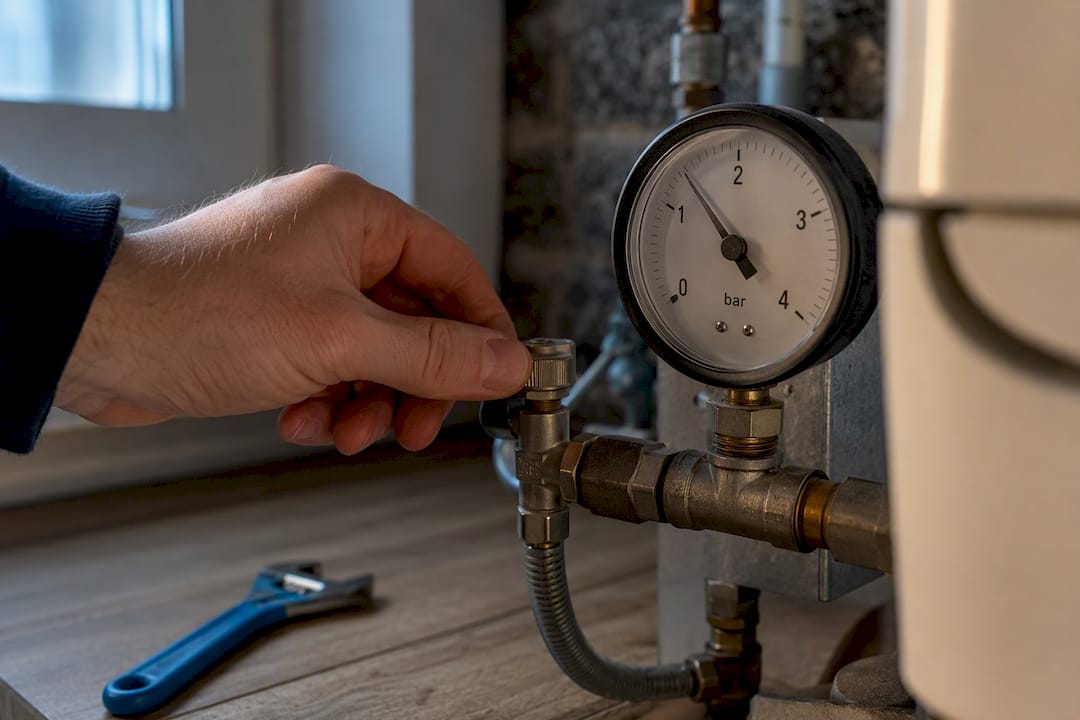
If your boiler is losing pressure, the most likely causes are a small leak, a waterlogged expansion tank, a discharging pressure relief valve, or a failing fill valve. Check the gauge while the boiler is cold, and if it reads below 1 bar, repressurize it to the correct cold target. Stop immediately and call a technician if you see water at the pressure relief valve, smell gas, or find yourself topping up more than once a week.
TL;DR:
- Most boiler pressure drops are caused by small leaks, a waterlogged expansion tank, or a faulty pressure relief or fill valve, not necessarily requiring a new system.
- Proper repressurization involves slowly opening the filling loop after the system cools and stopping at 1.0 to 1.5 bar, and it should hold steady if no leaks are present.
- Signs of active leaks include water discharge from the pressure relief valve, mineral staining around pipe joints, or the PRV discharge pipe showing dampness or puddles.
- Frequent topping-up beyond weekly indicates an active leak or malfunction that demands professional diagnosis rather than DIY patching.
- Annual checks of the expansion tank, PRV, joints, and bleeding radiators can help prevent pressure loss, but persistent issues require technician intervention.
Table of Contents
- Why Is My Boiler Losing Pressure? The Common Causes
- How Do You Safely Repressurize a Boiler?
- How Do You Find the Source of a Pressure Leak?
- When Should You Call a Professional Instead?
- Preventative Maintenance to Stop Pressure Loss Before It Starts
- Why Trust This Diagnostic Approach?
- A Practitioner’s View on DIY Boiler Fixes
- How Brighton Air Corp Solves Recurring Pressure Loss
- Sources
- FAQ
Why Is My Boiler Losing Pressure? The Common Causes
Every case of low boiler pressure traces back to one of a handful of mechanical failures, and each one leaves a slightly different fingerprint. The most common causes are small system leaks, a waterlogged or failing expansion tank, a pressure relief valve that won’t fully reseat, and a fill valve that’s passing water when it shouldn’t.
- Leaks at joints, radiator valves, or pump flanges. These rarely spray. A joint weep or a slightly loose radiator valve seal can drip so slowly it evaporates before you ever see a puddle, yet it still bleeds pressure out of the system day after day.
- Air in the system. Bleeding a radiator releases trapped air, and that always drops your gauge reading a little. That’s normal. What’s not normal is air returning to the same radiators within a few weeks. That pattern usually points to a leak drawing in air or a failing automatic air vent.
- A waterlogged expansion tank. The expansion tank absorbs the extra volume created when water heats up. Once its internal air charge fails, it can’t cushion that expansion anymore, and pressure swings become erratic between cold and hot cycles.
- A pressure relief valve (PRV) problem. If the PRV has opened even once, it may not reseal cleanly. That leaves a slow discharge path that mimics a leak elsewhere in the system.
- A passing fill valve or filling loop. If the isolation valves on your filling loop don’t seal fully, pressure creeps or drains without any visible leak at all.
How Do You Safely Repressurize a Boiler?
Repressurizing is usually a five-minute job, but rushing it is how people accidentally trigger the pressure relief valve or scald themselves on the filling loop. Work through it slowly.
- Let the boiler cool completely. Never touch the filling loop on a hot system. Confirm the display or gauge shows the boiler is off-cycle.
- Locate the filling loop. It’s typically a braided flexible hose with a valve (or two) connecting the cold mains to the heating system, usually tucked underneath or beside the boiler.
- Open the valve slowly. You’ll hear water flowing into the system. Watch the pressure gauge the entire time, not the wall.
- Stop at the correct cold target. Most residential systems should sit around 12 to 15 PSI, or 1.0 to 1.5 bar, when cold. Close the valve as soon as you hit that range.
- Close both valves fully and reset if needed. Some boilers need a manual reset button pressed once pressure is restored.
- Bleed radiators in order, starting from the ground floor and working up, then recheck the gauge and top up again if the bleed dropped it below target, following the same slow filling procedure recommended by British Gas.
Pro Tip: Open the filling loop valve in short bursts rather than one long turn. Opening it too fast can spike pressure past the target and trip the PRV before you even notice the gauge climbing.
A one-time recovery that holds steady for days is a good sign. If the needle creeps back down within 24 to 48 hours, you’re not looking at a fluke. Something is actively losing water or air, and that calls for the diagnostic checks below.
How Do You Find the Source of a Pressure Leak?
Finding where pressure actually goes takes patience more than tools. Work through these checks in order before you assume you need a new part.
- Watch for the expansion tank pattern. Normal pressure when cold, a noticeable jump once the heating runs, then a slow drop as it cools again is the classic signature of a waterlogged expansion vessel that has lost its internal air cushion.
- Inspect the PRV discharge pipe. Look for mineral staining, a damp patch on the wall below it, or a small puddle where the pipe exits outside. Any of these tells you the valve has been venting water.
- Isolate zones one at a time if your system allows it. Closing valves to individual radiator loops and watching whether pressure holds steady narrows the leak down to a specific zone instead of the whole house.
- Check for rust, staining, or damp insulation around visible pipework and joints. These visible clues often show up before an actual puddle does.
- Listen for gurgling near the boiler or radiators. That sound usually means air is getting into the system somewhere it shouldn’t, which often traces back to a leak drawing in air behind the scenes.
For hidden runs under floors or slabs, homeowners dealing with unexplained air or pressure loss in ductwork and piping systems can find useful general troubleshooting steps in this guide on finding and sealing hidden leaks.
When Should You Call a Professional Instead?
Some signs mean the DIY checklist stops and a technician’s visit starts. Treat these as hard limits, not suggestions.
- Active water discharge from the PRV, a gas smell anywhere near the boiler, or a gauge stuck at zero all mean stop troubleshooting and call for service immediately.
- Topping up weekly or more often almost always points to a hidden leak or a failing component rather than something you fix with the filling loop.
- Underground pipe runs, heat exchanger leaks, or plate exchanger cross-leaks need specialist tools like pressure-hold testing or acoustic detection. There’s no reliable way to find these by eye.
- A technician will typically run isolation tests, check the expansion vessel’s air charge, and inspect the PRV before replacing anything, which avoids paying for parts that weren’t actually the problem.
- Keep a simple log of your pressure readings and photograph any discharge or damp staining. That record matters if you ever need to file an insurance claim tied to water damage.
Preventative Maintenance to Stop Pressure Loss Before It Starts
A once-a-year check catches most of what causes pressure loss before it becomes a call for a technician.
- Have the expansion tank’s air charge, the PRV, and both filling loop valves inspected annually.
- Check visible joints and pump flanges for early staining while they’re still small enough to ignore.
- Bleed radiators when needed, then immediately check and restore pressure to the correct cold reading.
- Use a proper water treatment inhibitor to slow internal corrosion, which is often what creates pinhole leaks years down the line.
- Log the date and pressure reading every time you check or top up the system. A pattern is easier to spot on paper than in memory.
Pro Tip: Write your cold pressure reading on a sticky note near the boiler every time the heating engineer visits. Six months of consistent readings tells a technician more about your system’s health than a single snapshot ever could.
Why Trust This Diagnostic Approach?
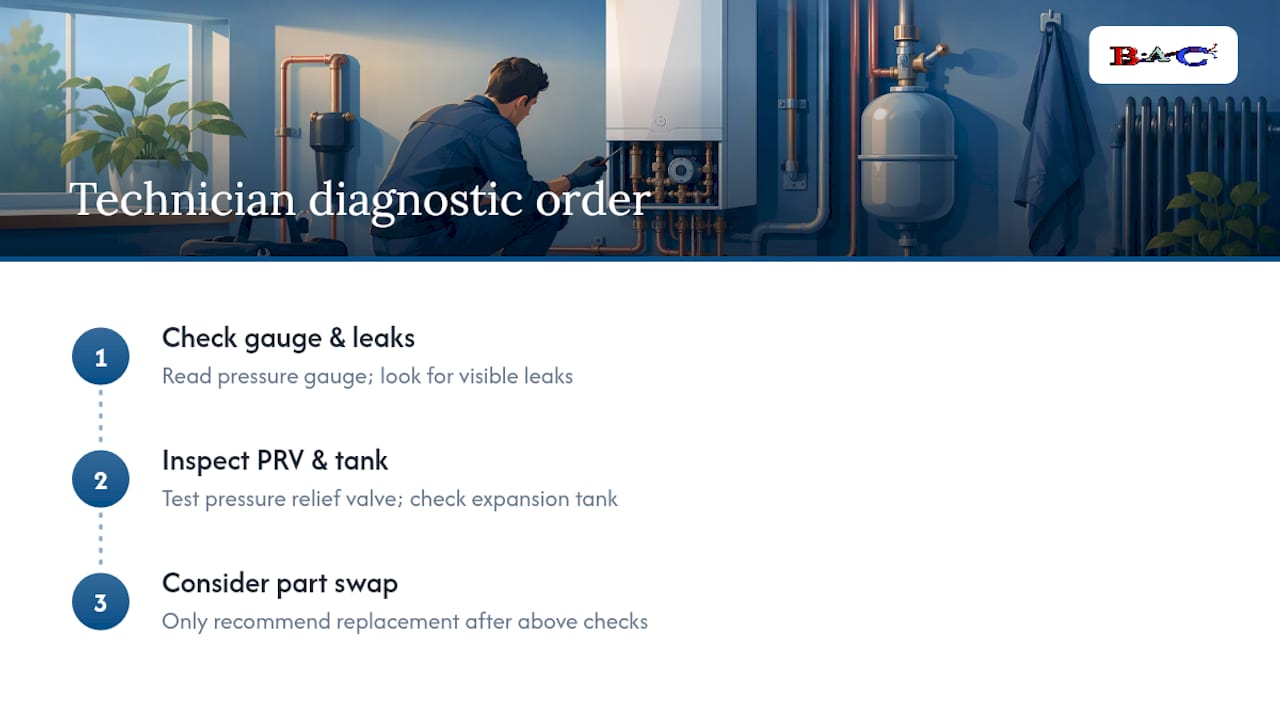
This guide reflects the field experience behind an HVAC contractor with extensive experience in boiler repair and emergency response calls. Author John draws on that background to walk homeowners through the same diagnostic order technicians use, checking the gauge and visible leaks first, then the PRV and expansion tank, before ever recommending a part swap.
A Practitioner’s View on DIY Boiler Fixes
Repeated top-ups don’t fix anything. They mask the leak while feeding fresh oxygen and minerals into the system, which speeds up corrosion. The better move is diagnosing before refilling, not the other way around.
— John
How Brighton Air Corp Solves Recurring Pressure Loss
Once you’ve worked through the gauge checks and the leak isn’t obvious, it’s time for equipment that can actually confirm what’s happening inside the system. Brighton Air Corp handles the calls that follow a homeowner’s DIY troubleshooting: expansion tank replacement, PRV repair, leak detection, and general boiler repair for systems that keep losing pressure despite a proper repressurize.

A service call typically starts with an inspection of the filling loop, PRV, and expansion tank, followed by isolation testing to pinpoint where pressure is actually going. You get a written estimate before any work begins, along with documentation you can keep on file if the issue ends up tied to an insurance claim over water damage. Brighton Air Corp also offers 24/7 emergency service for the red flag scenarios covered above, active PRV discharge or a gas smell that can’t wait for a scheduled appointment. If your system has needed more than one top-up this month, book a boiler repair inspection or browse the full service list to see what’s included before you call.
Sources
For deeper reading on pressure ranges, expansion tank behavior, and professional leak detection, see Heating System Answers and DCI Leak Detection.
- Boiler Pressure Keeps Dropping: Causes, Symptoms, and Fixes - Heating System Answers
- Low boiler pressure? It`s easy to repressurise your boiler yourself - British Gas
- How To Increase Boiler Pressure - DCI
- Why Is My Boiler Losing Pressure? - OutdoorBoiler
FAQ
Can a Boiler Lose Pressure Without a Leak?
Yes. A waterlogged expansion tank, a discharging PRV, or air escaping through a bleed valve can all drop pressure with no visible water leak anywhere in the system.
How Do I Fix a Boiler That Keeps Losing Pressure?
Check the gauge when the boiler is cold, repressurize slowly through the filling loop to 12 to 15 PSI (1.0 to 1.5 bar), then watch whether it holds. If it drops again within a day or two, the cause is mechanical and needs a technician, not another top-up.
How Often Is It Normal for a Boiler to Lose Pressure?
Very gradual pressure loss over several months is normal as tiny amounts of air work out of the system. Needing to top up weekly or more signals a hidden leak or a failing part, not routine wear.
Do I Need a New Boiler If the Pressure Keeps Dropping?
Rarely. Most repeated pressure loss traces back to a failed expansion tank, a PRV that won’t reseal, or a small leak, which can often be repaired without replacing the entire boiler.