
How 24/7 HVAC service works: process, response, and what to expect
How 24/7 HVAC service works: process, response, and what to expect
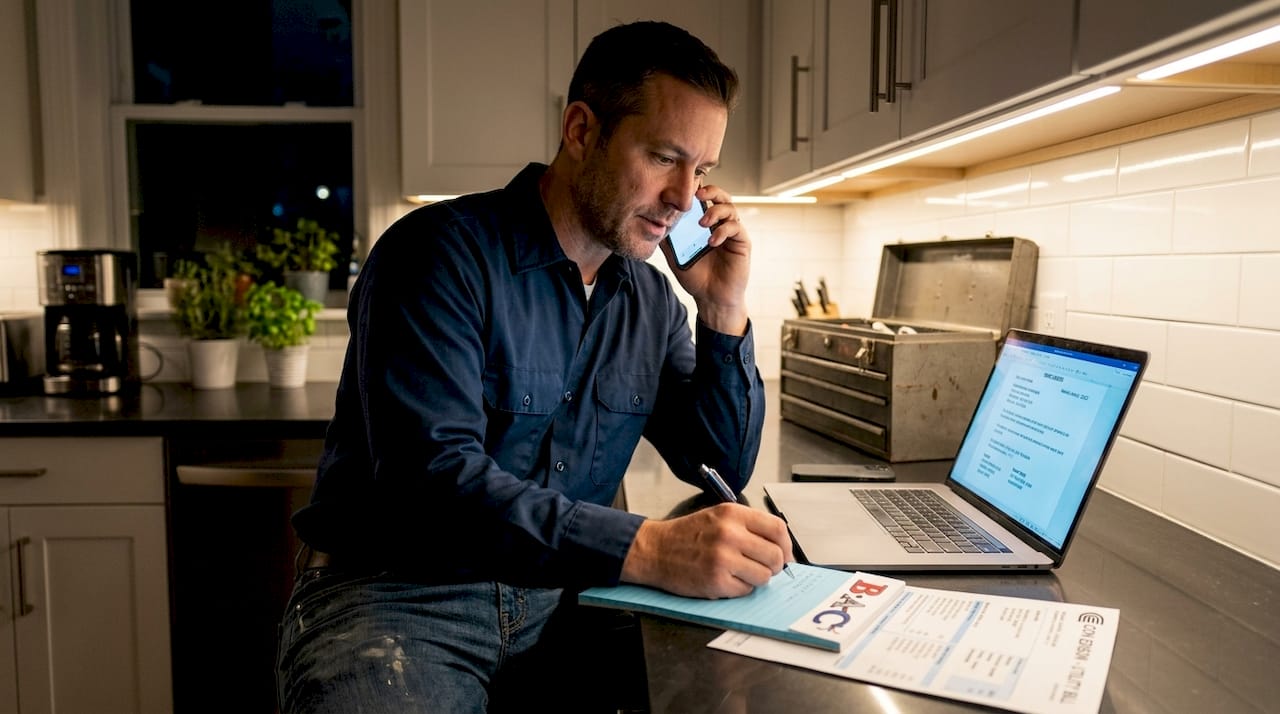
Most homeowners assume “24/7 HVAC service” means a technician is sitting by the phone at 3 AM, coffee in hand, waiting for your call. That image is comforting, but it’s not accurate. What actually runs behind the scenes is a carefully organized system with intake lines, on-call rotations, stocked service vehicles, and triage protocols designed to route the right help to the right place as fast as possible. Understanding how this system works gives you a real advantage during an emergency because you’ll know what to say, what to have ready, and exactly what to expect from first call to final repair.
Table of Contents
- The real mechanism behind 24/7 HVAC service
- Step-by-step: From your emergency call to technician dispatch
- Inside the emergency visit: Safety checks, diagnosis, and quote
- Smart use of 24/7 HVAC: Preparation and what homeowners should expect
- The uncomfortable truth: Most 24/7 HVAC problems are preventable
- Get reliable 24/7 HVAC service with Brighton Air Corp
- Frequently asked questions
Key Takeaways
| Point | Details |
|---|---|
| 24/7 HVAC is a system | Round-the-clock service relies on trained dispatch, on-call staff, and well-planned triage, not just having someone awake all night. |
| Triage shapes response | Providers use urgent questions to decide how quickly to respond and whom to send for your emergency. |
| Safety-first protocols | Technicians follow a proven process with immediate safety assessments and clear written quotes before any repairs start. |
| Preparation speeds help | Having detailed info ready and communicating honestly helps HVAC teams prioritize and resolve your emergency faster. |
| Prevention is best | Consistent HVAC maintenance means you’re much less likely to need true after-hours emergency service. |
The real mechanism behind 24/7 HVAC service
Here’s the thing about round-the-clock HVAC coverage: it sounds simple from the outside, but it takes a lot of operational structure to make it work reliably. The phrase “24/7” is often treated as a marketing promise, but for reputable providers, it reflects a specific set of systems that don’t stop running after 5 PM.
A key truth that most articles skip over is that 24/7 coverage is less about a technician never sleeping and more about three core elements: after-hours intake and triage, maintaining on-call coverage and pre-stocked vehicles, and running a repeatable safety-first diagnostic workflow with clear pricing before any repair begins. That’s the real structure.
Here’s what actually makes after-hours HVAC coverage work:
- After-hours intake line or emergency form that captures your request the moment you reach out
- An on-call rotation roster of licensed technicians available on scheduled shifts
- Pre-stocked service vehicles loaded with common parts to avoid wasted trips back to the shop
- Triage protocols that sort calls by urgency, safety risk, and type of equipment involved
- Standardized emergency workflow so every technician follows the same safety-first steps on arrival
- Dispatch coordination that routes the closest available tech with the right skills for your system
This is also why 24/7 services matter for homeowners, especially in New Jersey where winters can be brutally cold and summer humidity makes a broken AC a genuine health concern. Most urgent requests see a callback within minutes and on-site intervention typically within a few hours, depending on location and current demand. That’s not luck; it’s logistics.
Now that your expectations are set, let’s look at what actually happens from the moment you request emergency help.
Step-by-step: From your emergency call to technician dispatch
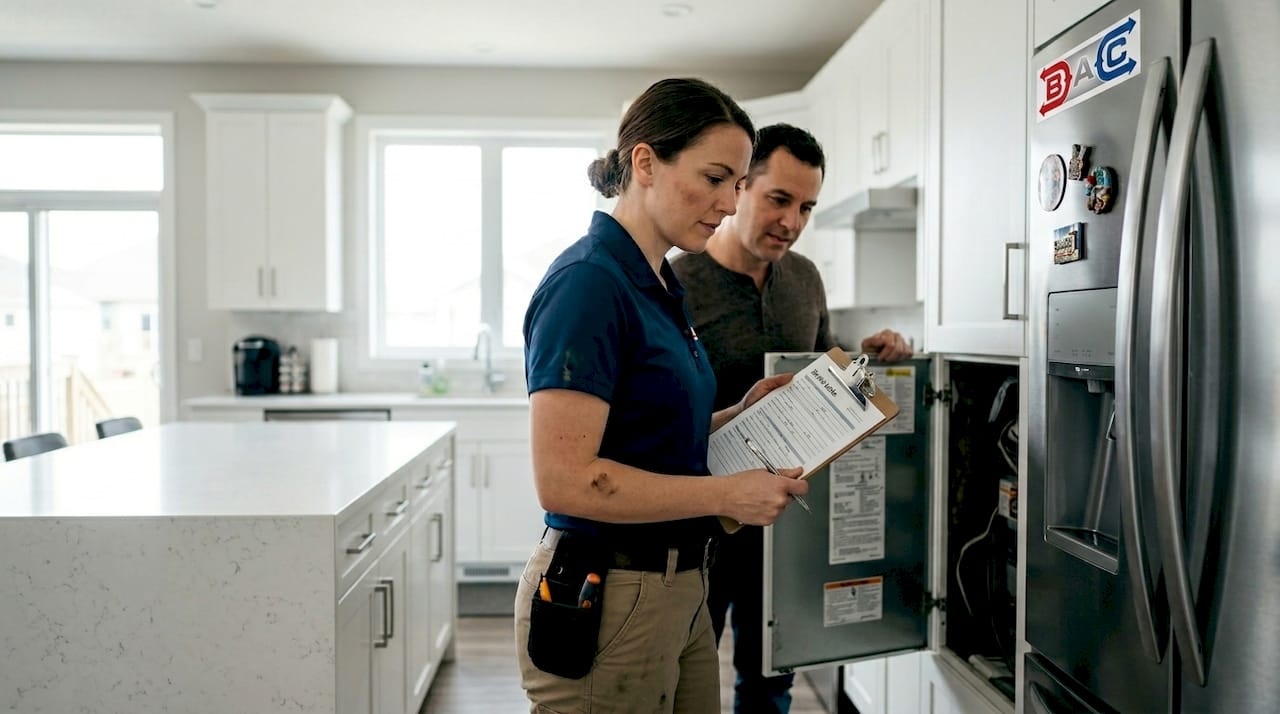
Understanding the process for residential emergency HVAC helps you communicate better and avoid the frustration of not knowing where you stand. Here’s a clear breakdown of how a typical emergency call flows from your first contact to a tech pulling into your driveway.
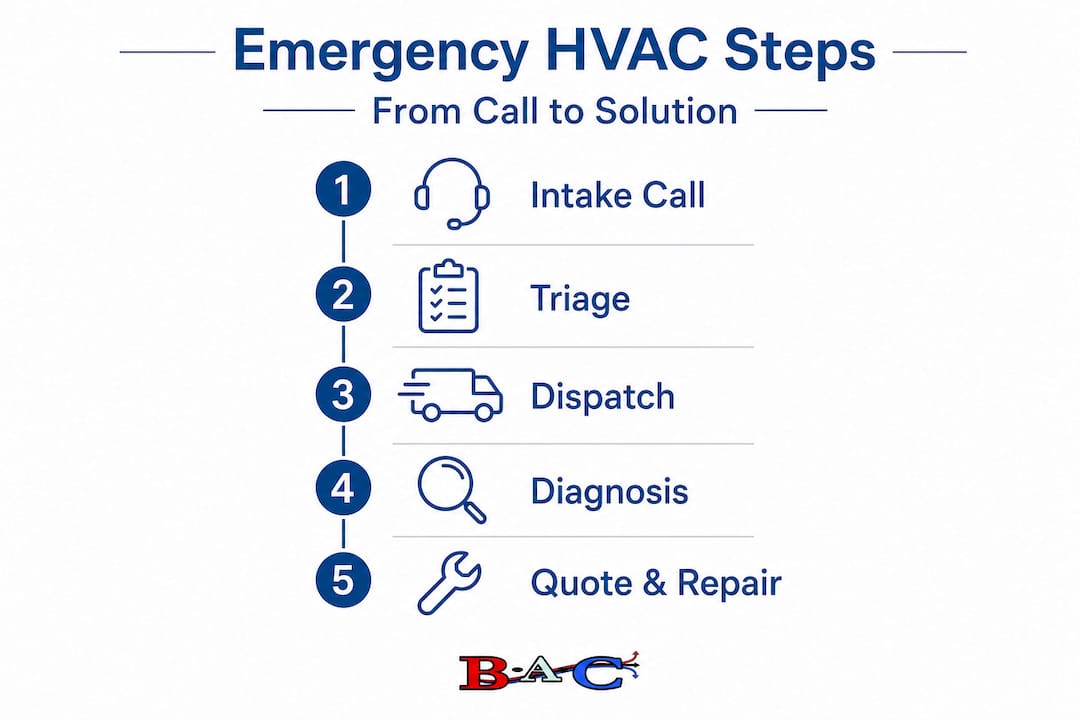
The emergency call process:
- Intake. You call the emergency line or submit an online form. An intake specialist or automated system collects your name, address, contact number, and a brief description of the problem.
- Triage questions. The intake agent asks targeted questions to assess urgency: Is there a smell of gas or burning? Is the unit making unusual noises? Is anyone in the home at elevated health risk (elderly residents, infants, people with respiratory conditions)? Is there water pooling near the unit?
- Priority routing. Based on your answers, your call gets ranked. Safety emergencies like gas smells, carbon monoxide (CO) concerns, or electrical hazards go to the top of the queue immediately.
- Contractor matching. Dispatch finds the on-call technician closest to your ZIP code who has the right licensing and expertise for your system type (furnace, heat pump, boiler, central AC, etc.).
- Callback for ETA. The assigned technician or dispatch calls you back to confirm estimated arrival time and may offer basic troubleshooting steps to keep you safe or comfortable in the meantime.
- Technician dispatched. The tech heads to your location with the relevant parts and tools already loaded.
Triage questions during the intake step are not just busywork; they are the mechanism that separates a true safety emergency from a comfort inconvenience. When resources are stretched on a cold night, this sorting is what ensures the family without heat in freezing temperatures gets seen before someone with a noisy air handler that’s still working.
| Feature | Standard office-hours call | 24/7 emergency intake |
|---|---|---|
| Intake method | Phone during business hours | Phone or online form, any time |
| Triage assessment | General scheduling questions | Detailed urgency and safety questions |
| Response time | Next available appointment | Callback within minutes, dispatch same day or night |
| Priority ranking | First-come, first-served | Urgency-based prioritization |
| Tech availability | Scheduled staff | On-call rotation roster |
| Parts availability | Shop stock | Pre-stocked service vehicle |
With a clear timeline from call to dispatch, let’s explore what actually happens at your home during an urgent visit.
Inside the emergency visit: Safety checks, diagnosis, and quote
Once your technician arrives, they follow a consistent, documented process. This isn’t improvised; it’s a structured protocol built around safety first. Emergency on-site protocol requires an immediate safety assessment before anything else, followed by diagnosis and a written quote before any repair begins.
Here’s what that looks like in real time:
- Immediate safety assessment (5 to 10 minutes). The tech checks for carbon monoxide levels, natural gas odors, electrical hazards, water or flooding near electrical components, and signs of fire or overheating. If a safety hazard is confirmed, they address that before touching anything else.
- Interview and equipment documentation (5 to 10 minutes). They ask you what you noticed, when it started, and whether there have been previous issues. They also document your system’s make, model, age, and last known service date.
- Diagnosis (20 to 45 minutes). Using diagnostic tools, visual inspection, and system testing, the technician identifies the root cause. This isn’t guesswork; experienced techs follow a systematic approach to eliminate possibilities.
- Written quote delivery (5 minutes). You receive a clear, itemized estimate. You know exactly what it costs before anything is touched. You approve it or ask questions.
- Repair begins. Only after you sign off does the work start.
| Step | Estimated time |
|---|---|
| Safety check | 5 to 10 minutes |
| Interview and documentation | 5 to 10 minutes |
| Diagnosis | 20 to 45 minutes |
| Quote delivery and approval | 5 minutes |
| Repair | Varies by issue |
“The best HVAC technicians treat emergency safety protocols as non-negotiable. A rushed diagnosis that skips safety assessment can miss a carbon monoxide leak or an electrical hazard that puts a family at risk. The sequence exists for a reason.”
Pro Tip: Before the technician arrives, make sure they have clear, unobstructed access to your HVAC unit, electrical panel, and any outdoor equipment. Gather any previous maintenance records you have. Even a rough timeline of recent issues, like “the unit started making a grinding sound about three weeks ago,” can cut diagnosis time significantly and get you to the repair phase faster.
Having all the steps and safety procedures revealed, let’s look at what you can do to use 24/7 HVAC services effectively.
Smart use of 24/7 HVAC: Preparation and what homeowners should expect
You can dramatically improve your emergency service experience by showing up prepared. After-hours intake and triage routing depends heavily on the quality of information you provide. The clearer your description, the faster and more accurately the dispatcher can route your call and set the tech up for success.
What to have ready when you call:
- A clear, specific description of the problem (strange noise, no heat, water leak, burning smell, etc.)
- Your HVAC unit’s location in the home (basement, attic, utility closet) and any outdoor unit access info
- The make and model of your system, if you can find it on the unit
- Your best contact phone number and a backup number
- Gate or alarm codes if your property has access restrictions
- Whether pets are present and need to be secured before the tech arrives
- Your most recent service or maintenance records, if available
- Names of any vulnerable household members (infants, elderly individuals, people with health conditions)
Common mistakes that slow things down include giving vague answers to triage questions (“It just isn’t working right”), not answering the callback from dispatch, and being unavailable when the technician arrives. Each of those gaps adds time to your resolution.
Prioritization during emergencies also means being honest and specific about your situation. Don’t downplay serious risks, and don’t overstate minor issues just to get seen faster. The triage process is designed to handle this fairly, and providers can usually tell the difference.
Pro Tip: If you have elderly family members, infants, or individuals with respiratory conditions in your home, or if outdoor temperatures are extreme, say so explicitly during triage. This detail is a legitimate factor in how urgently your call is prioritized. Being clear about real vulnerability can mean the difference between a same-night visit and a next-morning slot.
Setting realistic expectations also helps. Not every situation requires emergency pricing and a midnight visit. A unit that’s slightly less efficient, a thermostat that reads two degrees off, or an AC that cycles a bit more than usual might be better handled at a regular scheduled appointment rather than as an after-hours call. Saving the emergency line for genuine safety and severe comfort situations keeps costs down and response times fast for everyone.
The uncomfortable truth: Most 24/7 HVAC problems are preventable
Here’s what three-plus decades of working in this industry teaches you: the vast majority of those panicked midnight calls are not bad luck. They’re the predictable end result of ignored maintenance. A furnace that fails on the coldest night of January almost always had warning signs weeks or months earlier. A clogged filter that caused an AC compressor to overwork itself on a July weekend didn’t become a problem overnight.
Technicians genuinely would rather help you catch a problem early than respond at 2 AM when your family is cold. Prevention costs a fraction of emergency repair, and it certainly costs less in stress, lost sleep, and disrupted work schedules. That’s not a sales pitch; it’s the reality of regular HVAC maintenance done over decades of service calls across New Jersey.
The interesting pattern is this: the homeowners who never seem to need emergency service aren’t luckier than anyone else. They schedule annual check-ups before peak heating and cooling seasons. They change their filters every one to three months without waiting to be reminded. And when their system starts making a new sound or loses efficiency, they call before it becomes a breakdown.
“The best 24/7 emergency HVAC call is the one you never have to make because you caught the problem early.”
That means paying attention to performance changes. If your home used to heat to 70°F in about 20 minutes and now it takes 45, that’s not just a nuisance; it’s diagnostic data. If your utility bills have crept up without a change in usage habits, that points to an efficiency problem worth investigating now, not later. Acting on those early signals is genuinely smarter than having the most organized emergency response plan in the world.
Use 24/7 services for true emergencies, because that’s what they’re built for. But invest in the maintenance that makes emergencies rare. That combination gives you real peace of mind rather than just a phone number to call at the worst possible moment.
Get reliable 24/7 HVAC service with Brighton Air Corp
When a heating or cooling emergency does happen in New Jersey, who you call matters as much as how fast you call them.
Brighton Air Corp has been serving New Jersey homeowners and businesses since 1993, with over 150 years of combined technician expertise across its team. Their 24/7 emergency service follows the same safety-first protocols described in this article, with fast dispatch, clear written quotes before any repair starts, and technicians who communicate honestly throughout the process. Whether you’re dealing with a furnace breakdown at midnight, a failed AC on a humid July afternoon, or a boiler issue in the middle of winter, Brighton Air Corp is built to respond. Save their contact information now so you’re not searching in a panic when you need them most.
Frequently asked questions
How quickly can a technician arrive for a 24/7 HVAC emergency?
In most cases, homeowners receive a callback within minutes and a technician dispatched within hours, depending on location and urgency level.
What should I have ready before an emergency HVAC call?
Prepare a clear description of the problem, your unit’s location and model if available, and your best contact number to speed up intake and triage.
Are all issues treated as equal emergencies?
No. Triage questions determine priority so providers can address critical safety, health, and property-damage emergencies before comfort-only requests.
Will the technician give a price before starting repairs?
Yes. A written quote is delivered after diagnosis so you know the full cost and approve it before any repair work begins.
Can regular maintenance reduce the need for 24/7 emergency calls?
Absolutely. Most urgent HVAC failures stem from missed maintenance, so scheduling annual check-ups and responding to early warning signs helps you avoid emergencies altogether.